 +86-791-8686-1216


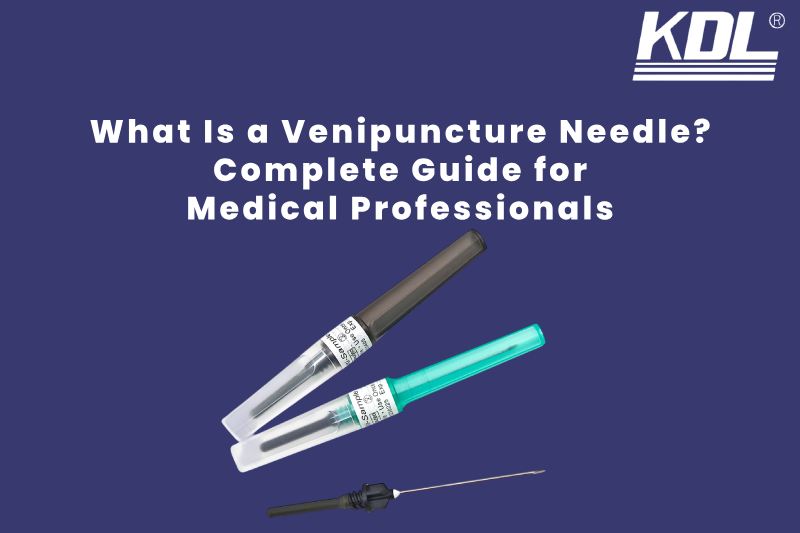
One of the most popular clinical procedures in healthcare is venipuncture. Every day, blood tests, IV access, blood donations, and many other treatments use it. The venipuncture needle is a small but very important tool that is at the heart of this easy but very important job.
This guide explains what a venipuncture needle is, how it works, the different kinds that are out there, and how to pick the right one. Nurses, phlebotomists, medical assistants, lab technicians, and other healthcare professionals who want clear, useful knowledge should read it.
What Is a Venipuncture Needle?
A venipuncture needle is a hollow, sterile needle that is designed to go into a vein and collect blood or deliver fluids. It is most typically used during blood draws for lab testing, although it is also utilized in blood donation and blood draws.
The needle makes a small hole in a vein that lets blood flow into a collecting tube, syringe, or IV line. Venipuncture needles are designed to be accurate, pointed, and smooth since veins are fragile.
A Simple Definition
In simple words, a venipuncture needle is
- A medical needle that is slender and sharp
- Used to get to a vein
- For blood collection or fluid delivery
The Centers for Disease Control and Prevention (CDC) and the World Health Organization (WHO) are two examples of healthcare organizations that consider venipuncture to be a normal clinical procedure when done correctly and with the right safety equipment.
Why Venipuncture Needle Matter in Healthcare
Even though venipuncture needles are tiny, they really make a big difference in patient care. Getting accurate blood samples is super important for doctors. It helps them figure out what’s going on with diseases, keep an eye on treatments, and avoid any complications down the line.
Choosing the right needle:
- Helps ease patient pain and anxiety
- Reduces the chances of hemolysis
- Enhances the quality of samples
- Reduces needlestick injuries
OSHA (Occupational Safety and Health Administration), emphasizes that using needles safely is crucial for keeping healthcare workers safe from bloodborne pathogens.
The Primary Components of a Venipuncture Needle
Understanding the different parts of a venipuncture needle is super important for medical professionals to ensure they use it the right way and keep things safe.
Needle shaft
The shaft is basically a long, hollow metal tube. After entering the vein, blood flows through this channel.
Bevel
The bevel is that slanted tip you see on the needle. A nicely designed bevel helps make skin and vein penetration smoother and less painful.
Hub
The hub is that plastic part that links the needle to a syringe, holder, or IV tubing. It’s usually color coded to indicate the size of the needle gauge.
Safety Mechanism (If Present)
Many modern venipuncture needles include safety features, such as :
- Retractable needles
- Shielded tips
- Push-button activation
These features are recommended by the CDC to reduce accidental needle sticks.
Types of Venipuncture Needle
There are different kinds of venipuncture needles, and each one is made for a particular clinical situation.
Straight Needles
Some traditional needles come connected to a tube holder or syringe. These are called straight needles.
Best for:
- Everyday blood draws
- Adult Patients With Strong Veins
Pros:
- Simple design
- Good control
Cons:
- Higher Risk of Vein Movement
- Less Flexible
Butterfly Needles (Winged Infusion Sets)
Butterfly needles have flexible tubing and plastic “wings” for better control.
Best for:
- Pediatric patients
- Olderly patients
- Small or fragile veins
Pros:
- Greater precision
- Less vein trauma
Cons:
- Slightly higher cost
- Risk of hemolysis if used incorrectly
Safety Venipuncture Needles
Safety needles come with protective features designed to help avoid needlestick injuries.
Ideal for :
- Hospitals and clinics that adhere to OSHA guidelines
- Blood collection in busy environments
Benefits:
- Better safety for workers
- Compliant with OSHA standards
Drawbacks:
- Increased cost
- It needs the right training.
Venipuncture Needle Gauge Sizes Explained
Needle gauge refers to the thickness of the needle. The higher the gauge number, the thinner the needle.
Common Venipuncture Needle Gauges
- 18–20 gauge: Blood donation, rapid flow
- 21 gauge: Standard adult venipuncture
- 22 gauge: Small or fragile veins
- 23 gauge: Pediatric or geriatric patients
Choosing the right gauge:
- Prevents vein collapse
- Reduces hemolysis
- Improves patient comfort
How Venipuncture Needles Are Used: A Step-by-Step Guide
The steps are pretty much the same in different healthcare places, even if the techniques change a bit.
Step 1: Patient Preparation
- Check who the patient is
- Can you break down the steps for me?
- Put on a tourniquet
Talking clearly can really help ease patient worries.
Step 2: Site Selection
Some usual spots for venipuncture are:
- Median cubital vein
- Cephalic vein
- Basilic vein
The WHO suggests going for veins that you can see, feel, and that are steady.
Step 3: Needle Insertion
- Wipe down the site with some antiseptic.
- Stick the needle in with the bevel facing up and at a slight angle.
- Keep an eye out for that blood flashback.
Step 4: Collecting Blood
Blood gets drawn into tubes or a syringe until you have the right amount.
Step 5: Getting Rid of the Needle
- Take off the tourniquet
- Pull the needle out gently.
- Turn on the safety feature
- Throw it in the sharps container
Venipuncture Needle vs Hypodermic Needle
Although they look similar, venipuncture needles and hypodermic needles serve different purposes.
| Feature | Venipuncture Needle | Hypodermic Needle |
|---|---|---|
| Purpose | Blood draw | Medication injection |
| Bevel | Designed for veins | Designed for tissue |
| Use | IV access, labs | IM, SC injections |
Using the correct needle type improves both safety and outcomes.
Common issues that can come up with venipuncture needle
Even if you do everything right, stuff can still go wrong.
Hematoma
It’s all about blood leaking into the nearby tissue.
Here are some Prevention tips to keep in mind:
- Put some pressure on it after you take it out.
- Stay away from poking veins
Hemolysis
Happens when red blood cells break apart.
Common causes:
- The needle’s way too small.
- Too much suction
Infection
It doesn’t happen often, but it can be a big deal if you don’t stick to the aseptic technique.
The CDC highlights the importance of keeping your skin clean and using single-use needles to avoid infections.
How to Choose the Right Venipuncture Needle
Selecting the right venipuncture needle depends on several factors.
Patient Factors
- Age
- Vein size
- Medical condition
Procedure Type
- Routine blood draw
- Blood culture
- IV therapy
Safety Requirements
Many healthcare facilities require safety-engineered venipuncture needles to comply with OSHA Bloodborne Pathogens Standard.
Venipuncture Needle Safety Best Practices
Needlestick injuries can expose healthcare workers to serious diseases such as hepatitis B, hepatitis C, and HIV.
Safety Tips
- Never recap needles
- Use safety devices correctly
- Dispose of needles immediately
- Report injuries promptly
The CDC and OSHA strongly recommend safety venipuncture needles in clinical settings. Healthcare professionals select venipuncture needles by collaborating with reputable medical device companies that adhere to strict safety and quality standards. KDLNC is part of the Kindly (KDL) Group. It is globally recognized for producing high-quality medical puncture equipment, including venipuncture and blood collection needles.
Venipuncture needle are used in various medical settings
Venipuncture needles are commonly used in various healthcare settings.
Medical facilities
When it comes to high-volume blood draws and IV access, it’s all about using needles that are both durable and designed with safety in mind.
Clinics and labs
Making sure everything is accurate and that patients feel comfortable is what we focus on the most.
Places to Donate Blood
Using large-gauge needles helps speed up blood flow and keeps donor veins safe.
Venipuncture Needle Design Trends for the Future
Manufacturers of medical devices keep making venipuncture needles better.
Brand-New Features
- Better safety shields
- Technology that makes walls thinner for better flow
- Easy-to-hold grips
The purposes of these changes are to lessen pain, make samples better, and keep healthcare workers safe.
Final Thoughts
A venipuncture needle is small yet essential in modern medicine. This tool aids in accurate diagnosis and effective care, from routine blood tests to life-saving treatments.
Knowing what a venipuncture needle is, its function, and how to select the appropriate one aids medical professionals in enhancing patient outcomes and ensuring workplace safety. Healthcare teams can confidently perform venipuncture by adhering to guidelines from trusted organizations such as the CDC, WHO, and OSHA.
Mastering venipuncture needle selection and technique is crucial for both newcomers and experienced professionals in healthcare to ensure safe, high-quality patient care.