 +86-791-8686-1216


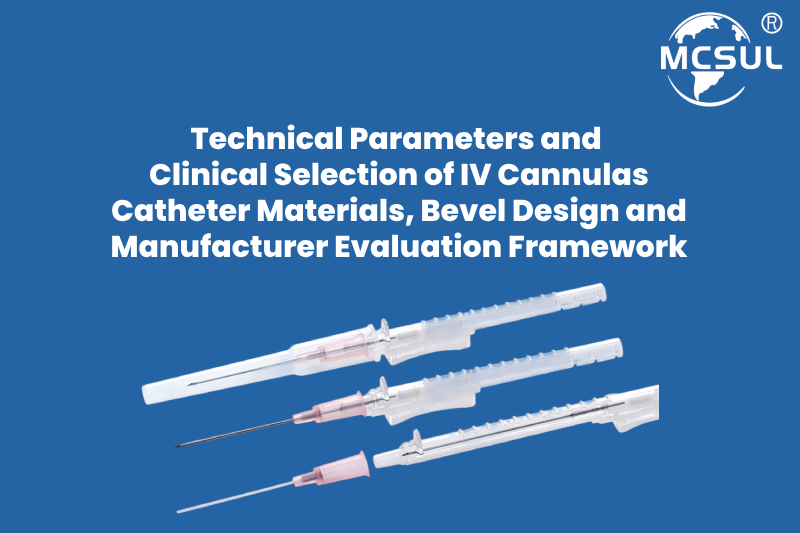
IV cannula selection is often overlooked. But it is one of the most important decisions in vascular access. Clinicians usually focus on insertion technique. However, the cannula itself matters too. Catheter material, bevel design, gauge, and manufacturer quality all affect patient comfort. They also affect complication rates and infusion outcomes. This guide breaks down the key factors. It will help you make better IV cannula selection decisions in hospitals, clinics, and procurement, whether you’re comparing our IV catheter product range or building a full vendor shortlist.
Understanding IV Cannula Design: Why Technical Parameters Matter
Before we look at materials and manufacturers, let’s cover the basics. Why does IV cannula selection deserve this much attention?
Role of Cannulas in Clinical Practice
Clinicians use IV cannulas millions of times every day. They use them for fluids, medication, blood transfusions, and lab sampling. A cannula is not just a basic supply item. Its design affects how easily it enters a vein. It also affects how much trauma it causes. And it affects how long it can stay in place safely. This is why IV cannula selection is a clinical decision. It is not just a supply-chain choice.
How Design Impacts Patient Safety and Comfort
Poorly designed cannulas raise the risk of failed insertions. They also raise the risk of vein trauma and early device failure. Studies show that catheter flexibility matters. Tip design and bevel sharpness matter too. Both affect pain scores and complication rates. As a result, IV cannula selection now weighs technical details alongside cost.
Catheter Materials Used in IV Cannula Manufacturing
Material science plays a big role in IV cannula selection. The catheter shaft’s material affects flexibility, biocompatibility, and dwell time.
PTFE (Teflon) Catheters
Manufacturers value PTFE for its rigidity and chemical resistance. It’s cost-effective and widely used as seen in our standard IV catheter needle line. But it’s stiffer than newer materials. This can make insertion less comfortable for patients with fragile veins.
Polyurethane Catheters
Clinicians increasingly favor polyurethane. It softens at body temperature. This reduces irritation to the vein wall over time. As a result, it works well for longer dwell times which is why our KDL safety IV catheter uses this material. It also suits more sensitive patients.
FEP (Fluorinated Ethylene Propylene) Catheters
FEP catheters offer a middle ground. They’re softer than PTFE. They’re also more affordable than polyurethane. FEP resists kinking well. Many teams choose it for routine, short-term IV cannula selection.
Comparing Biocompatibility and Flexibility Across Materials
Teams compare three factors in IV cannula selection. First, biocompatibility: how the body’s tissue reacts to the material. Second, flexibility: how well the catheter moves with the vein. Third, thrombogenicity: how likely the material is to cause clots. Polyurethane scores best overall. FEP comes next. PTFE trails in flexibility. But it wins on cost.
IV Catheter Material PTFE vs FEP vs PUR Performance
Buyers often ask for a direct side-by-side view. Here’s how PTFE, FEP, and polyurethane (PUR) stack up across the factors that matter most in IV cannula selection.
| Factor | PTFE | FEP | Polyurethane (PUR) |
|---|---|---|---|
| Flexibility | Low | Medium | High |
| Biocompatibility | Moderate | Good | Best |
| Cost | Lowest | Medium | Highest |
| Kink resistance | Good | Very good | Good |
| Best use case | Short-term, cost-sensitive | Routine short-term use | Long dwell time, sensitive patients |
PTFE wins on price and chemical resistance. FEP offers the best balance of cost and comfort for everyday use, similar to our side-hole IV cannula design. PUR performs best for patients who need long-term access, like oncology patients. This comparison should guide IV cannula selection whenever budget and clinical need pull in different directions, see our medical needle supplier evaluation guide.
Bevel Design and Its Impact on Insertion Success
Bevel shape is often ignored in IV cannula selection. But it has a real impact on trauma and success rates.
Types of Bevel Grinds (Short, Regular, Back-Cut)
Manufacturers make three main bevel types. These are short bevel, regular bevel, and back-cut bevel. Short bevels cause less trauma. They work well for small or fragile veins, like those found in our scalp vein-type IV catheter. Back-cut designs improve flashback visibility. Both matter in a solid IV cannula selection checklist, our guide to selecting butterfly-type IV cannulas covers this in more depth..
Bevel Angle and Insertion Trauma
The bevel angle affects how much resistance the needle meets. This happens when it punctures skin and vein wall. A sharper angle reduces insertion force. It also reduces pain, a key reason our butterfly-type IV catheter needle uses a fine-ground bevel. That’s why buyers ask about bevel angle during IV cannula selection.
Sharpness Retention and Multi-Facet Grinding
Multi-facet grinding keeps needles sharp longer. It also reduces coring. Coring happens when tissue gets cut and trapped inside the needle. This matters most in busy clinics. There, consistent needle performance is key to good IV cannula selection, see our best butterfly IV catheter needle guide for a closer look at grind quality.
Key Technical Parameters for IV Cannula Selection
Material and bevel are not the only factors. Several other specs matter in IV cannula selection too.
Gauge Size and Flow Rate Correlation
Gauge size and catheter width work in reverse. Smaller gauge numbers mean bigger catheters. Bigger catheters mean higher flow rates. Gauges range from 14G (very high flow) to 24G–26G (low flow). The larger sizes suit trauma or rapid transfusion. The smaller sizes suit pediatric or fragile veins. Matching gauge to need is central to IV cannula selection,our pen-type IV catheter needle is available across this full gauge range.
Catheter Length and Insertion Depth
Catheter length affects stability and infiltration risk. Shorter catheters are easy to secure in peripheral veins. But they can dislodge more easily. Longer catheters offer more stable placement, like the design used in our peripheral venous catheter. They work well for deeper access points. This trade-off matters in IV cannula selection.
Wing/Hub Design and Ergonomics
Wing and hub design affects how well a cannula stays taped in place. Textured grips help with grip. Color-coded hubs (per ISO 6009) help with quick gauge checks. Low-profile wings improve comfort. These small details matter in IV cannula selection too,browse our full puncture accessories range for compatible fixation supplies.
Safety Mechanisms (Passive vs. Active Needlestick Protection)
Modern IV cannula selection puts safety first. Passive mechanisms engage on their own when the needle is withdrawn. Active mechanisms need a manual step from the clinician. Most experts view passive systems as safer, like the design in our positive pressure indwelling needle.. Many health regulations now require or prefer them.
Closed IV Catheter System vs Open System
Closed and open systems differ in how they handle blood exposure during insertion. A closed system traps blood inside a sealed chamber. This lowers the risk of blood splatter and staff exposure. An open system does not have this barrier. Blood can be visible at the hub during insertion.
Closed systems cost more per unit. But they lower the risk of needlestick injury and bloodborne exposure, especially when paired with a needle-free Y-site connector. Many hospitals now favor closed systems for high-risk settings, like ICUs or infectious disease units. This choice should be part of any IV cannula selection policy, especially where staff safety is a top concern.
Clinical Selection Criteria: Matching Cannula to Patient Needs
Specs only matter if they fit the patient. This is the clinical side of how to select an IV cannula.
Vein Condition and Patient Age Considerations
Fragile or rolling veins need smaller, shorter, softer cannulas. Older patients often need this gentler approach. Their vein walls are more delicate. This should guide IV cannula selection for older adults.
Infusion Therapy Type (Fluids, Blood, Medication)
The type of infusion matters too. A slow drip needs less flow than a rapid resuscitation. Blood products are thicker and need wider catheters. Blood transfusions typically need 18G–20G cannulas, available across our IV infusion product category. This shapes IV cannula selection in oncology and surgery.
Special Populations (Pediatric, Geriatric, Oncology)
Pediatric IV cannula selection favors small gauges (24G–26G). It also favors short, soft catheters to reduce trauma. Oncology patients often need long-term access. Polyurethane catheters work well here. They lower the risk of phlebitis over time.
Manufacturer Evaluation Framework for Procurement Teams
Good specs mean little if manufacturing quality is poor. This is where procurement-side IV cannula selection comes in.
Regulatory Compliance (ISO, CE, FDA Standards)
Start any IV cannula selection process with regulatory checks. Look for ISO 13485 certification. Check for CE marking in European markets. Confirm FDA 510(k) clearance in the U.S. These marks show a baseline level of safety and quality.
Quality Control and Batch Consistency
Batch consistency matters a lot. This includes bevel sharpness, wall thickness, and sterility. Ask manufacturers for quality control records. Request third-party test reports too. This should be standard in IV catheter selection.
IV Catheter Kink Resistance Test Method
Kink resistance is not just a marketing claim. Manufacturers test it using a bend-radius method. A sample catheter bends around a fixed radius. Testers then check flow rate before and after the bend. Many labs follow ISO 10555 guidelines for this test. Ask any vendor for their kink resistance test data. This detail belongs in every serious IV catheter selection review.
Cost vs. Clinical Performance Trade-offs
Cheaper cannulas may look good on paper. But they can raise costs elsewhere. Failed insertions and repeat attempts add up. A smart IV cannula choice process looks at total cost of care. It does not just look at unit price.
Evaluating Manufacturer Track Record and Certifications
Look at each manufacturer’s history. Check for clinical studies and adverse event reports. Strong hospital partnerships are a good sign too. This step should never be skipped in IV cannula selection, our safety IV catheter manufacturer selection guide walks through what to check.
Common Complications Linked to Poor Cannula Selection
Poor choices lead to real problems. This shows why careful IV cannula selection matters clinically.
Phlebitis and Infiltration Risks
Wrong gauge-to-vein matches raise risk. So does using overly stiff catheter material. Both can cause phlebitis, which is vein inflammation. Both can also cause infiltration, where fluid leaks into nearby tissue. Poor IV cannula selection is a common cause.
Catheter Occlusion and Material Failure
Kinking and catheter collapse can block flow completely. Weak materials can also fail over time. Choosing cannulas with strong kink resistance helps. This is a key checkpoint in IV cannula selection.
Best Practices for Hospitals and Procurement Managers
Checklist for Cannula Evaluation
Use this checklist for selecting IV cannulas: catheter material and biocompatibility, bevel type and grind, gauge range, safety mechanism type, regulatory certifications, and real clinical performance data.
Vendor Assessment Tips
Ask vendors for product samples to test by hand. Request clinical trial or usage data. Confirm they have a reliable supply chain. These steps make sure your IV cannula selections choices hold up in real use.
Conclusion
Good IV cannula selections blends engineering with clinical judgment. It weighs catheter material, bevel design, gauge, and safety features. It also considers the patient’s specific needs. For procurement teams, this means going further. Check manufacturer quality, regulatory compliance, and total cost of care too. A careful, structured approach to IV cannula choice pays off. It leads to fewer complications. It also means a better patient experience and smoother care delivery.