 +86-791-8686-1216


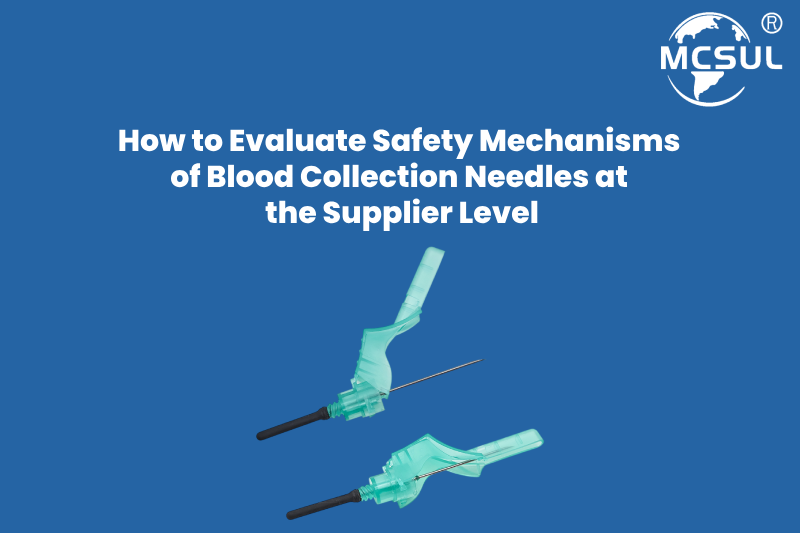
When it comes to blood collection needle safety, your procurement checklist probably stops at price, lead time, and certificates. It rarely checks whether the safety device actually performs consistently, batch after batch, in real clinical hands. That’s the weak point in most supply chains, and it’s usually invisible until an incident report surfaces it.
That gap is expensive. A single needlestick injury can trigger post-exposure prophylaxis costs, staff downtime, incident documentation, and in some jurisdictions, regulatory penalties. Building blood collection needle safety mechanism evaluation into your supplier vetting process, before the first purchase order, not after a complaint, is what separates a resilient procurement function from a reactive one.
This framework walks through what to check, how to test it, and how to weigh cost against risk when sourcing from a new or existing supplier.
Key Takeaways
- Blood collection needle safety mechanism evaluation should happen at the supplier vetting stage, not after an incident report forces the issue.
- Confirm ISO 23908, ISO 13485, and CE/FDA documentation before comparing any product features, this is a pre-screening filter, not a final checkbox.
- Request third-party activation failure rate data. Self-reported supplier numbers alone aren’t sufficient for a bulk purchasing decision.
- Vacuum blood collection needle gauge size standardization matters across batches, not just within a single sample; test at least three separate production lots.
- Hub design ergonomics directly affects safety outcomes; a hard-to-grip hub increases activation error risk even when the mechanism itself works correctly.
- Run a bulk procurement cost analysis using a cost-per-safe-draw model, not unit price alone; factor in incident cost, recall risk, and training overhead.
- Build a weighted supplier scorecard and re-audit on a fixed schedule (annually at minimum) rather than treating initial approval as permanent.
Regulatory Baseline Before You Evaluate Any Supplier
Before you compare safety mechanisms feature-by-feature, confirm the supplier clears the regulatory floor. Skipping this step wastes your evaluation time on products that shouldn’t be in the running at all.
At minimum, ask for:
- ISO 23908 compliance documentation: the standard specifically governing sharps injury protection features
- ISO 13485 certification: confirms the manufacturer operates under a recognized medical device quality management system
- CE marking (EU) or FDA 510(k) clearance (US), depending on your target market
- Batch-level certificates of analysis, not just a general product certificate
If a supplier hesitates to provide any of these upfront, treat it as a disqualifying signal rather than something you chase down later. A supplier confident in their certified safety needle product line will have this documentation ready before you ask twice.
Core Safety Mechanism Types to Evaluate
Not all “safety needles” work the same way, and the mechanism type affects both cost and clinical usability.
Passive mechanisms activate automatically after the draw: no extra step for the phlebotomist, which reduces the chance of a skipped activation under time pressure. Active mechanisms require a deliberate action (sliding a shield, pressing a button), which adds a training dependency but can lower unit cost.
Within these categories, you’ll want to look at:
- Retractable needle systems, where the needle withdraws into the housing
- Shielding or sheathing designs that cover the point post-draw
- Audible or tactile “click” confirmation that the mechanism has engaged
- One-handed activation, which overlaps ergonomics with safety: a design that requires two hands increases exposure risk during the activation window
Products like blood collection needle with safety device and the blood collection needle with safety device V-type illustrate two different activation geometries worth comparing side-by-side during trial evaluation. The V-type shield angle changes how the mechanism engages relative to standard straight designs.
Blood Collection Needle Safety Mechanism Evaluation: The Supplier Audit Checklist
This is the core of the framework: the actual checklist you should run against any supplier before committing to volume.
- Request activation reliability data: Request independent lab testing failure rate stats, not just internal QC summaries. A credible supplier will have 3rd party validation reports not just self reported numbers.
- Set a failure rate benchmark.: Industry-acceptable activation failure rates are typically fractions of a percent. Any supplier unable to quote a specific number, or who gives a vague “very low” answer, hasn’t tested rigorously enough to trust at scale.
- Self-reported vs third-party data comparison: If you can find any independent lab results, compare them to the supplier’s internal numbers. Discrepancies are a red flag and should be investigated before a bulk order not after.
- Run your own sample lot testing: Before you sign a volume agreement, order a trial batch and have your clinical staff test activation consistency, not just a lab technician. Real-world handling surfaces issues spec sheets miss.
- Audit the supplier facility (in-person or virtual): Ensure that the production line has checks for the safety mechanism assembly in process (not just checking the final product).
For a broader reference on structuring this kind of vendor assessment, MCSUL custom medical needle supplier evaluation guide covers criteria that extend beyond blood collection needles specifically.
Vacuum Blood Collection Needle Gauge Size Standardization
Gauge inconsistency across batches is one of the most common quality failures in bulk procurement. It’s also one of the most overlooked. It doesn’t show up in a spec sheet comparison. It shows up when nursing staff report inconsistent draw speed or higher hemolysis rates from the same “21G” order.
Why standardization matters for your procurement process:
- Hospital-wide protocols are often built around specific gauge-to-application mapping (e.g., 21G for standard adult draws, 23G for pediatric or fragile veins)
- Inconsistent gauge tolerance across batches forces staff to adjust technique mid-shift, increasing both draw time and complication risk
- ISO color-coding conventions (the visual gauge identification system) should match exactly across every shipment: a supplier that varies color-coding is signaling inconsistent production control
When you evaluate a new supplier, request gauge tolerance specifications in writing and, where possible, measure a sample from at least three separate production batches, not one. A single sample tells you almost nothing about consistency at scale.
Explore the specification range across MCSUL vacuum urine tube and general specimen collection category for how gauge and format variants are typically documented for procurement comparison.
Blood Collection Needle Hub Design Ergonomics
Hub design gets treated as a secondary concern behind the needle point itself, but it has a direct and measurable effect on safety outcomes. A poorly designed hub increases the odds of activation error, which is functionally a safety failure even if the mechanism itself works correctly.
What you should evaluate:
- Grip texture and shape: does the hub allow a secure, single-handed grip during activation, especially with gloved hands?
- Hub-to-holder compatibility: does it seat correctly across the multi-draw holder systems already in use at your facility, or does it require a proprietary holder that locks you into a single supplier?
- User trial feedback: has the manufacturer collected phlebotomist feedback during design, or is the ergonomics claim purely internal engineering opinion?
This is one area where comparing product lines genuinely pays off. MCSUL’s blood collection needle pen type uses a notably different hub geometry than the wing-type blood collecting needle (single wing/double wing). The pen-type favors single-hand control for high-volume draw stations, while winged designs prioritize stability during longer or more difficult draws, such as pediatric or geriatric patients.
Also check compatibility with your existing needle holder – blood collection needle assembly before switching suppliers. A hub redesign that doesn’t seat properly in your current holder stock creates an unbudgeted secondary procurement problem.
Blood Collection Needle Bulk Procurement Cost Analysis
Unit price is the easiest number for you to compare and the most misleading one to optimize for in isolation. A true cost analysis has to account for what happens after the invoice.
Build a cost-per-safe-draw model, not a cost-per-unit model. Factor in:
- Base unit price at your target order volume
- Estimated activation failure rate × average cost of a needlestick incident (PEP treatment, reporting time, staff downtime)
- Recall or batch-rejection risk based on the supplier’s QC track record
- Training cost if switching to a mechanism type unfamiliar to your staff
Volume discounts vs. quality tiers. Suppliers will often give big discounts on higher MOQs but make sure the discount isn’t tied to a lower-spec safety mechanism tier. Ask explicitly whether the bulk-priced SKU is identical to the sample you tested, not a cost-reduced variant.
Treat unusually low pricing as a diagnostic question, not a win. If a quote comes in significantly below the market range for a comparable safety mechanism and certification level, the gap is coming from somewhere: usually thinner QC sampling, lower-grade raw materials, or an untested mechanism design.
For a side-by-side look at how vacuum system components are typically priced and specified across order volumes, see MCSUL vacuum blood collection system supplier guide.
Building a Supplier Scorecard
Once you’ve gathered evaluation data across the categories above, weight it into a single comparable score rather than relying on a judgment call from memory. Here’s a simple structure to start from:
| Criteria | Weight |
| Safety mechanism reliability (failure rate + third-party validation) | 35% |
| Regulatory compliance documentation | 20% |
| Gauge consistency across batches | 15% |
| Hub ergonomics / clinical feedback | 15% |
| Cost-per-safe-draw | 15% |
Re-score suppliers on a fixed cadence (annually at minimum, biannually for high-volume contracts) rather than treating initial approval as permanent. Manufacturing lines change, staff turnover happens on the supplier side too, and a supplier that scored well two years ago isn’t guaranteed to score well today.
Common Procurement Mistakes to Avoid
- Relying on price or brand reputation alone. Reputation reflects past performance, not current batch quality.
- Skipping lot-level testing after initial approval. The sample that won the contract isn’t the same as every shipment that follows: spot-check ongoing batches.
- Ignoring end-user feedback. Your phlebotomists and nursing staff notice ergonomic and reliability issues long before they show up in a formal incident report. Build a feedback loop into your supplier review process, not just a paperwork audit.
- Treating certification as a one-time gate. ISO and CE certifications can lapse or change scope, so confirm certificate validity dates as part of every annual re-score, not just at initial onboarding.
- Evaluating the needle in isolation from the holder. Safety performance is a system property. A well-designed needle paired with a mismatched or worn holder can still produce activation issues: evaluate the assembly, not just the needle component.
Who Should Own This Evaluation Internally
Safety mechanism evaluation often falls into a gap between procurement, clinical quality, and infection control. Each team assumes another one is covering it. The most reliable structure assigns a named owner, typically clinical quality or materials management. That owner maintains your supplier scorecard, schedules re-audits, and routes end-user feedback into the evaluation cycle. Your procurement team can still lead price negotiation. But sign-off on any new safety mechanism should require clinical quality approval. That approval needs to happen before a purchase order is issued, not after the first shipment arrives on your floor.
Conclusion
Evaluating blood collection needle safety mechanisms at the supplier level isn’t a one-time checklist for you to complete and forget. It’s an ongoing compliance function that sits at the intersection of clinical safety, regulatory obligation, and procurement economics. Score, re-test, and re-audit your suppliers on a fixed schedule, and build your cost analysis around risk-adjusted outcomes rather than unit price alone.
If you’re ready to move from evaluation to sourcing, browse MCSUL full product catalog and visible flashback safety design lines, both built with ISO 23908-aligned safety mechanisms and full batch documentation available on request.