 +86-791-8686-1216



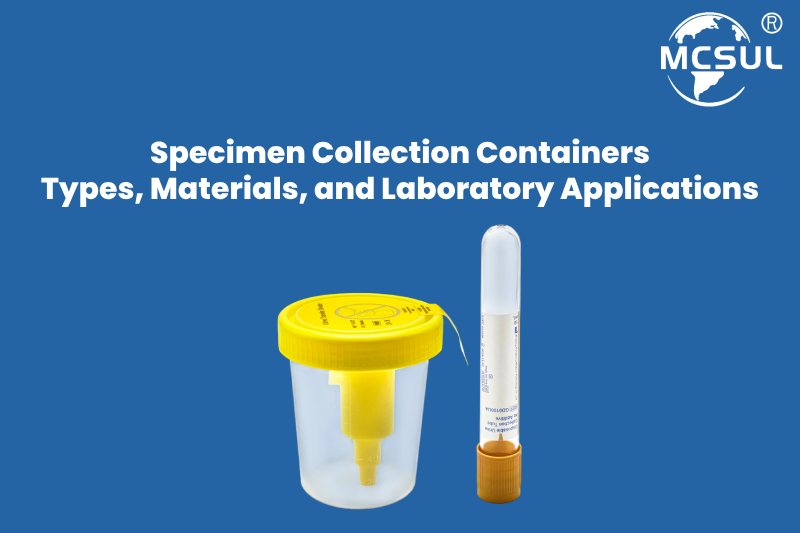
A lab can have the best equipment and the best staff and still get a bad result. It often starts before the sample ever arrives. A cracked lid, a wrong material, or a non-sterile cup can spoil a sample in a few hours.That’s why specimen collection containers matter more than most people think. They hold the sample, protect it, and keep it safe on the way to the lab.
This guide compares the main types, materials, and features. If you manage a lab, buy supplies, or work with patients, it will help you pick the right container the first time. You can also browse the full range of specimen collection products as you read.
What Are Specimen Collection Containers, and Why Does Your Choice Matter?
Specimen collection containers are sealed, labeled containers used to collect, store, and transport samples such as urine, stool, sputum, tissue, and blood. Each type is designed for a certain sample and a certain test.
The container is part of the test
Labs call everything that happens before testing the “pre-analytical stage.” Most testing errors start here, and the container is a big part of it.
A poor choice can lead to:
- Contamination. A non-sterile cup can add bacteria to a urine culture.
- Leaks. A loose lid can ruin the sample and put your team at risk.
- Sample rejection. Labs often turn away samples in the wrong container.
- Wrong results. Some plastics react with preservatives or change what the sample contains.
Standards to look for
Look for suppliers that follow ISO 13485 for medical device quality. Depending on where you work, you may also need CE marking or FDA registration. Many labs also follow guidance from CLSI. Ask for the paperwork. A good supplier will share their quality certificates and compliance documents without a fight.
Types of Specimen Collection Containers Compared
Different samples need different containers. Here’s how the main ones differ.
Urine Specimen Collection Containers
A urine specimen container is the one you’ll see most often. Most are wide-mouth cups with a screw-on lid, and you can get them sterile or non-sterile.
Here’s what to know:
- Standard cups usually hold about 60 to 120 mL. That’s plenty for routine urinalysis.
- 24-hour collection containers are much bigger, often around 3 liters, for tests that need all the urine over a full day.
- Midstream kits come with a sterile cup and wipes, so the patient can give a clean sample.
- Transfer-style cups let staff move urine into a tube without opening the cup. A vacuum urine container works with a transfer device, so the sample goes straight into the tube. This cuts down on spills and handling in busy labs.
- Screw caps seal tighter than snap caps. Snap caps are quicker to use but can pop off if they get bumped.
A wide mouth makes a big difference. Patients find it easier to use, and spills go down.
Stool Specimen Containers
Stool containers usually have a small spoon or scoop attached to the lid. This keeps the process cleaner and gives you the right amount of sample.
Some come empty. Others hold a liquid preservative. Pick based on the test. A culture needs a different setup than a test for parasites, so check with your lab first.
Sputum and Respiratory Specimen Containers
Sputum samples are thick and can carry germs that spread through the air, so these containers must be strong and tight. Look for a wide mouth, a leak-proof lid, and a sturdy body. Many have a conical (cone-shaped) bottom, which helps in TB and culture testing.
Histology and Pathology (Formalin) Containers
A histology formalin container holds tissue samples in a liquid called 10% neutral buffered formalin. The liquid keeps the tissue from breaking down before the pathologist looks at it.
You can buy these two ways:
- Pre-filled. Ready to use, with the formalin already measured. They save time and cut down on spills and handling.
- Empty. You add the formalin yourself. Good if you want control over the amount, but you’ll need safe handling steps.
A common rule is to use much more formalin than tissue. Many labs use about ten times the tissue volume. The material matters too, because formalin can damage the wrong plastic.
Blood Collection Tubes
Blood collection tubes are a topic of their own, but here’s the short version. They come with different additives inside, and each one fits a different test:
- EDTA for blood counts
- Citrate for clotting tests
- Heparin for some chemistry tests
- Serum separator tubes for many routine blood panels
The additive is color-coded on the cap, so it’s easy to match the tube to the test. Mixing them up is a common mistake, so double-check before you draw. For small or hard-to-draw patients, such as infants, micro blood collection tubes let you work with a much smaller sample.
Swab Transport Tubes and Multipurpose Containers
Swab tubes keep throat, nose, wound, and other swab samples alive and stable on the way to the lab. They’re widely used in microbiology and molecular testing, including PCR. Multipurpose containers work for a range of samples when you need something flexible.
Specimen Container Materials: Which One Fits Your Lab?
The plastic your container is made from affects how well it holds up. Here’s a simple look at polypropylene vs polystyrene containers, plus a few other options.
Polypropylene (PP)
PP is tough and handles many chemicals well. It can usually go through an autoclave, and it doesn’t crack easily.
- Good for: sputum containers, formalin containers, and anything that may be heated or stored cold
- Downside: it’s a little cloudy, so you can’t see the sample as clearly
Polystyrene (PS)
PS is clear, light, and cheap. It’s easy to see the sample inside, which is handy for urine.
- Good for: routine urine cups and other short-term uses
- Downside: it’s more brittle and doesn’t resist some chemicals well
HDPE and LDPE
These plastics are flexible and resist many chemicals. They’re common in bottles and larger containers, like 24-hour urine jugs.
- Good for: large containers and liquids that need a bit of give
- Downside: not clear, and not as stiff as PP
Glass
Glass doesn’t react with most samples, and it can be reused after cleaning. But it breaks, it’s heavier, and it costs more. Most labs now choose plastic for everyday collection.
Side-by-Side Comparison Table
Here’s a quick view of how the main container types stack up. Details like size and price will vary by supplier.
| Feature | Urine Cup | Stool Container | Sputum Container | Formalin Container | Blood Tube |
|---|---|---|---|---|---|
| Usual material | PP or PS | PP or PS | PP | PP or HDPE | PET or glass |
| Sterile option | Yes | Yes | Yes | Not usually needed | Yes |
| Lid type | Screw or snap | Screw (often with spoon) | Screw | Leak-proof screw | Stopper or cap |
| Preservative | Optional | Optional | None | Formalin | Additives |
| Best use | Urinalysis, urine culture | Stool culture, parasite tests | TB and respiratory culture | Tissue and biopsy samples | Blood counts, chemistry, clotting |
How to Choose a Specimen Container: Features to Compare
If you’re wondering how to choose a specimen container, start with the sample, then go through this list.
Sterility
Sterile containers are cleaned with gamma radiation or ethylene oxide (EO) gas. Non-sterile ones are not. We’ll cover the difference in the FAQ below.
Closure and Leak-Proofing
Leaks cost you samples and create safety problems. Look for leak-proof specimen containers for transport. Screw caps with a gasket or liner give you the best seal. If samples travel by courier or air, test the seal before you order a large batch.
If your team handles a lot of urine samples, ask whether the cup lets you transfer urine into vacuum tubes without removing the lid. Fewer open containers means fewer spills and less contact with the sample.
Capacity and Markings
Clear volume lines help staff and patients fill the container to the right level. Make sure the size fits the test. Too small and you risk short samples. Too big and you waste money.
Labeling and Barcodes
A good label area saves headaches. Check that the surface takes a printed label or barcode and that the label sticks. Some labs want a label on the body of the container, not just the lid, since lids can get swapped.
Temperature and Transport Stability
Will the container sit in a fridge, ride in a cooler, or travel a long way? Make sure the plastic won’t crack in the cold or warp in the heat.
Safety Features
Tamper-evident seals show whether anyone opened the container. They’re useful for drug testing and legal cases.
Packaging
Individually wrapped containers stay clean until use. Bulk packs cost less per piece. If sterility matters, wrapped is the safer pick.
Choosing the Right Container by Laboratory Application
The best specimen container for lab use depends on what your lab does. Here’s a quick guide.
Clinical Chemistry and Urinalysis
You’ll mostly use standard urine cups. Clear PS cups work well for a quick visual check. For timed collections, use large 24-hour containers, and ask whether the test needs a preservative.
For high-volume urinalysis, a closed-system urine transfer setup can save time. Staff fill the cup once, then move the sample into a tube in one step.
Microbiology and Culture
Here, a sterile specimen cup is a must. Any germs in the container can show up in the culture and give a false result. Choose sterile, sealed packaging and tight lids.
Histopathology
Use a histology formalin container made from a material that resists formalin. A leak-proof lid is important, since formalin fumes are harsh and spills are a health risk.
Molecular Diagnostics and PCR
PCR is very sensitive. Even tiny traces of outside DNA can throw it off. Look for containers made without contaminants and, where needed, labeled free of DNase and RNase.
Toxicology and Drug Testing
These tests often need chain of custody. That means tamper-evident seals, tracking labels, and a clear record of who handled the sample.
Veterinary and Research Labs
Needs vary a lot here. You may want a wider range of sizes and some flexibility, so multipurpose containers and bulk packs often make sense. If you work in animal health, you can also look at veterinary medical devices for related supplies.
Common Mistakes to Avoid When Picking Specimen Containers
These are easy to make, and they cost time and money.
Using a Non-Sterile Container for a Culture
This is the most common mistake. If you’re growing the sample, the container has to be sterile. Mixing up sterile and non-sterile boxes happens more than you’d think, so store them apart and label the shelves.
Choosing a Material That Doesn’t Match the Preservative
Not every plastic can hold every liquid. Check that your container works with formalin or whatever else you add.
Ignoring the Lid
A container might look fine and still leak in a bumpy van. Always check the closure, especially for long trips.
Skipping Labels and Tracking
An unlabeled sample is a lost sample. Pick containers with a good label area, and train your team to label before the sample goes in.
Why Choose MCSUL Specimen Collection Containers?
MCSUL specimen collection containers provide safety, reliability and ease-of-use for your daily laboratory work. Each container is intended for urine, blood and other routine specimens and has leak-resistant closures for safe handling, clear design for easy viewing of specimens, and durable medical-grade materials for reliable performance.
They are sterile, non-pyrogenic and latex free. ISO 13485 and CE marked. MCSUL is a trusted choice for hospitals, labs, distributors and brand owners with OEM and ODM support and over 35 years of experience in medical puncture devices.
Buyer’s Checklist for Procurement Teams
If you buy supplies, use this list when you compare suppliers.
- Certifications. Ask for ISO 13485, CE, or FDA documents, and quality control reports.
- Reliability. Check the minimum order quantity (MOQ), lead times, and what happens if a batch arrives late or damaged. Suppliers with a clear sourcing and supply chain service usually make this easier to plan.
- Custom options. Ask about OEM and ODM services if you want your own brand, label, or color. If you’re not sure which model fits, this guide on OEM vs ODM manufacturing can help.
- Real cost. Don’t judge by the price per unit alone. A cheap container that leaks or gets samples rejected costs you more in the end.
- Samples. Ask for a few to test with your own workflow before you place a big order.
Final Thoughts
The right specimen collection container protects your sample, your team, and your results. Start with the sample type, match it to the right material and closure, and check sterility and labeling before you buy. A little care at this step saves a lot of repeat work later.
If you’d like to see how a transfer-style cup fits your workflow, you can ask for a sample to test before placing a larger order. For custom or bulk needs, you can contact our team and we’ll help you find the right fit.
Frequently Asked Questions
What is the difference between sterile and non-sterile specimen containers?
Sterile containers are treated to remove all living germs, usually with gamma radiation or EO gas, and sealed until use. Non-sterile ones are clean but not germ-free. Use sterile for cultures. Non-sterile is fine for tests like routine chemistry, where germs won’t change the result.
Which material is best for specimen collection containers?
It depends on the use. Polypropylene is tough and resists chemicals, so it suits sputum and formalin. Polystyrene is clear and low cost, so it suits routine urine cups. HDPE works well for large containers. Check your test needs before you choose.
Can specimen containers be reused?
Most plastic specimen containers are made for single use and shouldn’t be reused. Cleaning can leave residue, and the seal may wear down. Reusing them raises the risk of contamination and wrong results. Glass can be reused if cleaned and sterilized the right way.
How much urine is needed in a specimen cup?
For routine urinalysis, many labs ask for about 30 to 60 mL, but it varies. Some tests need less, and timed collections need more. Always follow your lab’s instructions, since too little sample can lead to a rejected test.
Why are formalin containers different from standard cups?
Formalin is a harsh chemical that can damage some plastics and gives off strong fumes. Formalin containers use resistant materials like PP or HDPE and have tight, leak-proof lids. Many are pre-filled, which cuts down on spills and handling.
How should specimen containers be stored and transported?
Store unused containers in a cool, dry place, away from sunlight, and keep sterile ones sealed. Once filled, close the lid tightly, label the container, and follow your lab’s temperature rules. Use a sealed bag or box for transport to catch any leaks.