 +86-791-8686-1216


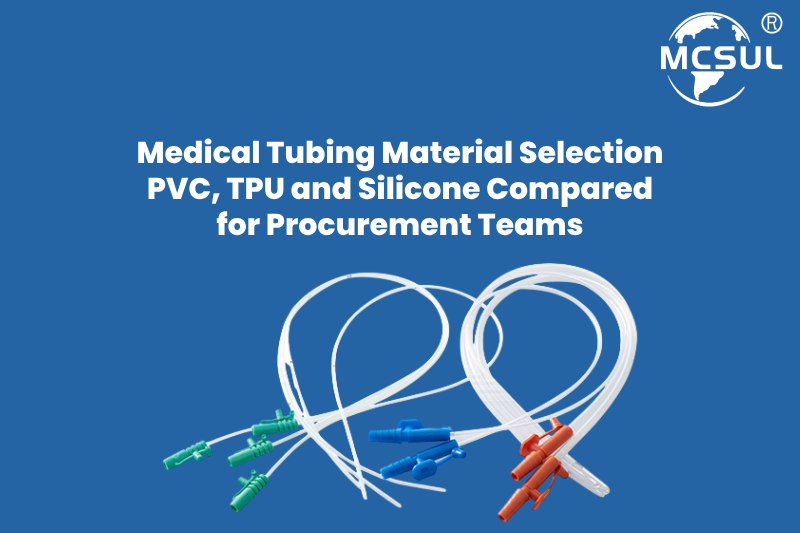
Medical tubing material selection may look simple on a purchase order, but the details matter. A tube that kinks, clouds, or reacts with a drug can cause problems for clinicians, patients, and your brand.
So how do you decide? This guide explains medical tubing material selection in simple language. Whether you are starting your first medical tubing selection or reviewing a current supplier, you will learn how PVC, TPU, and silicone differ, what to check before you buy, and how to talk to a supplier with confidence.
What Does Medical Tubing Material Selection Actually Mean?
Medical tubing material selection means matching a tube’s material to its job. The job includes what flows through the tube, how long it touches the body, and how it will be sterilized.
There is no single “best” material. Instead, the right choice depends on your application. For example, a short-term infusion line has different needs than a long-term feeding tube.
Tubing is used in many devices, such as infusion sets, extension lines, drainage systems, and connectors. If you want to see what is available, you can browse our medical tubing collection. If your tubing is part of an infusion set, see how injection site design and flow control affect infusion set performance.
Tip: Start with the application, not the price. A cheaper material that fails in use costs far more in the end.
What Should Procurement Teams Decide First for Medical Tubing Material Selection?
Before you begin medical tubing selection, answer these five questions:
- What flows through the tube? Drugs, fluids, blood, or nutrition?
- How long is the contact? Short-term, prolonged, or long-term?
- How will it be sterilized? Ethylene oxide (EO), gamma radiation, or steam?
- Which market will it be sold in? Rules differ by country.
- What is your target cost? Consider total cost, not only unit price.
Once you have these answers, the comparison becomes much easier.
Medical Tubing Material Selection : PVC vs TPU vs Silicone: A Quick Comparison
Here is a simple overview. These are general characteristics. Actual results depend on the grade and the manufacturer.
| Factor | PVC | TPU | Silicone |
| Flexibility | Good, adjustable with plasticizers | Good, firm but elastic | Very soft and flexible |
| Kink resistance | Good | Very good | Good |
| Clarity | Very clear | Clear | Clear to translucent |
| Typical cost | Lower | Medium to higher | Higher |
| Common sterilization | EO, gamma | EO, gamma | EO, gamma, steam |
| Typical use | Infusion and extension lines | Catheters and high-performance tubing | Long-term and pump tubing |
Note: Always confirm a material’s performance with test data from the manufacturer. A table like this is a starting point, not a final answer.
What Is PVC Medical Tubing?
PVC (polyvinyl chloride) is one of the most widely used materials in medical devices. It is also one of the most familiar.
Strengths
- It is clear, so users can see the fluid.
- It is flexible and easy to process.
- It usually costs less than TPU or silicone.
- It works with EO and gamma sterilization.
Considerations
- Some PVC tubing uses plasticizers to stay soft. Certain plasticizers are restricted in some markets, so many buyers choose alternatives.
- Some drugs may interact with PVC, so compatibility should be checked.
- Gamma sterilization can change the color of some grades.
Because of these points, buyers should discuss the plasticizer type and the intended drug with the supplier.
What Is TPU Medical Tubing?
TPU (thermoplastic polyurethane) is a tough and elastic material. It is common in catheters and other tubing that must resist wear.
Strengths
- It resists kinking and abrasion well.
- It is strong, even in thin walls.
- It has good clarity and a smooth surface.
Considerations
- It usually costs more than PVC.
- Different grades behave differently, so grade selection is important.
- It needs well-controlled processing and storage.
For this reason, TPU often suits products where performance matters more than the lowest price.
What Is Silicone Medical Tubing?
Silicone is known for being soft, stable, and gentle. Therefore, it is often chosen for long-term contact and pump tubing.
Strengths
- It is very soft and flexible.
- It handles a wide range of temperatures, including steam sterilization.
- It has a long history in applications with extended contact.
Considerations
- It costs more than PVC.
- It can be less tear-resistant than TPU.
- Production can take longer because of the curing process.
In short, silicone is a strong option when long-term use or repeated sterilization is part of the plan.
What Should You Check in Medical Tubing Material Selection?
Material choice is only one part of the decision. The next steps cover the details that protect your project.
Material Specifications and Dimensions
Write down your exact requirements:
- Inner diameter (ID) Outer diameter (OD)
- Thickness of walls and tolerances
- Hardness of water
- Color and transparency
- Tubing length and cut
Pro tip: Put every requirement in one document. Then send the same document to each supplier, so the quotes are easy to compare.
Biocompatibility and Regulatory Documentation
Tubing that touches the body or a drug path needs proof of safety. Manufacturers often follow ISO 10993-1, the standard for the biological evaluation of medical devices.
Ask the supplier for documents such as:
- Biocompatibility test reports
- Material declarations and certificates
- Quality management system certificates
- Sterilization compatibility data
To see which documents we can supply, review our quality management certificates and regulatory compliance information. Requirements vary by market, so please confirm the exact rules with your regulatory advisor.
Sterilization Compatibility
Not every material handles every method. For example, some grades change color after gamma, and some cannot handle steam. Therefore, tell the supplier your sterilization method early.
Quality and Batch Consistency
Quality is not about one good sample. It is about receiving the same result in every batch. Ask how the manufacturer controls raw materials, extrusion, and final inspection. In addition, ask how batches are traced.
MOQ, Pricing, and Total Cost
The unit price is only part of the cost. Consider these as well:
- Minimum order quantity (MOQ)
- Volume pricing
- Packaging and labeling
- Tooling or customization fees
- Shipping and lead time
- Costs for repeat orders
How Do You Evaluate a Medical Tubing Manufacturer or Supplier?
A good medical tubing manufacturer supports you beyond one order. A good supplier also supports your medical tubing material selection with test data, samples, and clear answers. Look at these areas:
- Manufacturing capability: Does the company extrude and process in-house?
- Quality system: Are inspection, training, and corrective actions documented?
- Capacity and lead time: Can it support both first and repeat orders?
- Medical device experience: Has it served similar products and markets?
- Technical support: Does it answer questions quickly and clearly?
If you need help comparing materials, you can ask our team for technical guidance or learn how we support medical device sourcing.
When Should You Consider Custom Medical Tubing?
Standard tubing will do the job for the most part. Custom medical tubing may be a better choice, though, if you need a particular size, color, durometer or multi-layer design. Custom options can make it easier to choose medical tubing materials if standard sizes or grades will not work with your device. If you are not sure whether standard tubing will fit, you can first review our ready-to-supply tubing options and then decide what to customize.
OEM and ODM services also work well here. In OEM, the manufacturer builds to your drawings. In ODM, the supplier helps develop or adapt a design. Learn how our OEM and ODM manufacturing services support custom medical device projects.
Before a custom project starts, discuss these points:
- Drawings and specifications
- Material grade and test requirements
- Packaging and labeling
- Sampling and validation
- Production quantities and delivery dates
Medical Tubing Procurement Checklist for Medical Tubing Material Selection
| Procurement Factor | What to Check |
| Material | PVC, TPU, or silicone, and the exact grade |
| Dimensions | ID, OD, wall thickness, and tolerances |
| Biocompatibility | Test reports and material documents |
| Sterilization | EO, gamma, or steam compatibility |
| Quality | Inspection and batch traceability |
| MOQ and pricing | Unit price and extra costs |
| Lead time | Sample and mass-production timelines |
| Customization | OEM/ODM options |
How Do You Request a Quote for Medical Tubing?
A clear request gets a clear answer. Include the following in your RFQ:
- Material and grade, if known
- Dimensions and tolerances
- Expected quantity and yearly demand
- Packaging and labeling needs
- Delivery location and timeline
- Any OEM/ODM or testing requirements
When your specifications are ready, send your tubing requirements to our team for a quote.
Key Takeaways
- Pick the material and start with the application.
- PVC is cheap, TPU is tough, and silicone is soft and heat resistant.
- Early check biocompatibility, sterilization compatibility and rules of the market.
- Compare MOQ, packaging, shipping and lead time beyond unit price.
- Have a single, concise spec sheet that is used for all supplier quotes.
- Choose a supplier based on quality, capacity, documentation, and support.
Final Thoughts
“It’s all about safety, consistency and trust when choosing tubing. Knowing what to look for makes choosing a material for medical tubing much easier and less stressful.
MCSUL is a medical device manufacturer and supplier that provides standard and custom solutions, including OEM/ODM manufacturing, to satisfy a wide range of specifications and procurement demands. Got questions about materials or your next project? We are here to help.
Frequently Asked Questions
How do I start medical tubing selection?
Start with the application. Define what flows through the tube, how long it touches the body, and how it will be sterilized. Then compare PVC, TPU, and silicone against those needs, and ask suppliers for test data and documents.
Which medical tubing material is best?
It depends on your application. PVC suits many general infusion needs, TPU works well when you need kink resistance and toughness, and silicone is a strong choice for long-term contact or pump use. Start with how you will use the tube, then compare materials.
Is PVC medical tubing safe?
PVC is widely used in medical devices. However, you should check the plasticizer type, drug compatibility, and the rules in your target market before you buy.
What is the difference between TPU and silicone tubing?
TPU is firmer and more resistant to abrasion. Silicone is softer and handles heat better, but it usually costs more. Choose based on how the tube will be used and sterilized.
Can I order custom medical tubing from you?
Yes. We offer custom sizes, colors, and hardness levels through OEM and ODM services. Share your drawings and requirements, and our team will guide you through the next steps.
What documents can you provide for my market?
We can share quality management certificates and compliance information. Please confirm your market’s exact requirements with your regulatory advisor first.
What information do I need for a tubing quote?
Share the material and grade (if known), inner and outer diameter, wall thickness, length, quantity, packaging needs, and delivery location. The more detail you give, the faster and more accurate your quote will be.