 +86-791-8686-1216


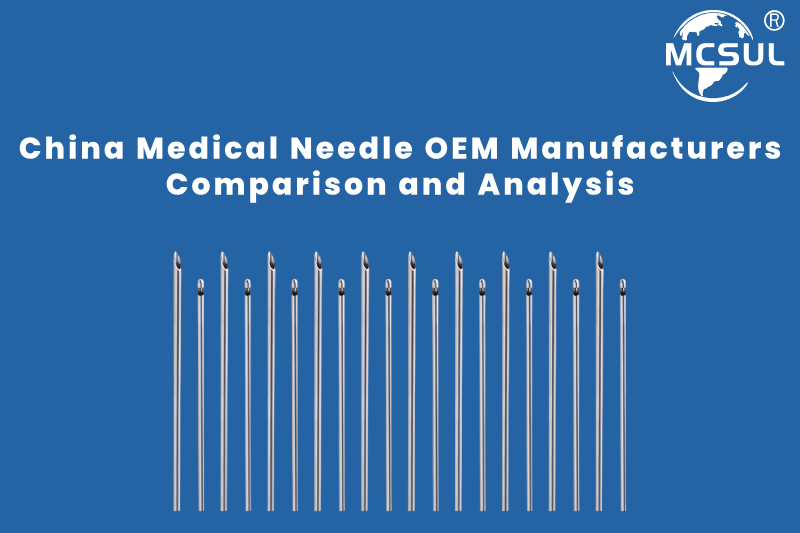
As the demand for healthcare products rises globally, China has established itself as one of the world’s leading bases for manufacturing medical consumables. Medical needles are one of the most demanded products, including hypodermic needles, biopsy needles, spinal needles, blood collection needles, and other precision puncture devices. Hospitals, pharmaceutical companies and medical device brands and distributors are increasingly turning to Chinese Medical needle OEM Manufacturer for high quality, cost-effective products that meet international regulatory standards.
However, selecting the right OEM partner is about more than simply getting the best price. Today’s buyers consider suppliers’ manufacturing capabilities, quality management systems, regulatory compliance, engineering expertise, customization options, production capacity and long-term reliability.
The choice of supplier can have a major impact on product quality, regulatory approval and customer satisfaction when launching a private-label medical device to market, expanding your product line, or seeking a reliable manufacturing partner.
This 2026 comprehensive comparison covers the best China medical needle OEM manufacturers, gives the buyer the most important factors to consider, and offers a practical approach to selecting the right manufacturing partner for your business.
Why China Leads the Medical Needle OEM Industry
China has long since left the days of being a low-cost manufacturing paradise. Today, many Chinese device manufacturers have highly automated production facilities, invest heavily in research and development and follow internationally recognized quality standards.
China is the leader in the medical needle industry for several reasons:
Advanced Manufacturing Infrastructure
Today’s manufacturing processes include CNC machining, precision grinding, laser welding, automated assembly lines, and cleanroom manufacturing to provide consistent product quality.
With these investments, manufacturers are able to produce millions of medical needles per month, while adhering to stringent demands for dimensional accuracy and sterility.
Cost of Manufacturing Competitiveness
Lower production costs allow international buyers to compete without sacrificing quality.
OEM partnerships also deliver savings on:
- Initial capital investment
- Equipment costs
- Manufacturing overhead
- Workforce expenses
- Production risks
Strong Export Experience
Leading Chinese manufacturers export products worldwide: North America, Europe, Southeast Asia, Middle East and Latin America.
They have international regulation expertise that enables them to launch products globally.
Constant Innovation
Many manufacturers now offer engineering support for:
- Custom needle dimensions and gauge selection
- Specialized bevel and tip designs
- Surface treatments
- Safety needle technologies
- New product development
Innovation has become a competitive advantage instead of an optional service.
What Is a Medical Needle OEM Manufacturer?
OEM (Original Equipment Manufacturer) – A medical needle manufacturer that makes a product to the specifications of another company and sells it under that company’s name, often through an OEM/ODM partnership.
OEM services usually cover:
- Product design optimization
- Prototype development
- Precision manufacturing
- Sterilization
- Private labeling
- Packaging customization
- Regulatory documentation
- Global logistics support
For many medical device companies, OEM manufacturing offers a faster path to market, and avoids the large capital investment required to build out-house manufacturing facilities.
Key Factors to Evaluate When Choosing a China Medical Needle OEM Manufacturer
Not all manufacturers are created equal as to quality, flexibility and technical expertise. There are several important considerations for buyers when choosing an OEM partner.
Quality Certifications
International certifications, viewable on a supplier’s certificates, are an indication that a manufacturer is complying with recognized quality management systems and regulatory requirements.
Select suppliers that have certifications such as:
- ISO 13485
- CE marking
- FDA registration or compliance
- GMP compliance
- Relevant national regulatory approvals
These certifications are useful for regulatory submissions and provide you with confidence in the quality of the product.
Manufacturing Capabilities
A good OEM would have in-house capabilities for the entire manufacturing process and not outsource core manufacturing steps.
Core features are:
- Needle tube manufacturing
- Precision grinding
- Cannula processing
- Injection molding
- Automated assembly
- Sterilization
- Cleanroom packaging
- Quality testing laboratories
Vertical integration typically results in higher quality control and shorter production lead times.
Product Customization
Each medical application has its own requirements.
Supported by leading OEM manufacturers for:
- Needle gauge
- Needle length
- Tip geometry
- Bevel angle
- Surface coating
- Hub materials
- Color coding
- Packaging design
- Branding
Buyers can customize to differentiate their products and to address specific clinical needs.
Research and Development
Innovation is becoming more and more important in the manufacturing of medical devices.
If you have internal R&D teams, manufacturers can support with:
- Prototype development
- Product optimization
- Performance testing
- Material selection
- Cost reduction
- Regulatory documentation
Strong engineering support can often shorten development time frames.
Production Capability
The ability to manufacture at scale is becoming increasingly important for pharmaceutical companies, healthcare brands and distributors serving multiple markets.
Questions buyers should be asking:
- Monthly production volume
- Expansion capability
- Lead times
- Inventory management
- Emergency production capacity
Better planning of production could help avoid a breakdown in the supply chain.
Quality Assurance
Quality control should be applied at every stage of the manufacturing process, guided by a documented compliance program, not just at the end.
Full quality systems usually contain:
- Incoming material inspection
- In-process quality monitoring
- Automated visual inspection
- Dimensional testing
- Tensile testing
- Sterility validation
- Packaging integrity testing
- Batch traceability
These procedures are designed to guarantee product performance consistency and regulatory compliance.
Questions Every Buyer Should Ask Before Selecting a Medical Needle OEM Manufacturer
Prepare a list of technical and commercial questions before you request quotations. For example:
- What are your current certifications?
- Do you do custom needle designs?
- What are the minimum quantities you can order?
- Do you help with design?
- What is your product quality assurance?
- What sterilization services do you provide?
- Can you provide me regulatory docs?
- What export markets do you serve?
- What is the average production lead time?
- How do you handle supply chain risks?
The quality of the manufacturer’s response often indicates the level of experience they have in supporting international OEM projects.
Certifications an OEM Medical Needle Supplier Should Hold
An OEM medical needle supplier ISO 13485 certified status is just the start. ISO 13485:2016 is the main quality rule for medical device makers. It covers design checks, risk checks, and how they pick their own suppliers.
Beyond ISO 13485, look for these standards by name:
| Standard | What It Covers | Why It Matters |
| ISO 13485:2016 | Quality rules for medical device makers. | Shows the factory runs a real, controlled process. |
| ISO 7864 | Rules for sterile, single-use needles. | Confirms the finished needle is safe to use. |
| ISO 9626 | Rules for steel tubing used in needles. | Confirms the raw tube is medical-grade steel. |
| CE marking | Lets a device sell in Europe. | Needed if you sell into the EU. |
| FDA QMSR | The new U.S. quality rule, based on ISO 13485. | The required floor for devices sold in the U.S. |
Don’t accept a plain business license as a stand-in for these. A license just says the company can legally operate. It says nothing about needle safety.
Ask your supplier for theircertificates. Check that the dates are current. ISO 13485 needs a fresh audit every year to stay valid.
FDA Registration for a China Medical Needle Manufacturer
A China medical needle manufacturer FDA registered status is required by law. This applies before any needle can enter the U.S. Under 21 CFR Part 807, any foreign factory making a device for U.S. sale must register. It must also list its devices with the FDA.
This rule changed in a big way in 2026. On February 2, 2026, a new FDA rule took effect. It’s called the QMSR. It replaced the older rule under 21 CFR Part 820. The QMSR now uses ISO 13485:2016 as its base. U.S. rules and the world standard now match up much better.
Take a common product like a hypodermic needle. That device sits in Class II. It falls under 21 CFR 880.5570. This sets the safety rules the needle itself must meet. It is separate from the factory’s paperwork.
Check two things with any China-based supplier:
- Their factory registration number is active, not still pending.
- Their U.S. agent is listed and easy to reach.
A registration number alone does not prove safety. It just shows the FDA knows the factory exists. Pair it with the ISO checks above.
How Do Leading China Medical Needle OEM Manufacturers Compare?
Several factories in China have built strong names in needle OEM work. Each one has its own core strength.
| Manufacturer | Key Strength | Certifications |
| MCSUL (formerly KDL, Nanchang Kindly Medical Technology Co., Ltd.) | Specimen collection and custom needle work, with wide gauge and hub options | ISO 13485, CE |
| Shanghai Mekon Medical Devices | Deep engineering focus on tip design for spinal and Huber needles | ISO 13485, CE |
| Jiangsu Kanglong | Large-scale hypodermic and safety needle output | ISO 13485, CE, FDA |
| Zhejiang Kangkang Medical Devices | Hypodermic needle lines with FDA-cleared products | ISO 13485, CE, FDA |
MCSUL has narrowed its focus this year. The company now centers on specimen collection products. It also focuses on custom needle solutions. This came after a 2026 name change from KDL. It also came with a new supply partnership with SCM Group. A sharper focus means deeper work on fewer lines. The factory isn’t spread thin across a wide catalog anymore.
Weigh certificates and audit results first. Then compare lead time and order size. Check how flexible the factory is with private-label packaging, too.
Common Mistakes When Selecting a Medical Needle OEM Supplier Manufacturer
Choosing Only Based on Price
Low pricing may be attractive at first but it is the reliability and consistency that is needed in medical products.
A cheaper supplier can create hidden costs by:
- Quality problems
- Production slowdowns
- Regulatory concerns
- Product recalls
- Customer grievances
The best OEM partner is not the lowest quotation, but brings strong value.
Ignoring Quality Audits
What a supplier says on their website and in their sales materials is not always what they can actually produce.
Before buying in bulk, consider:
- Factory inspections
- Sample assessments
- Quality system reviews
- Production process evaluations
Reasonable supplier verification should be embraced by a clear manufacturer.
Choosing a Supplier Without OEM Experience
Standard medical needle manufacturing is different than supporting custom OEM projects.
OEM buyers require suppliers that can manage:
- Design discussion
- Engineering modifications
- Documentation standards
- Customizing the packaging
- Product improvements
International OEM relationships can bring a high level of success to projects.
Final Thoughts
2026 is a year of change for the medical needle manufacturing industry as buyers are seeking quality, customization, regulatory support and long term supplier relationships. China remains one of the strongest destinations for medical needle OEM sourcing because of its manufacturing expertise, advanced production capabilities and global supply chain experience. But only by correctly valuing the supplier will it lead to successful sourcing. Other considerations besides price: companies should consider technical capability, quality systems, support for customization and partnership potential beyond price.
MCSUL (formerly Nanchang Kindly Meditech), a medical needle company, highlights the advantages of precision manufacturing and OEM partnerships in the production of custom-designed medical needles. By selecting a capable manufacturing partner, healthcare companies can accelerate product development, improve supply reliability and build competitive medical device solutions for global markets.
Ready to develop your custom medical needle solution? Partner with an experienced China medical needle OEM manufacturer that understands precision, quality, and international healthcare requirements.