 +86-791-8686-1216


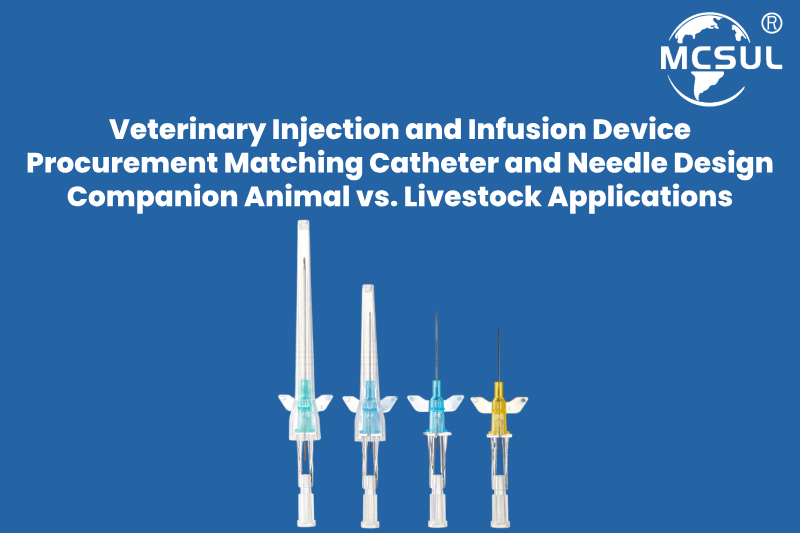
Veterinary infusion device procurement is not one decision. It is several decisions stacked together, because a catheter or needle built for a house cat rarely performs well on a bull. So, catheter hub design and tape-down surfaces for buyers who treat every species the same end up with bent needles, failed catheter placements, and wasted stock. This guide walks through how catheter and needle design should change between companion animal and livestock applications, what documentation to request, and what to check before you place a bulk order.
Getting veterinary infusion device procurement right matters beyond a single purchase order. A mismatched gauge or a hub that bends under field pressure can slow down an entire clinic day or a farm visit, and repeated failures erode trust between a distributor and its customers. So, the goal of this guide is to give buyers a clear, repeatable framework rather than a one-time checklist.
Why Device Selection Differs Between Companion Animals and Livestock
A cat’s vein and a cow’s vein are not the same problem. Companion animals need finer gauges, gentler bevels, and careful securement, because their veins are small and their skin is thin. Livestock, on the other hand, need stronger hubs, longer needles, and more force tolerance, because their hide is thick and handling conditions are rougher. So sound veterinary infusion device procurement starts by separating these two use cases early, instead of buying one generic product line for every patient type. Buyers who skip this step often end up over-specifying for companion animals or under-specifying for livestock, which drives up both cost and failure rates.
Companion Animal vs. Livestock Device Selection: Key Differences
| Procurement Factor | Companion Animals | Livestock |
|---|---|---|
| Patient size | Cats and dogs ranging from small to large breeds | Medium to very large animals depending on species |
| Primary setting | Veterinary clinics and hospitals | Farms, ranches, field services, and veterinary facilities |
| Procedure volume | Often individual-patient focused | Individual and high-volume applications |
| Needle considerations | Precision, gauge, length, and handling | Procedure requirements, durability, gauge, length, and volume |
| Catheter considerations | Patient comfort, size, and secure placement | Access requirements, size, durability, and handling |
| Procurement priority | Broad range of sizes and clinical flexibility | Availability, consistency, efficiency, and appropriate sizing |
| Inventory planning | Multiple sizes for varied patients | Species- and procedure-specific stock |
This comparison is a starting point rather than a universal specification guide for veterinary infusion device procurement. Device selection should always be based on the individual procedure and veterinary requirements.
What Counts as a Veterinary Injection and Infusion Device
Hypodermic Needles
Hypodermic needles deliver a single dose through the skin. Gauge, bevel, and hub material all affect how the needle performs across species. A well-built needle line should span enough gauges to cover everything from small companion animals to full-grown livestock.
IV Catheters
IV catheters stay in place for continuous fluid or medication delivery. Material, flexibility, and hub design determine how well a catheter tolerates movement once placed. Because animals rarely stay perfectly still, catheter design carries more weight here than in most human clinical settings.
Butterfly and Winged Infusion Sets
Winged sets add flexible tubing and a wing grip, which makes short-term blood draws and small-vein access easier to manage by hand. These sets work especially well for nervous or fractious companion animal patients.
Extension Lines and Connectors
Extension lines and connectors link the catheter to the fluid source. So their compatibility with the chosen catheter and needle matters just as much as the primary device, and mismatched connectors are a common cause of leaks during longer infusion sessions.
Companion Animal Infusion Device Procurement Requirements
Vein Size and Catheter Gauge for Cats and Dogs
Cats and small dogs generally need 22G to 24G catheters, while larger dogs may tolerate 18G to 20G. Because vein diameter varies so widely even within companion species, buyers should stock a gauge range rather than a single size.
Short-Term vs. Long-Term IV Access in Clinical Settings
Short procedures often use a simple straight catheter, while longer hospital stays benefit from an easy-slide catheter design, since smoother insertion reduces vein trauma during placement and improves comfort for patients that need extended fluid therapy.
Comfort and Restraint Considerations During Placement
Companion animals are often awake and mobile during placement. So catheter hub design and tape-down surface matter for keeping the line secure without added restraint stress.
Livestock Infusion Device Procurement Requirements
Thicker Hide and Higher Force Tolerance
Livestock hide resists penetration far more than companion animal skin. As a result, needles built for cats or dogs often bend or dull quickly when used on cattle or horses.
Larger Gauge and Longer Needle Requirements
Large animal work typically calls for 14G to 18G needles with longer shaft lengths, because the injection depth and fluid viscosity both increase with animal size. Aluminum hub needles are a common choice here, since their reinforced hub resists bending under the additional force required for livestock work.
Field Conditions and Durability Needs
Farm and field settings rarely offer the controlled conditions of a clinic. So devices used there need higher durability margins than anything built for indoor veterinary use alone.
IV Catheter Design Considerations for Infusion Device Procurement
Catheter Material (PTFE, FEP, PUR) and Flexibility
Catheter material affects flexibility, kink resistance, and how the tip glides through tissue. PTFE and FEP are the most common lines for veterinary use, whereas PUR offers a softer feel that is better for longer dwell times.
Winged vs. Non-Winged Catheter Hubs
Winged hubs provide handlers a secure grip during placement, which helps in both companion animal and livestock settings where the patient may move unexpectedly. A veterinary IV catheter with a winged hub can therefore reduce failed first-attempt placements across species.
Securement and Kink Resistance in Moving Animals
Animals move more than human patients during treatment. So catheter tubing needs kink resistance built in, not added later with extra tape or splinting.
Needle Design Considerations for Infusion Device Procurement
Bevel Design and Penetration Force
A sharper, well-ground bevel lowers penetration force and reduces tissue trauma. This matters even more in livestock work, where a dull needle can cause visible discomfort and handling problems.
Gauge Range Across Species
Because a gauge needs to span from small birds to cattle, a full specification for procuring veterinary infusion devices should list every gauge your patient mix actually requires, instead of defaulting to whatever the supplier stocks most.
Hub Material for Field vs. Clinical Use
Clinical settings can rely on lightweight poly hubs, but field and farm use often benefits from veterinary hypodermic needles built with tougher hub materials that hold up under repeated handling.
Ready to source the right catheters and needles for your species mix?
Request a sample today and test insertion force, hub strength, and gauge accuracy before you commit to volume.
Request a SampleMatching Device Design to the Application
Vaccination and Bulk Injection Programmes
Bulk vaccination work favors simple, cost-effective needles in a narrow gauge range, since speed and volume matter more than precision here.
Fluid Therapy and Continuous Infusion
Continuous fluid therapy needs a catheter built for dwell time, with a secure hub design and kink-resistant tubing. So this application should never share a specification with single-dose injection work.
Blood Draws and Diagnostic Sampling
Diagnostic sampling favors finer gauges and gentle bevels to protect sample quality and reduce the risk of hemolysis, particularly in small companion animal patients.
Sterility, Packaging, and Shelf-Life Requirements in Veterinary Device Procurement
Every device in this category should be sterile and non-pyrogenic, regardless of species. So buyers should confirm sterilization method, packaging integrity, and shelf life in writing, rather than assume every supplier’s baseline matches. Batch traceability also matters, because a single defective lot can affect multiple clinics or farms before anyone notices the problem. Field-use products, in particular, need packaging that holds up to rougher handling and less controlled storage than a clinic setting typically provides.
Bulk Procurement Checklist for Veterinary Infusion Device Procurement
Specification Sheet Essentials
- Species range covered (companion animal, livestock, or both)
- Gauge range needed across that species range
- Catheter material and hub type
- Needle length and bevel design
- Sterility and packaging format
Documentation to Request From the Manufacturer
- Product specification sheet with gauge and length options
- Sterility and non-pyrogenic test documentation
- Material documentation for catheter and needle hardware
- Quality management certification, such as ISO 13485
- Batch and lot traceability records
Sample Evaluation Before Mass Order
Always request samples before committing to volume. Test insertion force, hub strength, and gauge accuracy across both companion animal and livestock configurations if your practice covers both. Then approve a golden sample as your reference for every future order.
How to Evaluate a Manufacturer for Veterinary Infusion Device Procurement
Manufacturing and Quality System Capability
Look for consistent quality across production batches, documented inspection steps, and sterilization capability. Manufacturing consistency matters more here than buyers often expect, since a single flawed batch can reach multiple species lines at once.
OEM/Private-Label and Custom Configuration Support
Many distributors need private-label packaging or a custom gauge lineup for a specific regional market. So confirm whether your manufacturer supports OEM branding and flexible configuration before signing a long-term contract.
Common Mistakes in Veterinary Injection and Infusion Device Procurement
- Using one gauge across all species: This practice ignores real differences in vein size and tissue thickness.
- Choosing hub material by price alone: Reinforced hubs cost more but reduce bending in large animal work.
- Skipping sterility documentation: Always confirm sterile, non-pyrogenic status in writing
- Not testing samples in field conditions: A device that performs well in a clinic can still fail on a farm
- Treating catheters and needles as one purchasing decision: Each device type needs its own specification
Conclusion
Successful veterinary infusion device procurement means treating companion animal and livestock applications as two separate specifications, not one. Companion animals need finer gauges, gentler bevels, and careful securement. Livestock need larger gauges, longer needles, and tougher hubs built for field conditions. So build your specification around the species you actually serve, confirm sterility and quality documentation in writing, and always test a sample before you commit to a bulk order. A little extra time spent on veterinary infusion device procurement upfront saves far more time and stock loss later.