 +86-791-8686-1216


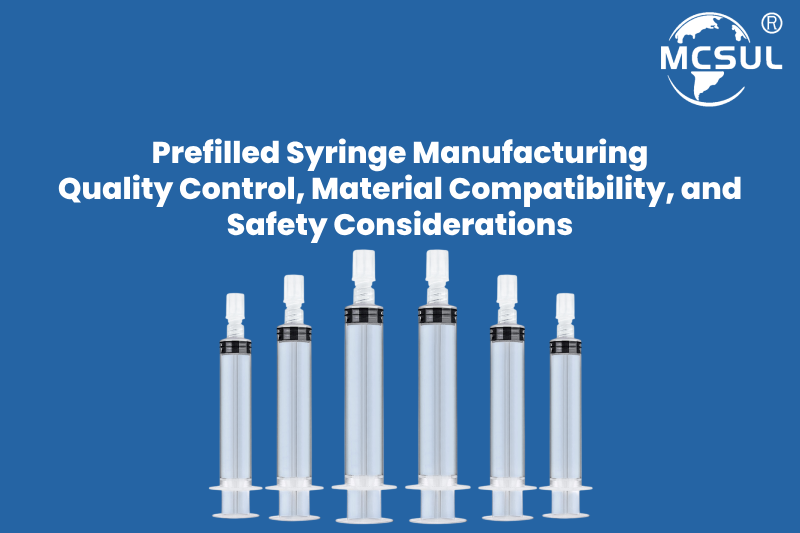
When selecting a prefilled syringe for your medical product, you need more than a vessel to hold a dose. You need a system that protects the drug, supports accurate dosing and helps keep patients safe.” Every step of the manufacturing process counts, from the selection of the proper barrel material to the checking of the final sterile product. Prefilled syringe manufacturing combines medical device production, pharmaceutical filling, packaging, and quality testing. If you manufacture injectable medicines or source prefilled syringes for your business, you must understand how these steps work together.
Material compatibility is especially important. What works well for one drug may not work well for another. Inadequate material selection, substandard container closure integrity or improper sterilization process could negatively impact product quality and patient safety.
In this guide, you will learn how prefilled syringes is manufacturing, which quality control tests matter, how you can assess material compatibility, and what safety factors you should consider when choosing a manufacturing partner. For a broader overview, read our complete guide to prefilled syringes.
What Is Prefilled Syringe Manufacturing?
Prefilled syringe manufacturing is the production of a syringe that contains a measured dose of medication prior to delivery to the healthcare professional or patient. A prefilled syringe is ready to use as directed in its approved instructions, unlike empty sterile single-use syringes, which you fill before use.
You will commonly find prefilled syringes used for vaccines, biologics, anticoagulants, saline solutions, and other injectable medicines. To see why they are so widely use, read about the advantages of prefilled syringes.
A typical prefilled syringe system includes:
- Syringe barrel: Holds the medication and, if designed to do so, gives you a clear view of the contents.
- Plunger stopper: Creates a seal and moves through the barrel to deliver the dose.
- Tip cap or needle shield: Protects the syringe opening or needle, depending on the design.
- Needle: Provides the route for injection in needle-equipped models.
- Safety mechanism: Helps reduce accidental needlestick injuries when included in the design.
- Secondary packaging: Protects the syringe during storage, transport, and handling.
When you look at a prefilled syringe, you have to look at the system as a whole, not judge each component in isolation. The barrel, stopper, lubricant, closure and drug formulation should be compatible.
How Is a Prefilled Syringe Manufactured?
The prefilled syringe production process involves several controlled stages. Each stage helps protect the product and maintain consistent performance.
1. Raw Material Selection
Your first manufacturing choice is selecting materials that are suitable for the medication and its purpose.
Another common barrel material is pharmaceutical-grade glass or cyclic olefin polymer (COP) or cyclic olefin copolymer (COC). The decision is base on considerations such as drug stability, risk of breakage, clarity, extractables and compatibility with the formulation.
You also have to choose appropriate elastomers for the plunger stopper and closure parts. Such materials should provide a reliable seal without creating unacceptable interactions with the drug.
2. Syringe Component Production
After approval of the materials, the syringe barrel and other parts are produce to the required design specifications.
Glass syringes may be made by forming, dimensional checks, surface inspection and cleaning. Polymer syringes have to be molded or otherwise shaped in a controlled manner.
It is time to consider such important features as barrel dimensions, flange strength, tip design and component fit. Small defects can influence filling accuracy, sealing or movement of the plunger.
3. Cleaning and Component Preparation
Before filling, the syringe components must meet the necessary cleanliness and bioburden specifications.
Depending on the product and manufacturing system, manufacturers may wash, depyrogenate, sterilize, or otherwise prepare components in validated steps.
You should not assume that every component of a syringe should be treated the same. The process must be suitable for the material, the component design and the application intended.
4. Sterilization and Aseptic Processing
Sterility is a feature of prefilled syringe manufacturing. The method selection is based on the sensitivity of the product, the container system, and the validated manufacturing process.
Some components may be sterilized prior to assembly and filling. Such drugs are heat sensitive and the final product cannot withstand terminal sterilization. Hence, aseptic processing may be required.
You should verify that the manufacturing site has validated processes, environmental monitoring, qualified equipment and trained staff.
Sterilization alone does not ensure a sterile finished product. You have to deal with contamination risks throughout the process.
5. Filling and Stoppering
Controlled filling conditions deliver the dose of medication required into the syringe. The suitable process then applies the plunger stopper or closure.
“Your manufacturer should be controlling filling volume, line speed, environmental conditions and equipment performance.
Unnecessary agitation and exposure to air may increase the risk of protein aggregation or other quality changes for sensitive biologics. The filling technique should be compatible with the specific formulation.
6. Inspection, Packaging, and Release
After filling, syringes are subject to inspections and tests according to the product quality plan.
They may include visual examinations, fill volume checks, container closure integrity tests, functional testing and review of batch records.
The finished syringes are then packaged in an appropriate sterile barrier or protective packaging system. The batch can get released only after the completion of required quality checks and document reviews.
Quality Control in Prefilled Syringe Manufacturing
Quality control helps you confirm that each batch meets its specifications and performs as intended. A strong quality system combines in-process checks, finished-product testing, validated procedures, and complete records.
1. Dimensional and Visual Inspection
Visual inspection can identify visible particles, cracks, chips, discoloration, cosmetic defects and other product quality problems.
We do dimensional testing to get barrel sizes, flange sizes, tip shape and component fit.
Inspection methods should be appropriate to the design of the syringe and the acceptance criteria should be clearly defined.
2. Fill Volume and Dose Accuracy
Your syringe should deliver the correct dose of medicine within the approved limits.
Fill-volume test is a test to measure the amount of liquid in the syringe. We may perform additional testing depending on the design and intended use of the device, e.g. testing to determine the volume or dose accuracy delivered.
This is especially true if you work with medicines that need to be dosed properly. Poor fill or delivery can affect treatment.
Verify that filling equipment is calibrated, filling parameters controlled and test results are recorded.
3. Container Closure Integrity Testing
Container closure integrity testing (CCIT) helps you to determine if the syringe system maintains an adequate barrier to microbial ingress and product leakage.
Damaged seals can lead to contamination or loss of product. Pressure changes, vibration, or rough handling during distribution of the syringe can increase the risk.
Depending on the product and the packaging system, the appropriate methods may include validated deterministic methods such as vacuum decay or high-voltage leak detection, as appropriate.»
Choose a method that can reliably identify defects relevant to your container closure system. Visual inspection alone cannot demonstrate container closure integrity.
4. Sterility and Endotoxin Control
You must control microbial contamination throughout production. Sterility testing is one part of a broader assurance strategy that includes validated sterilization or aseptic processing, environmental monitoring, personnel controls, and contamination prevention.
Bacterial endotoxins are another important concern for injectable products. Endotoxin control may require suitable testing of the product, components, and manufacturing process.
You should understand that sterility and endotoxin testing address different risks. A product can meet one requirement and still fail the other.
5. Plunger Force and Syringe Function
To be able to deliver the required dose under the conditions of its use, a syringe must perform well enough.
Testing can include break loose force, glide force, leakage and other functional properties. Too much power can make it difficult to administer, too little control can affect handling or delivery.
Factors that can affect plunger movement include silicone lubrication, stopper design, barrel surface properties and dimensional tolerances.
When you evaluate a syringe, ask for evidence that functional performance has been tested across the relevant production range.
6. Batch Records and Traceability
Good quality control is based on clear documentation. Your manufacturing partner should have records of raw materials, component lots, equipment parameters, environmental conditions, inspection results and batch release decisions.
Traceability allows you to investigate complaints, identify affected lots and support recalls if required.
You should also confirm the manufacturer’s procedure for deviations, corrective and preventive actions (CAPA), change control, and supplier qualification.
Material Compatibility: Glass vs. Plastic Prefilled Syringes
Material compatibility is one of the most important decisions you will make when selecting a prefilled syringe. Your choice should depend on the drug formulation, storage conditions, intended shelf life, and delivery requirements.
Glass Prefilled Syringes
Pharmaceutical companies widely use pharmaceutical glass because it offers good chemical resistance and transparency when they select the correct glass type.
Potential benefits include:
- Strong barrier properties for many formulations.
- Good visibility for inspecting the contents.
- Established use in injectable drug packaging.
- Compatibility with a wide range of pharmaceutical applications when properly assessed.
Glass syringes, however, can break when dropped or otherwise subjected to damaging mechanical stress. Also some formulations that can react with the glass surface require product-specific assessment.
If you select this option, you should consider glass composition, surface quality and the risk of glass related particles.
Plastic Prefilled Syringes
COP and COC syringes are used in applications where their material properties offer advantages.
Potential benefits include:
- Lower breakage risk than glass in many situations.
- Good transparency.
- Design flexibility.
- Potential suitability for selected sensitive drug formulations.
Plastic is not automatically more compatible than glass. Some polymers may be more permeable to gasses or moisture and drug ingredients may interact with the material.
Choose a polymer syringe according to extractables and leachables, adsorption, permeability and effect of storage conditions.
How to Choose the Right Material for Prefilled Syringe Manufacturing
Start by reviewing the drug formulation and its known sensitivities. Next determine expected storage temperature, shelf life, sterilization requirements and distribution conditions.
Full container closure system evaluation should also be performed including the barrel, plunger stopper, lubricant, tip cap and needle components.
If your product is a biologic, vaccine, or protein-based medicine, pay particular attention to protein adsorption, aggregation, particles, and interactions with silicone or elastomeric components.
The right material is the one that has been shown to protect your specific formulation throughout its intended shelf life.
Extractables and Leachables: What You Need to Know for Prefilled Manufacturing Syringe Systems
Extractables and leachables are important when you assess the chemical compatibility of a prefilled syringe.
It is chemical substances that can be released from packaging materials under controlled, often more aggressive test conditions.
Leachables are substances that migrate into the drug product under actual or simulated storage and use conditions.
Sources include elastomeric stoppers, polymer barrels, lubricants, adhesives, and other packaging components.
You should work with your manufacturer and your pharmaceutical development team to determine which substances could migrate into the medicine and whether these could affect the safety, quality or efficacy of the medicine.
The evaluation should look at the formulation, components materials, manufacturing process, storage conditions and expected shelf life.
You should not rely only on a general statement that a component is pharmaceutical grade. Product-specific compatibility data and a suitable risk assessment are essential.
Safety Considerations in Prefilled Syringe Manufacturing
A safe prefilled syringe must protect the medicine, the person administering it, and the patient receiving it.
Preventing Contamination
Contamination can occur through raw materials, equipment, personnel, the production environment, or compromised packaging.
Verify that the manufacturer uses suitable contamination control procedures and validated methods for cleaning, sterilization or aseptic processing.
The manufacturing process of sterile products should be in accordance with applicable good manufacturing practice requirements.
Reducing Needlestick Injuries
If your syringe includes a needle, consider whether a suitable safety feature is needed for the intended application.
Properly designed safety-engineered devices, used as directed, can assist in reducing accidental needlestick injuries.
Consider the activation mechanism, ease of use, compatibility with clinical workflows, and protection against accidental activation.
Maintaining Packaging Integrity
During storage and transport, the syringe is protected by pharmaceutical packaging solutions. It may also provide the necessary sterile barrier to maintain product sterility until use.
You need to look at seal strength, package integrity, material compatibility and resistance to the distribution stresses you expect.
Clearly label the product, dose or concentration, where applicable, batch number, expiry date, storage requirements and other information required for safe use.
Managing Particles and Product Quality
Visible and subvisible particles are important concerns for injectable medicines.
You should consider possible sources of particles:
- The drug product formulation
- The glass surfaces
- The elastomeric components
- The silicone lubricant
- The manufacturing equipment
An appropriate control strategy may include component qualification, process controls, visual inspection, and product-specific particulate testing.
The precise requirements are determined by the product and the pharmacopeial standards that apply.
Regulatory and Quality Standards You Should Consider for Prefilled Syringe Manufacturing
When you source prefilled syringes, you need evidence that the manufacturing process meets the requirements that apply to your product and target market.
Relevant frameworks may include:
- Good Manufacturing Practice (GMP): Supports controlled production, documentation, and consistent product quality.
- ISO 13485: Provides a quality management system framework for medical devices.
- ISO 14971: Covers risk management for medical devices.
- ISO 11040 series: Addresses prefilled syringes and related components in relevant parts of the series.
- USP and other applicable pharmacopoeial requirements: May cover injectable product quality, packaging, and testing.
Not all standards are applicable to all products. Applicability depends on whether you are producing a medical device, a medicinal product or a combination product and the destination market.
A certificate or standard name alone is not sufficient, you should check with your quality and regulatory teams for the current regulatory requirements.
How to Choose a Reliable Prefilled Syringe Manufacturer
Choosing the right manufacturing partner can help you lower quality risks and ensure a reliable supply.
Before approving a supplier review these key areas.
Manufacturing Experience and Technical Support
Ask the manufacturer if they have experience with your type of syringe, your application and material requirements.
You’ll also want to make sure that the supplier can handle design changes, component selection, validation planning and technical documentation.
Quality Systems and Certifications
Request relevant quality system certificates and confirm their scope and validity. You should also ask how the supplier manages audits, deviations, complaints, CAPA, and change control.
A certificate is useful evidence, but it does not replace your own supplier qualification process.
Testing Capabilities
Ask which tests are performed in-house and which are outsourced. Review the methods, acceptance criteria, validation evidence, and records available for your product.
Important areas may include fill-volume accuracy, container closure integrity, functional performance, material compatibility, and particulate control.
Customization and Supply Reliability
You might need a particular barrel material, syringe size, closure, needle arrangement or packaging style.
Talk about your technical needs early, and verify what specs can be supported. You also need to think about your production capacity, lead times, change notification procedures and traceability.
A good supplier will be clear about what they can do, and what the limits are.
Common Prefilled Syringe Manufacturing and Quality Control Mistakes to Avoid
When you select a prefilled syringe, avoid these common mistakes:
- Choosing by price alone: A low unit price may not reflect the total cost of quality issues, testing, delays, or product loss.
- Assuming all materials are interchangeable: Glass, COP, and COC have different properties and require suitable compatibility assessments.
- Overlooking the stopper and lubricant: These components can affect sealing, drug compatibility, particles, and plunger force.
- Relying only on sterility test results: Sterility assurance depends on validated processes and contamination controls, not just finished-product testing.
- Ignoring distribution conditions: Temperature changes, vibration, and transport stress can affect packaging and product quality.
- Accepting incomplete documentation: Missing traceability or validation records can make investigations and regulatory reviews more difficult.
You can reduce these risks by defining your requirements early and reviewing them with your manufacturer, quality team, and pharmaceutical development specialists.
Conclusion
The manufacture of prefilled syringes needs tight control on the materials, the filling operations, sterilization or aseptic processing, and the packaging and testing of the final product. Make sure that the syringe system you choose will protect your medication, provide the prescribed dose and maintain its quality throughout the anticipated shelf life.
Your quality control plan should include fill accuracy, container closure integrity, functional performance, contamination risks, particles and traceability. You should also consider the compatibility of each product-contact part, not just the barrel.
When you buy prefilled syringes for pharmaceutical applications or healthcare use, partner with a manufacturer that can supply you with pertinent technical information, quality documentation and product-specific testing support.
Explore MCSUL medical device manufacturing and supply capabilities that meet your product needs. Discuss with your supplier the intended application, material requirements, quality expectations and documentation requirements before selecting from prefilled syringe solutions.
The right manufacturer will be able to build a reliable supply process while keeping product quality and patient safety at the heart of every decision.