 +86-791-8686-1216


If you’ve been researching cosmetic injections or dermal fillers, you may have seen the term micro cannula come up again and again. Many people wonder what it is, how it works, and whether it’s better than a traditional needle.
This guide breaks it all down in simple terms. By the end, you’ll understand what a micro cannula is, why providers use it, and whether it might be right for you.
What Is a Micro Cannula?
A micro cannula is a small, flexible tube that is used to put dermal fillers and other cosmetic products under the skin. A micro cannula, in contrast to a regular needle, has a blunt, rounded tip.
The cannula does not cut through blood vessel or muscle because it is blunt. It, on the other hand, moves smoothly past them. This design helps avoid pain, swelling, and bruising during cosmetic treatments.
Micro cannulas are used a lot in
- Lip Filler Treatments
- Cheek and Jawline Contouring
- Under Eye Filler
- Nasolabial folds (smile lines)
- Non surgical facial rejuvenation
Why Micro Cannulas Matter in Medical and Aesthetic Treatments
You should think about more than just comfort when picking out a micro cannula. Safety, success, and mending time are all affected.
The Best Things About Using a Micro Cannula
- Less bruising and swelling overall
- Reduced risk of vessel injury
- Better management of the shot
- Product placement that is easier
- Better service for the patient
If you use a micro cannula the right way, it can make therapy safer and more reliable.
Micro Cannula vs Needle: What’s the Difference?
| Feature | Needle | Microcannula |
|---|---|---|
| Tip Design | Sharp point that goes through skin and blood vessels | Blunt tip that moves around tissue rather than breaking it |
| Flexibility | Rigid and straight | Flexible and slightly bendable under the skin |
| Entry Points | Requires more than one injection site | Usually one or two small entry points |
| Comfort Level | Typically involves more poking, which may increase discomfort | Many patients report greater comfort due to fewer entry points and less poking |
Common Areas Treated with a Micro Cannula
1. Lips
Micro cannulas lip filler techniques are popular because they reduce bruising. This is helpful for patients who want little downtime.
2. Under Eyes
The under-eye area is delicate and full of small blood vessels. A micro cannulas can gently place filler with less risk of swelling or bruising.
3. Cheeks
Cheek filler often requires smooth, even placement. Cannulas allow filler to be spread evenly for a natural look.
4. Jawline and Chin
Micro cannulas help sculpt the jawline while minimizing trauma to the skin.
Key Factors When Choosing the Right Micro Cannula
Not all micro cannulas are the same. The right choice depends on several factors.
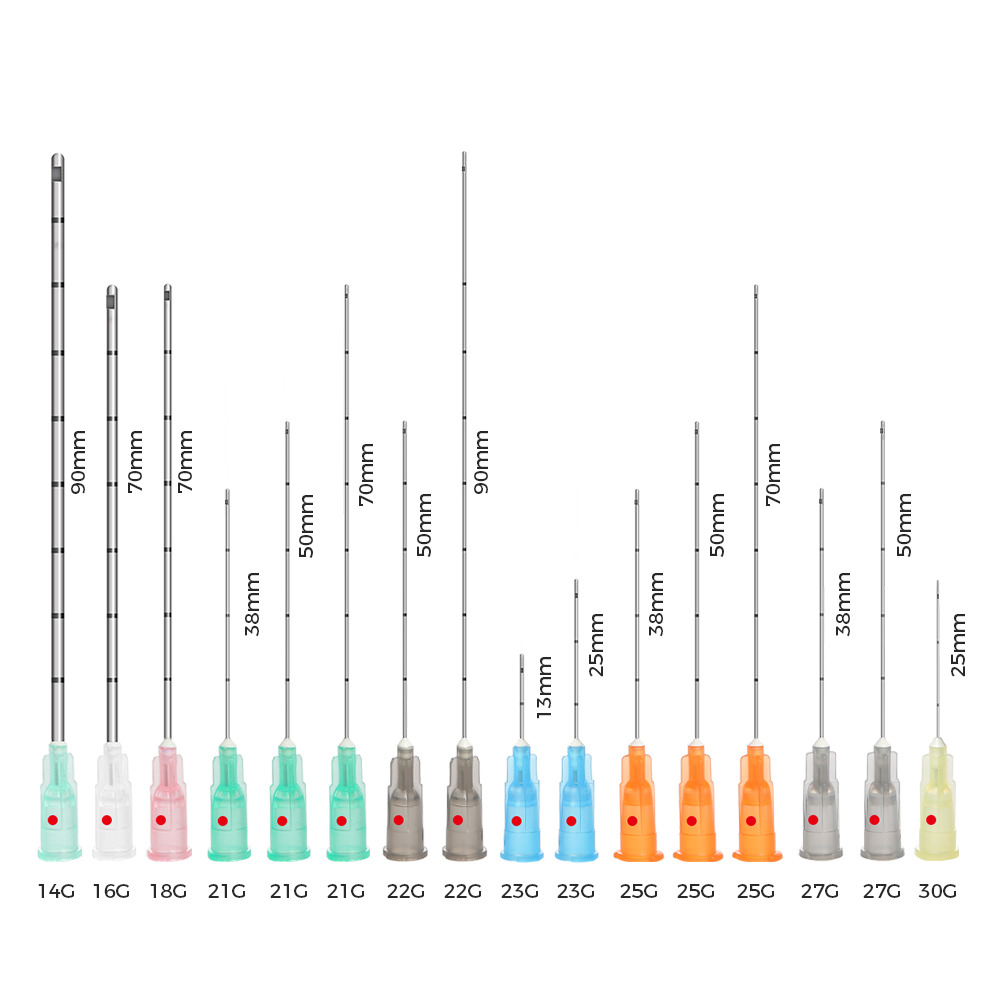
The Cannula Gauge Size Matters
The gauge tells you how thick or thin the microcannula is. A tube that is smaller has a higher diameter number.
The Common Micro Cannula Gauges
- 18G – 22G: Thicker, used for fat transfer or thicker fillers.
- 23G–25G: Most common for dermal fillers Procedure.
- 27G–30G: Thin, used for fine lines or delicate areas.
How to Choose the Right Gauge
- Thicker products need a lower gauge (wider cannula).
- Delicate areas need a higher gauge (thinner cannula).
- Control the flow rate and balance it.
Using the wrong gauge can lead to poor product flow or tissue stress.
Cannula Length : Short vs Long
Reach and control are impacted by micro cannulas length.
The Short Micro Cannulas
- Better for small places
- More control
- Ideal For Lips, Tear Troughs, and Fine Lines
The Long Micro Cannulas
- From one starting point, you can cover bigger areas.
- Cut down on the number of holes in the skin
- Often seen on the cheeks, jawline, and nasolabial folds
Choosing the righ micro needle length helps you work quickly and safely.
Tip Design : Blunt vs Flexible Tips
The shape is still important even though the majority of micro cannulas used in aesthetic treatments have blunt tips.
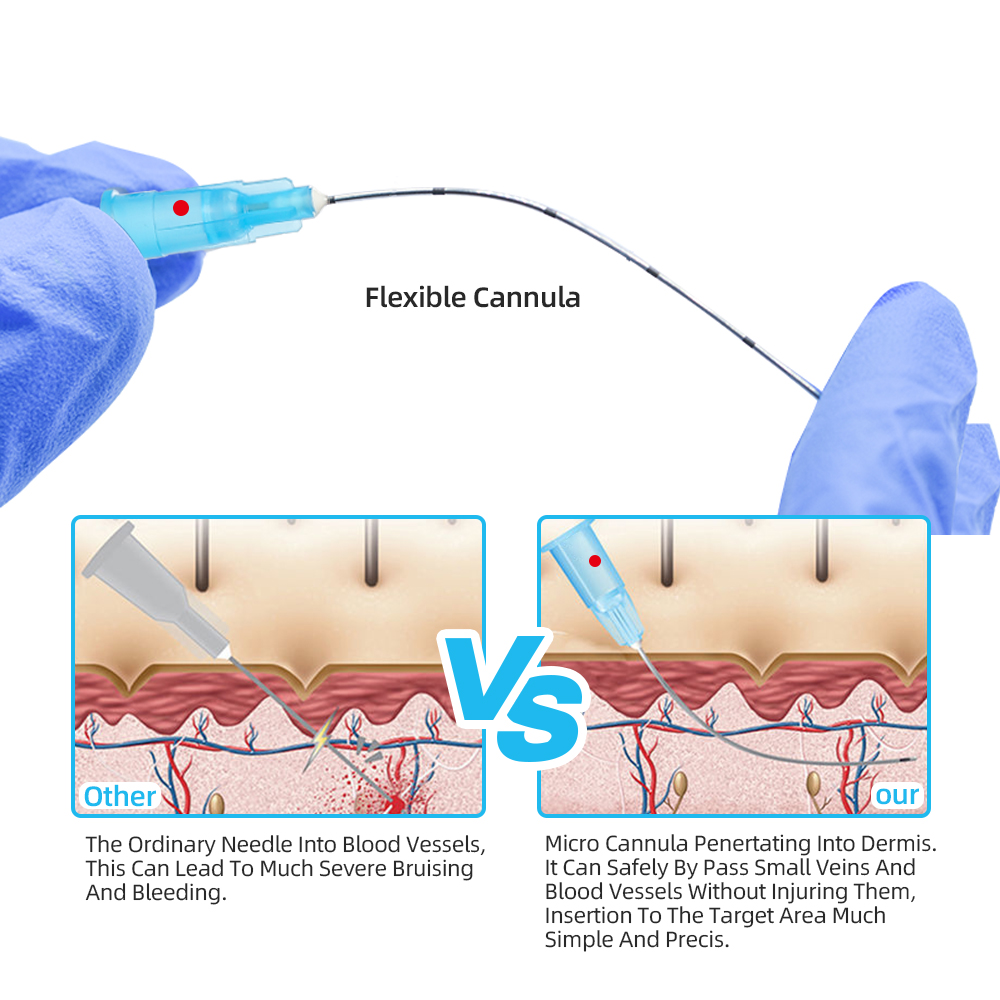
Blunt Tip Micro Cannulas
- Lower the possibility of vessel damage.
- Through tissue smoothly, slide.
- Ideal for Fillers and Anesthetic Placement.
The Ultra Flexible Tips
- Facial anatomy can bend easily around.
- Especially useful in curved or delicate areas.
- Offer better navigation under the skin.
Tip design plays a big role in how the cannula feels during use.
Port Design : Side Port vs Multiple Ports
The port is the opening where the product exits the micro cannula.
Single Side Port
- Precise delivery
- Better control for sculpting
- Common in facial aesthetics
Multiple Ports
- Spread product evenly
- Useful for fat transfer
- Faster coverage in larger areas
Choose a port style based on how you want the product to spread.
Matching the Micro Cannula to the Treatment Area
Different areas of the body need different tools.
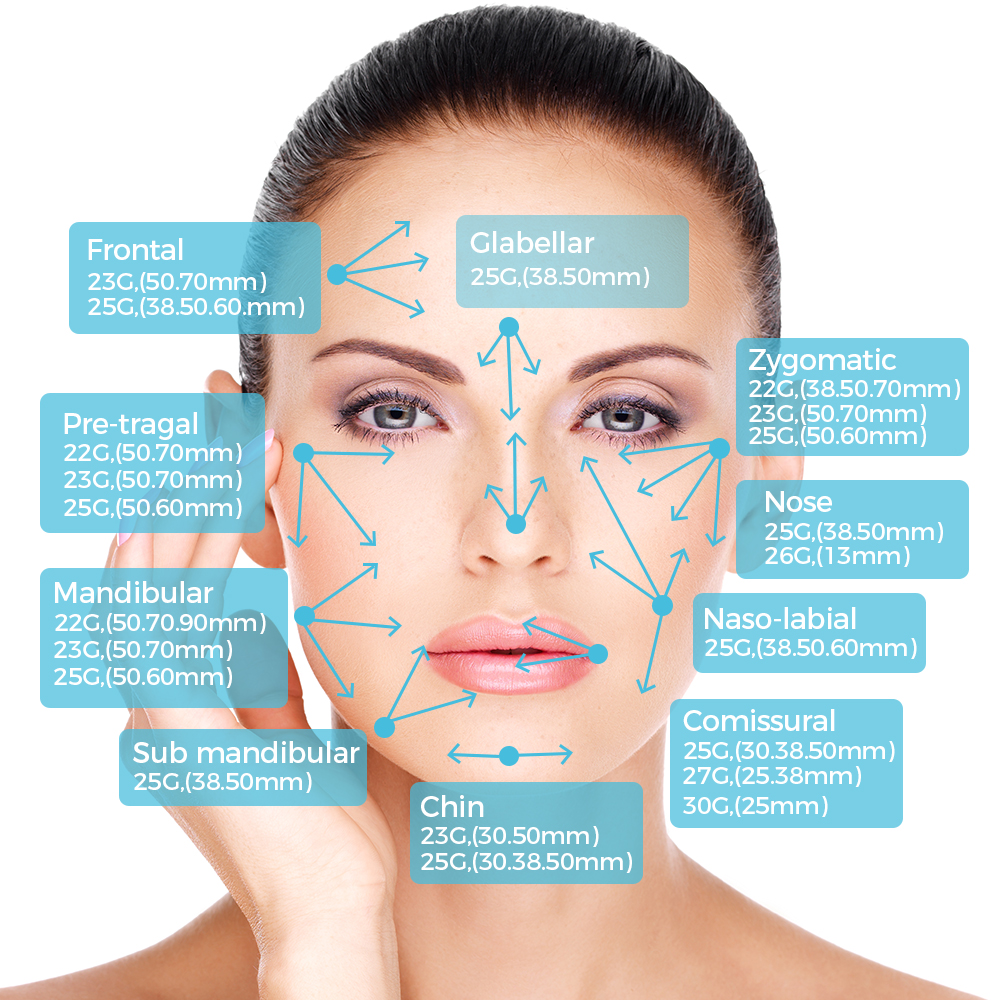
Micro Cannula for Facial Fillers
For cheeks, jawline, and chin:
- 22G–25G gauge
- Medium to long length
- Blunt tip with side port
For lips and tear troughs:
- 25G–27G gauge
- Short length
- High flexibility
Micro Cannula for Body Treatments
For hands or décolletage:
- 22G–25G gauge
- Longer cannula
- Smooth product flow
For fat transfer:
- Lower gauge (18G–20G)
- Multiple ports
- Strong but flexible design
Product Compatibility: Fillers and Fluids
Always match the micro cannulas to the product being injected.
Thick Products
- Calcium-based fillers
- Fat grafts
- Need wider cannulas
Thin Products
- Hyaluronic acid fillers
- Anesthetics
- Work well with higher gauge cannulas
If the cannula is too thin, injection becomes difficult and uneven.
Safety Considerations When Using a Micro Cannula
Safety should always come first.
Tips for Safe Micro Cannula Use
- Know facial anatomy well
- Use gentle pressure
- Never force the cannula
- Aspirate when appropriate
- Monitor patient feedback
The right micro cannulas reduces risk, but technique matters just as much.
Common Mistakes When Choosing a Micro Cannula
Avoid these common errors:
- Using a cannula that is too thin for thick filler
- Choosing length without considering anatomy
- Ignoring port design
- Using low-quality cannulas
- Rushing the selection process
Taking time to choose the right micro cannulas leads to better outcomes.
Final Thoughts: Is a Micro Cannula Worth It?
A micro cannula is an effective instrument in modern cosmetic medicine. It provides reduced bruising, fewer injections, and enhanced comfort for many patients.
It may not suit every treatment, but it is a reliable choice for facial fillers and non-surgical rejuvenation.
If you’re thinking about getting dermal fillers talk with your provider about micro cannula techniques. Knowing what’s out there lets you make smart, confident decisions about your care.
Why Should You Choose KDLNC Micro Cannula?
If you want to buy a micro cannulas, quality is just as important as size or style. KDLNC is renowned for its high quality micro cannulasmanufacturer and supplier, which are designed to meet the needs of current medical and aesthetic practices. Each micro cannulas is carefully made to help with smooth product flow, better control, and more comfortable care for the patient.
What Is Special About KDLNC Micro Cannula?
- Gauge precision that stays the same for steady performance
- Surfaces that are smooth and shiny to protect tissue
- For better guidance, the structure is both flexible and strong.
- For safety, use sterile, one-time packing
- Different sizes, lengths, and ports to choose from
KDLNC micro cannulas are made to help you get safe, consistent results whether you are using them for medical procedures, facial filler treatments, or fat transfer.
Quick Takeaways:
- A micro cannula is a thin, flexible tube with a blunt tip used to place dermal fillers under the skin.
- Micro cannulas are designed to slide around tissue instead of cutting through it.
- Using a micro cannula often results in less bruising and swelling compared to needles.
- Micro cannula injections usually feel more comfortable because fewer skin punctures are needed.
- Many providers use micro cannulas for lip filler, cheek filler, and under-eye treatments.
- A micro cannula allows filler to be placed evenly for natural-looking results.
- Micro cannulas are often safer in areas with many blood vessels.
- Most patients experience little to no downtime after micro cannula treatments.
- Micro cannulas are mainly used for dermal fillers, not Botox.
- The safety of micro cannula injections depends more on provider skill than the tool itself.
- Micro cannulas are not ideal for every area, and some treatments still require needles.
- Choosing a trained and experienced injector is the most important factor for safe results.