 +86-791-8686-1216


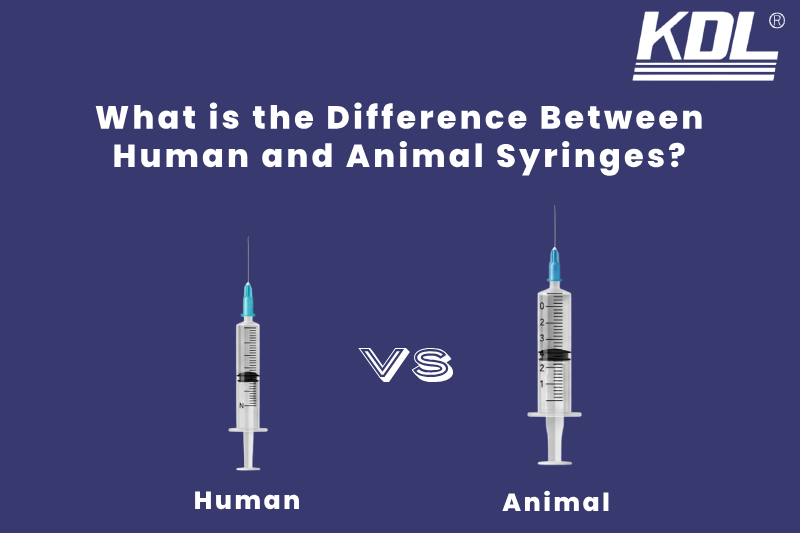
Syringes are very important for both human and animal medicine. They help make sure that shots, drugs, and water get safely into the body. Human and animal syringes are not always the same, despite their initial appearance similarities. People and animals have different wants, physical issues, and sizes, so they are made in different ways.
This blog will talk about what is the difference between human and animal syringes, how to tell them apart, and why it’s important to pick the right one. We will also look at safety tips for handling syringes, needle types, and syringe sizes.
Human and Animal syringes : Understanding the Purpose
A syringe is a tool used to push medicine or fluids into the body through a needle. Syringes are used in many ways:
- Giving vaccines
- Injecting medication
- Drawing blood
- Giving IV fluids
- Feeding animals that cannot eat normally
Syringes help doctors, veterinarians, nurses, and pet owners care for their patients in a safe and accurate way.
Main Difference Between Human and Animal Syringes
The biggest difference between human and animal syringes is how they are designed and sized. Human syringes focus on very accurate measurements, especially for small doses. Animal syringes must work for many body sizes from tiny hamsters to huge cows and horses.
Key Differences at a Glance
| Feature | Human Syringes | Animal (Veterinary) Syringes |
|---|---|---|
| Dose accuracy | Very precise, small dose control | Wide range, from tiny to large doses |
| Needle size | Usually small and fine | Many sizes for thick skin, fur, and muscle |
| Use style | Mostly single-use | Can be single-use or reusable |
| Design options | Mostly handheld syringes | Includes automatic and multi-dose syringes |
| Regulations | Strict medical rules | Veterinary-specific regulations |
| Body type | One species (humans) | Many species, shapes, and sizes |
Why Human and Animal Syringes Are Different
Even though human and animal syringes may appear alike, they differ for many reasons. The biggest differences include body size, needle size, syringe volume, design features, and how they are used.
1. Body Size and Skin Type
Humans and animals vary greatly in size and skin thickness. For example:
- A small dog or cat has thin skin.
- A cow or horse has thick skin.
- A human child needs a smaller needle than an adult.
Because of this, needles for animals must be stronger and made in many different lengths and thicknesses. A needle made for human skin may bend or break on a large animal.
2. Syringe Volume and Medication Amount
Human medicine usually uses small amounts of medicine. But animals, especially large livestock, sometimes need much bigger doses.
| Syringe Use | Typical Size for Humans | Typical Size for Animals |
|---|---|---|
| Vaccines | 1 mL or 3 mL | 3 mL to 12 mL |
| Fluids | 5 mL to 10 mL | 20 mL to 60 mL |
| Oral feeding | Rarely used | 20 mL to 100 mL |
This is one of the biggest differences between human and animal syringes animals often require much larger syringe barrels.
3. Needle Gauge and Length
Needle gauge means thickness. A higher number = thinner needle.
- Humans often use gauges between 22–30
- Animals may use 14–22 gauges for thicker skin
Needle Length
- Human needles are usually short (½–1 inch)
- Animal needles can be 1–2 inches or longer
4. Repeating Syringes for Herds
In veterinary use, especially on farms, syringes called automatic or multi-dose syringes can give many injections quickly. Farmers use them for vaccines for cows, pigs, sheep, and horses.
These are not used in human healthcare because people require individual, single-dose injections for safety.
5. Syringe Tip Styles
Different needle tips work better for different jobs:
| Tip Type | Human Use | Animal Use |
|---|---|---|
| Luer-lock | Common | Common |
| Slip tip | Common | Common |
| Catheter tip | Rare | Common for oral feeding, wound flushing |
| Curved tip | Dental use | Animal dental and wound care |
| Eccentric tip | Rare | Common for large-animal injections |
Animal syringes need more tip options because animals come in many shapes and sizes.
Types of Syringes Used in Human and Animal Care
Human Syringes
Most used in hospitals, clinics, pharmacies, and home care:
- Insulin syringes
- Tuberculin (TB) syringes
- Luer-lock syringes
- IV syringes
- Oral syringes without needles
Animal Syringes
Common in veterinary clinics, farms, shelters, and zoos:
- Veterinary IV Catheter
- Large-capacity feeding syringes
- Automatic dosing syringes for herds
- Disposable and reusable syringes
- Multi-dose vaccination syringes
- Veterinary Urethral Catheter
- IV Catheters for Dogs
Why It Is Important Not to Mix Human and Animal Syringes
Many people are curious as to whether or not a human syringe can be used on an animal. It isn’t a good idea to do this, but it might be okay to do it in an emergency. This is why:
1. Risks to Safety
- Needles that are too big or too small can hurt or injure people.
- A needle that is too short may not reach the right tissue.
- A needle that is too long can damage muscle or organs.
2. Dose Accuracy
Humans need very precise doses. If a syringe has large measurement lines, it may not measure small amounts correctly.
3. Contamination
Medical standards for humans are much stricter. Animal syringes may be reusable or shared among livestock with sterilization between uses, while human syringes are almost always disposable.
4. Medication Differences
Many animal medicines have different strengths and formulas. Using the wrong syringe can lead to overdose or underdose.
Comparing Human and Animal Syringes
| Feature | Human Syringe | Animal Syringe |
|---|---|---|
| Main Use | Hospitals, clinics | Farms, vet clinics, zoos |
| Typical Needle Gauge | 22–30 | 14–22 |
| Syringe Size | 1 to 10 mL | 3 to 60+ mL |
| Skin Type | Thin | Thin to very thick |
| Dose Frequency | Single dose | Repeated, multi-dose |
| Safety Design | Designed for comfort | Built for durability |
| Reusable Options | Rare | Common (in large-animal care) |
Can You Use Human Syringes for Dogs or Cats?
Sometimes veterinarians recommend insulin or syringe feeding for pets at home. In these cases, human syringes are safe, especially:
- Insulin syringes
- 1 mL or 3 mL syringes
- Oral feeding syringes (without a needle)
But for vaccines and thick medications, animal syringes are better.
Can You Use Animal Syringes for Humans?
No, they should not be used.
Animal syringes may not meet human medical safety standards. They may also use stronger needles that are painful or risky for human skin.
How Veterinarians Choose the Right Syringe
Vets choose veterinary syringes based on:
- Animal size
- Type of injection: under skin, in muscle, in vein
- Medicine volume and thickness
- Location of injection (neck, leg, shoulder, etc.)
Example Choices
| Animal | Needle Gauge | Syringe Size |
|---|---|---|
| Cat / small dog | 22–25 | 1–3 mL |
| Large dog | 20–22 | 3–12 mL |
| Horse | 18–20 | 12–60 mL |
| Cow | 16–18 | 12–60 mL |
| Birds | 25–30 | 1 mL |
Human and Animal Syringe : How Syringes Are Sterilized and Disposed
Human Healthcare
- One-time use only
- Thrown into biohazard sharps containers
- Never reused or shared
Animal Healthcare
- Livestock syringes may be reused after boiling or chemical sterilizing
- Disposable syringes are common in vet clinics
- Needles are changed between animals to prevent infection
Signs You Are Using the Wrong Syringe
- Bruising or swelling at injection site
- Medicine leaks out
- Needle bends or breaks
- Animal reacts with pain
- Incorrect dose measurement
If any of these happen, stop and check syringe type or call a vet or doctor.
Safety Tips for Using Syringes for Pets or Livestock
- Always wash hands before handling medicine
- Use a new needle for each injection
- Never guess a dose measure carefully
- Do not reuse needles
- Dispose of needles safely in a sharps container
- If unsure, ask a vet for help
Final Thoughts
Now you understand what is the difference between human and animal syringes. Even though they might seem alike, they actually serve different medical purposes. Human syringes are all about comfort, making sure they’re accurate, and ensuring they’re safe for single use. Animal syringes are designed to be strong, handle large doses, and cater to different body sizes and skin types. Picking the right syringe is important because it helps keep both people and animals safe from pain, infection, and getting the wrong dose.
If you’re working with pets, livestock, or in veterinary medicine, it’s really important to know the right syringe and needle sizes to use. If you’re ever unsure, it’s a good idea to chat with a veterinarian or healthcare professional.
Summary:
Human and animal syringes may look alike, but they are not the same. They are built for different needs, body sizes, and safety rules.
In Simple Terms
- Human syringes are small, precise, and mostly disposable.
- Animal syringes come in more sizes and styles, from tiny to very large.
- Veterinary syringes include reusable and automatic options.
- Needle sizes differ based on skin and muscle thickness.
- Using the wrong syringe can be dangerous.