 +86-791-8686-1216


Choosing a bone marrow biopsy needle is not just a line on a purchase order. The needle sits at the center of a painful, high-stakes test. A poor tip can mean a failed sample. A weak batch can mean the same thing. Either way, the patient has to go through it all again.
This guide breaks the decision into three parts. These are design parameters, clinical performance, and quality control data. It is written for hospital buyers, distributors, and supply managers. You do not need an engineering degree to follow it. For more on the clinical side, see our guide on the needle’s role in hematology diagnostics.
What Is a Bone Marrow Biopsy Needle and How Is It Built?
A bone marrow biopsy needle is a sterile, single-use device. It pulls a solid core sample from bone marrow. The sample usually comes from the iliac crest or the sternum. It works alongside a separate bone marrow needle used for aspiration. That needle draws liquid marrow instead of solid tissue.
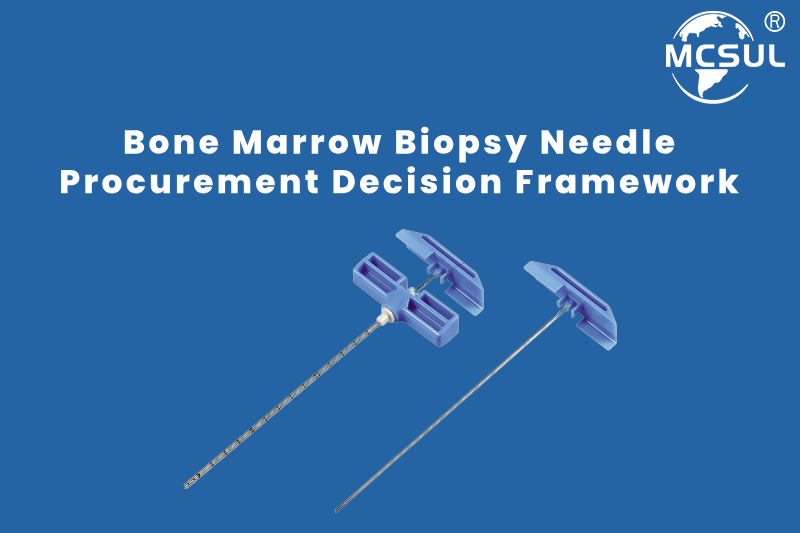
Most designs share five main parts. The needle hub connects the device to a syringe or handle. The needle tube, or cannula, is the outer shaft that enters the bone. The inner stylet is sometimes called the lining core. It seals the tube during insertion. This keeps tissue and bone fragments from clogging the tube too early. The handle gives the operator grip and control. A protective cap shields the sharp tip before and after use.
Cannulas are almost always made from SUS304 steel. This steel holds a sharp edge well. It also resists rust after sterilization. Handles and hubs are commonly molded from ABS, PP, or PC plastic. A thin coat of silicone oil on the cannula reduces friction. This eases the needle through skin, fat, and bone.
What Design Parameters Matter Most for Bone Marrow Biopsy Needles?
The right design depends on the patient, the site, and how much sample the lab needs. Four parameters do the majority of the work.
Gauge. Commercial bone marrow biopsy needles typically run from 7 to 18 gauge. A lower number means a wider bore. Wider needles pull larger, more intact cores. Pathologists prefer these for tricky diagnoses. Narrower needles cause less trauma. But they can yield a smaller, more broken-up sample.
Length. Needle lengths usually fall between 68mm and 150mm. Shorter needles suit average adult iliac crest depth. Longer needles are built for larger patients. They also help with deeper marrow sites.
Wall type. A regular wall balances strength and bore size for most adult procedures. Thin-wall versions exist for gentler, low-trauma use, such as this minimally invasive assembly. These trade off some rigidity for that gentler profile.
Connector type. A Luer lock fitting lets the needle attach firmly to a syringe or extraction cradle. A loose or non-standard fitting raises the risk of disconnection mid-procedure.
| Parameter | Typical Range | Why It Matters |
| Gauge | 7G to 18G | Controls core size and patient trauma |
| Length | 68mm to 150mm | Matches patient size and marrow site depth |
| Wall thickness | Regular or thin | Balances strength against bore diameter |
| Tip design | Multi-facet cutting edge | Affects how cleanly the core separates |
| Connector | Luer lock | Prevents disconnection during aspiration |
What Clinical Performance Data Should Buyers Ask For?
Specs on paper do not always predict what happens in a patient. Before a bulk order, ask the supplier for data on three outcomes.
Sample adequacy. This is the share of biopsies that give a full, usable sample on the first try. A low adequacy rate forces repeat procedures. That adds cost. It also adds patient discomfort that a lower unit price will never make up for.
First-pass success. This tracks how often the needle reaches the marrow and returns a usable core. It should do this without needing a reposition. Tip geometry and cannula stiffness both drive this number.
Patient-reported pain or trauma. Some makers run trials that compare bruising, bleeding, or pain to an older device. Ask if this data exists. Ask if it was reviewed as part of a regulatory filing. A internal marketing test is not the same thing.
A supplier who cannot share this data is asking you to buy on faith. The same goes for vague claims like “excellent performance.” Ask for the numbers first.
What Quality Control Checks Confirm a Bone Marrow Biopsy Needle Is Safe?
Quality control on these devices happens at three stages. These are raw material, finished device, and batch release.
Raw material testing. Stainless steel tubing is checked for tensile strength and corrosion resistance. This happens before it becomes a cannula. Plastic resins for the hub and handle get tested too. The goal is consistency between batches.
Finished device testing. Each design should be checked for tip sharpness. It should also be checked for bond strength between the cannula and hub. Smooth stylet movement inside the tube matters as well. A stylet that binds is a functional failure, not a small flaw. The same goes for a cannula that separates from its hub under load.
Batch release testing. Every production batch should be tested for sterility. It should also be checked for bacterial endotoxins. This matters because these needles are labeled sterile and non-pyrogenic. The maker should give you a certificate of analysis for your batch. A generic spec sheet for the whole product line is not enough.
Ask your supplier for a recent batch test report before you commit to volume. This one document tells you more about ongoing quality than any brochure.
What Certifications Should a Bone Marrow Biopsy Needle Manufacturer Hold?
Named, checkable standards set a real maker apart from a reseller with a spec sheet. Look for these specifically.
In the United States, these needles fall under 21 CFR 876.1075. This is the FDA’s rule for gastroenterology-urology biopsy instruments. It is listed under product code KNW. This is a Class II device rule. That means it carries special controls beyond a basic Class I listing.
In the European Union, these needles are usually Class IIa devices. This falls under Rule 6 of the EU’s Medical Device Regulation, or MDR. That rule covers devices used inside the body for a short time. A Notified Body must review the maker’s file before the CE mark is applied.
Beyond product-specific rules, look for ISO 13485. This is the core quality management standard for medical device makers. Biocompatibility work should reference ISO 10993-1. If the device is sterilized with ethylene oxide, the process should follow ISO 11135.
A business license alone proves nothing. Ask for current credentials, not simply logos on a website.
How Do You Compare Bone Marrow Biopsy Needle Suppliers?
Once certificates check out, look at what affects your supply chain day to day.
| Factor | What to Check |
| Certifications | Current ISO 13485, FDA registration, CE technical file |
| Gauge and length range | Coverage for your typical patient population |
| Batch testing | Recent certificate of analysis available on request |
| OEM/ODM flexibility | Can they adjust gauge, packaging, or labeling for your order |
| Lead time | Realistic timelines under normal and high-demand conditions |
| Sample availability | Willingness to send trial units before a bulk order |
Weigh certificates and clinical data first. Then compare price, lead time, and how open the supplier is to custom orders. A supplier that resists sending a sample or a test report is telling you something. For more on fit, see choosing the right biopsy needles for your practice.
Need OEM or private-label bone marrow biopsy needles?
KDL provides ISO 13485-certified manufacturing, customizable gauge, packaging options, and regulatory support for global markets.
Get OEM quoteWhat Common Mistakes Do Buyers Make When Sourcing Bone Marrow Biopsy Needles?
Most sourcing mistakes come from habit, not from bad data.
Buying on price alone. A cheaper needle that causes more failed first-pass attempts costs more later. Think repeat procedures, staff time, and patient distress.
Skipping the sample trial. Specs on paper do not show how a needle feels in real hands. Always test before a bulk buy.
Ignoring batch-to-batch consistency. One strong test report does not mean every batch after it will match. Ask how often batch tests happen, not just if they happen once.
Assuming one gauge fits every patient. Facilities with a wide patient range should stock more than one gauge and length.
For a deeper checklist, see 7 things to consider before buying a bone marrow biopsy needles.
Key Takeaways
- A bone marrow biopsy needle usually runs 7G to 18G and 68mm to 150mm long. It has a steel cannula, a plastic hub and handle, and an inner stylet.
- Ask suppliers for sample adequacy rates and first-pass success data. Also ask for any comparative patient trauma studies before you order.
- Batch testing for sterility and endotoxins should come with a certificate for that exact batch.
- A credible manufacturer holds ISO 13485. In the U.S., look for FDA 21 CFR 876.1075 under product code KNW. In the EU, look for a Class IIa CE file under MDR Rule 6.
- Compare suppliers on certifications and clinical data first. Then compare lead time, OEM flexibility, and price.
- Always request a sample and a recent batch test report before you commit to a large order.
Final Thoughts
A bone marrow biopsy needle looks simple. It is a tube, a stylet, and a handle. The decision behind it is not simple at all. Design parameters set the ceiling on what the needle can do. Clinical performance data tells you if it lives up to that ceiling in real patients. Quality control data tells you if each unit acts like the sample you tested.
Start with the certificates. Confirm the design fits your patient population. Then ask for real performance and batch data before you sign a purchase order. That approach protects your patients, your clinical staff, and your supply chain, all at once.