 +86-791-8686-1216


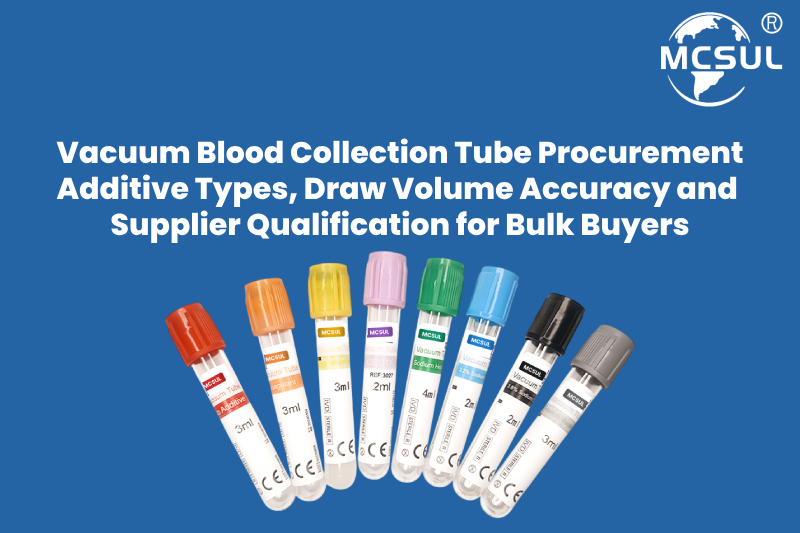
Blood collection tube procurement looks simple until a lab rejects a batch. One wrong additive, a weak vacuum, or a smudged label is enough to ruin a sample, delay a diagnosis, and force a second draw. That’s why comparing unit prices alone gets expensive fast. You save a little per tube, then lose it in wasted stock and frustrated labs.
This guide walks you through the three things that matter most: additive types, draw volume accuracy, and supplier qualification.
We’re MCSUL, a medical puncture device manufacturer, and we wrote this guide for hospital purchasing teams, labs, distributors, and OEM brand owners. You’ll see what to specify, what to test, and which documents to ask for before you place a bulk order.
What a Vacuum Blood Collection Tube Includes in Procurement Specifications
Tube, Stopper and Cap Components
A vacuum blood collection tube has four core parts: the tube body, a piston or stopper, a cap, and, when the test needs one, an additive. Each part affects your sample. For example, a loose stopper lets the vacuum leak, and a poorly moulded cap can spill blood when staff remove it. So name every component in your specification, not just the finished tube.
How Pre-Set Vacuum Controls Draw Volume
Each tube holds a set amount of negative pressure. When the needle enters the vein, that vacuum pulls blood in until the pressure evens out. As a result, vacuum strength decides how much blood you get. Ask every supplier how they set and check the vacuum on each batch.
Glass vs. Plastic Tube Materials
Plastic tubes resist breakage and weigh less, which lowers injury risk and shipping cost. Glass, however, has a long track record with some tests. Your best choice depends on your workflow, local rules, and the tests you run. Either way, ask for material documentation before you commit.
Additive Types in Blood Collection Tube Procurement
Additives decide which tests a tube can support. The wrong one can make results useless, so additive choice is the first line of any blood collection tube procurement specification.
Clot Activators and Serum Tubes
Clot activators speed up clotting so the lab can separate serum quickly. Coagulation-promotion tubes suit most chemistry and immunology tests. However, they need standing time before centrifugation, so check that your lab’s protocol matches the tube design.
Anticoagulants: EDTA, Heparin and Citrate
Anticoagulant tubes keep blood liquid for cell counts, plasma tests, and clotting studies. EDTA suits most haematology work, heparin suits many plasma chemistry tests, and citrate suits coagulation testing. Citrate needs an exact blood-to-additive ratio. Unlike serum tubes, these tubes need gentle inversion right after the draw to mix the additive.
Glycolytic Inhibitors for Glucose Testing
Blood cells continue to use glucose after a draw. So glucose testing often needs a tube with an inhibitor that slows the process down. If your lab runs glucose panels, confirm that your supplier offers this option.
Cap Colour Coding in Tube Sourcing
Cap colours help staff pick the right tube at a glance. The table below shows common conventions, but colours vary by manufacturer and region. Always confirm the colour standard in writing before you order.
| Additive | Typical Use | Common Cap Color |
|---|---|---|
| None or clot activator | Serum chemistry, immunology | Red |
| Clot activator with gel | Serum separation | Gold or yellow |
| Sodium citrate | Coagulation tests | Light blue |
| Heparin | Plasma chemistry | Green |
| EDTA | Hematology, cell counts | Lavender |
| Fluoride and oxalate | Glucose testing | Gray |
Draw Volume Accuracy and Vacuum Retention
Why Fill Volume Affects Additive Ratio
Additive amounts assume a specific blood volume. If a tube underfills, the additive gets too concentrated and can skew results. Citrate tubes show this problem most clearly. So draw volume accuracy is a quality issue, not a convenience feature.
Vacuum Loss Over Shelf Life
Vacuum slowly fades as tubes age. A tube that draws perfectly at production may underfill months later. Therefore, ask suppliers for shelf-life data on vacuum retention, and test aged samples yourself.
Tube Sizes to Specify
Size matters for your analyser racks and centrifuge buckets. Common options include 13×75 mm, 13×100 mm, and 16×100 mm tubes with draw volumes from 2 mL to 10 mL. Our 2 mL to 10 mL blood collection tubes come in coagulation-promotion and anticoagulation versions. Match the dimensions to your equipment before finalising your order.
Needle and Holder Compatibility
Tubes work as a system with needles and holders. A mismatched gauge or holder can slow the draw and cut fill volume. If you source both items, also review the safety mechanisms on the collection needles that pair with these tubes, because activation design affects both safety and draw performance.
Speciality Tubes for Blood Collection Tube Procurement
Micro Collection Tubes for Small-Volume Draws
Some patients can’t give a full tube of blood. A micro blood collection tube holds 250 to 500 µL and has an integrated scoop that makes collection easier. Its label carries fill lines, lot numbers, and expiry dates. Staff can also open the snap cap with one hand, which speeds up busy clinic work.
Capillary Tubes for Pediatric and Geriatric Patients
Capillary collection suits children and older adults when a venous draw is challenging. A capillary blood collection tube supports tests such as glucose monitoring, hemoglobin testing, and blood gas analysis. Its central crossed rubber cap lets staff insert a capillary tube without removing the cap, which cuts exposure and spills.
Sterilization, Labelling and Traceability in Blood Tube Procurement
Sterilisation Method and Validation
Tubes must arrive clean and ready to use. We wash our tubes with deionised water and sterilise them with Co60 gamma radiation. Whatever supplier you choose, ask which method they use and request the validation records.
Label Fill Lines, Lot Numbers and Expiry Dates
Clear labels prevent errors. First, look for visible fill lines, lot numbers, and expiry dates on every tube. Also verify that labels stay attached through freezing, spinning, and handling.
Batch Traceability for Recall Readiness
If a defect shows up, you need to find every affected tube fast. Therefore, confirm that the supplier links each shipment to lot records, production dates, and inspection results.
Standards and Compliance for Blood Collection Tube Procurement
Compliance checks protect blood collection tube procurement from rejected shipments and audit findings. However, standard language can be vague, so ask precise questions.
Identifying the Applicable Standard
Ask every supplier to name the exact international standard that applies to their tubes. For venous tubes, buyers commonly cite ISO 6710:2017, which sets requirements and test methods for evacuated and non-evacuated single-use venous blood specimen containers. However, it doesn’t cover blood collection needles or holders. Then request the test evidence behind the supplier’s claim. A general line like “meets international standards” isn’t enough.
Additive Regulatory Requirements by Market
Additives must meet the laws in each destination market, and those rules differ by country. So check your local requirements before you approve a supplier’s formulation. Don’t assume approval in one region carries over to another.
Company Certification vs. Product Test Evidence
A quality management certificate, such as ISO 13485, shows that a manufacturer runs a controlled process. It doesn’t prove that every product meets every requirement. So ask for product-level test reports as well.
Ready to test blood collection tubes before your next bulk order?
Request a sample today and check vacuum, fill volume, and additive performance before you commit to volume.
Request a SampleSupplier Qualification for Blood Collection Tube Procurement
Strong blood collection tube procurement depends on choosing a supplier who stays consistent from batch to batch. For a wider view of how to compare vendors, see this broader supplier selection for vacuum blood collection systems.
Manufacturing Capacity and Cleanroom Capability
Ask about monthly output, cleanroom standards, and backup capacity. Because demand can spike, a supplier that can’t scale may delay your orders. Also ask how they handle rush requests.
Additive Spraying and Quality Control
Even additive coating matters for accuracy. For example, some suppliers use ultrasonic spraying to spread additives evenly across the tube wall. Ask how the supplier checks additive amount, vacuum level, and fill accuracy during production.
OEM and Private-Label Options
Many distributors need custom cap colours, labels, or packaging. So confirm that your manufacturer supports OEM branding, and ask about minimum order quantities and lead times before you sign a contract.
Documentation to Request Before Ordering
Ask for these items before your first order:
- Product specification sheet with sizes, additives, and draw volumes
- Sterilization method and validation records
- Material documentation for the tube, stopper, and cap
- Quality management certificates
- Product-level test reports
- Batch and lot traceability procedures
Sample Testing Before a Bulk Blood Collection Tube Order
Sample testing is the safest step in blood collection tube procurement, because it catches problems before you commit to volume. For example, a tube that looks perfect on a spec sheet may still underfill on your holders.
What to Check on Received Samples
Test samples in your own lab, not just on the bench. First, check vacuum draw and fill volume. Then check cap fit, label clarity, and additive performance on your analyzers. Finally, run a few aged samples to test vacuum retention.
Acceptance Criteria and the Golden Sample
Set clear pass or fail limits before testing begins. Then pick one sample as your golden reference for all future batches. In addition, require the supplier to report any material or design change before it reaches your stock.
Bulk Blood Collection Tube Procurement Checklist
Product Specifications
- Tube size and draw volume confirmed
- Additive type and amount confirmed
- Cap colour standard confirmed in writing
- Material and stopper type confirmed
- Label content and fill lines confirmed
Compliance and Documentation
- Applicable standard named by the supplier
- Product-level test reports reviewed
- Sterilization records verified
- Market-specific additive rules checked
Supplier Evaluation
- Capacity, MOQ, and lead time confirmed
- Vacuum and additive controls reviewed
- Samples tested and approved
- Lot traceability confirmed
Common Mistakes in Blood Collection Tube Procurement
- Choosing on price alone : A cheap tube that underfills costs you a redraw.
- Assuming cap colours are universal : Confirm the colour standard each time.
- Skipping shelf-life vacuum data : Vacuum loss shows up months after delivery.
- Accepting general compliance claims : Ask for product-level test evidence.
- Ignoring needle and holder fit : Poor compatibility cuts draw volume.
- Approving production without samples : Test first, then order.
Conclusion
Good blood collection tube procurement balances additive fit, draw volume accuracy, sterilisation, documentation, and supplier consistency. Price matters, but a failed batch costs far more than a small saving per tube. So write a clear specification, ask for product-level evidence, and test samples before you commit. Then pick a supplier who delivers the same quality on the tenth order as on the first. If you’d like to test our tubes, we’re happy to send samples.