 +86-791-8686-1216



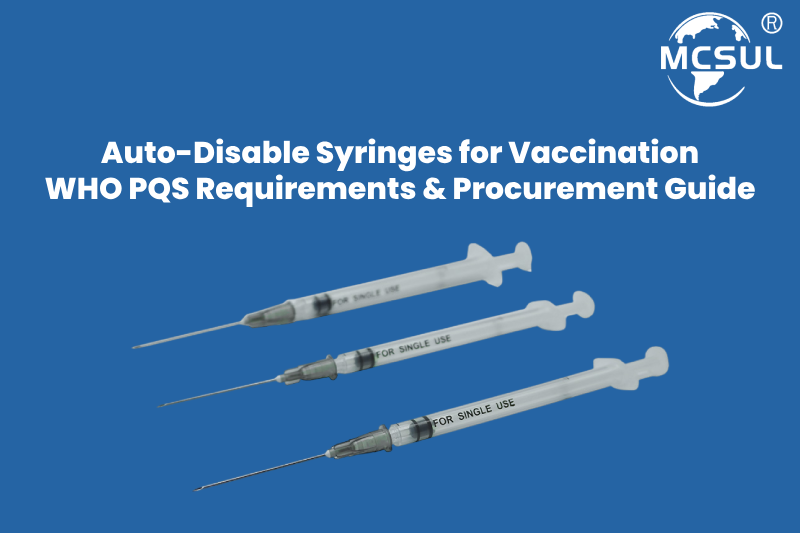
Safe vaccination programs are important for the use of auto-disable syringes. They are not like normal disposable syringes, as they are built with a mechanism that prevents the syringe from being used more than once after one injection. This helps reduce the risk of re-use of the syringe and transmission of blood-borne infections.
If you purchase medical devices for hospitals, clinics, public health programs, or vaccination campaigns, selecting the right auto-disable syringe is more than a matter of checking its size and price. You also need to know its safety features, product specifications, quality requirements, and relevant standards.
Performance, Quality and Safety (PQS) requirements for auto-disable syringes used for immunization have been defined by World Health Organization (WHO). These requirements help buyers to assess product performance, and help manufacturers to meet recognized quality expectations.
This guide will explain how auto-disable syringes work, what the WHO PQS requirements are, the specifications to look for, and how to choose a reliable supplier for your procurement needs.
What Is an Auto-Disable Syringe for Vaccination?
An auto-disable syringe (AD syringe) is a disposable medical device which is not to be reused after a fixed dose of a medicine or vaccine has been administered.
It has special mechanism which disables the syringe during or after injecting . Once the injection has been administered and the mechanism triggered, the syringe is not reusable.
Although a regular disposable syringe may still be able to draw and deliver liquid again , an auto-disable syringe is designed to prevent reuse .
How Does an Auto-Disable Syringe Work?
The working principle depends on the syringe design and its disabling mechanism. Common designs use features such as:-
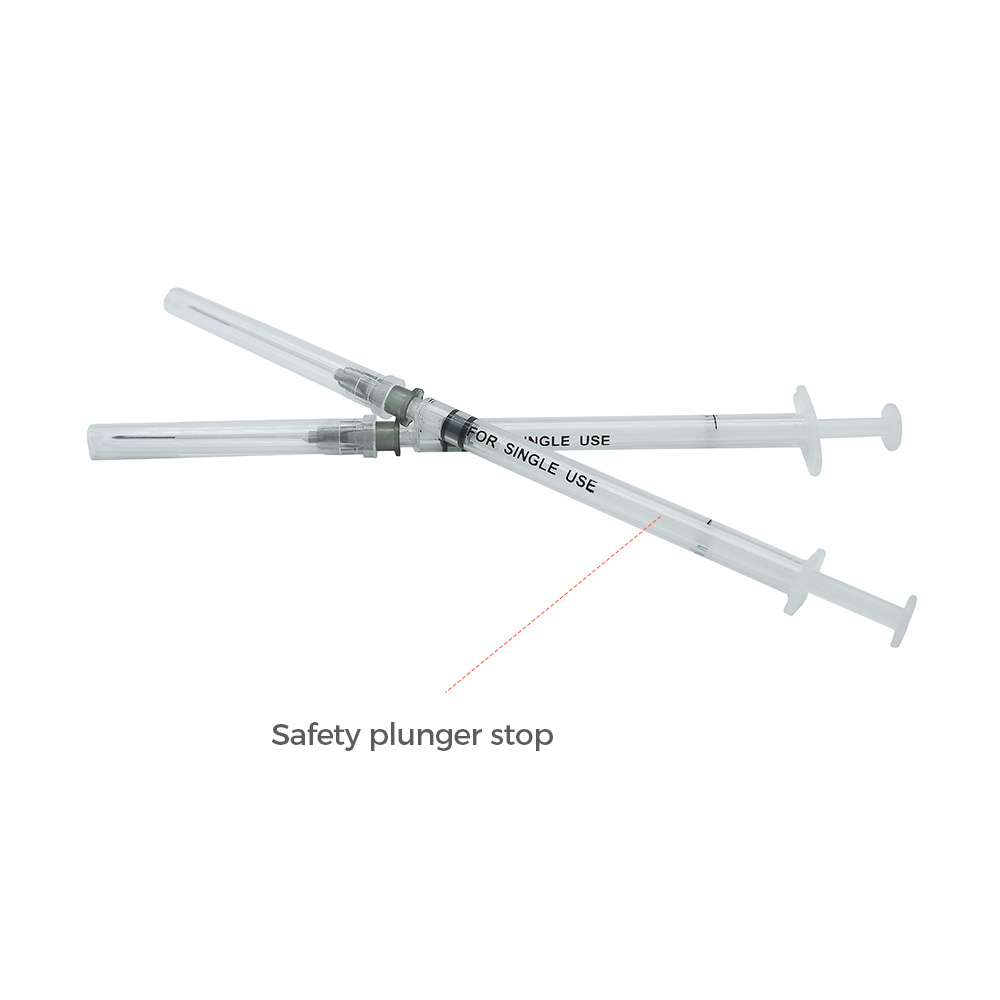
- Locked plunger: The plunger locks after the injection, preventing another complete injection cycle.
- Broken plunger: A designed weak point breaks when the user attempts to withdraw or reuse the plunger.
- Other disabling mechanisms: Some designs use a mechanism that blocks further movement or prevents another dose from being delivered.
The exact activation point varies between products. Some devices are disabled at the start of the injection and some are enabled later in the injection process.
This is a useful feature for vaccination programs as it prevents reuse of any syringe.
Why Are Auto-Disable Syringes Used in Vaccination Programs?
“Reusing syringes poses serious health risks to patients including transmission of blood borne infections. This risk can happen if two or more people use infected needles or syringes.
Auto-disable syringes are designed to address this problem, making reuse difficult or impossible. Healthcare organizations should also consider other medical device safety and quality solutions when planning their injection equipment requirements.
Key Benefits of Auto-Disable Syringes
Prevent syringe reuse
The automatic disabling mechanism prevents the syringe from being used for another injection after its intended use.
Support injection safety
Using a single-use syringe for each patient helps reduce the risk of cross-contamination associated with syringe reuse.
Support immunization programs
Auto-disable syringes are used in routine immunization services, mass vaccination campaigns, and other public health vaccination activities.
Improve procurement consistency
Healthcare organizations can establish clear product specifications for purchasing, receiving, and distributing vaccination syringes.
Support safe disposal practices
After use, the syringe becomes contaminated sharps waste and must be disposed of according to applicable healthcare waste management procedures.
Remember that an auto-disable feature prevents reuse; it does not automatically protect healthcare workers from needlestick injuries. For additional protection, evaluate whether the product includes a separately verified sharps injury protection feature.
What Are The WHO PQS Requirements for Auto-Disable Syringes?
WHO PQS stands for Performance, Quality, and Safety. This is a prequalification system to assess products and equipment intended for use in immunization programs.
The WHO PQS system assists buyers in identifying products that have been evaluated against defined performance and quality requirements.
Auto-disable syringes are part of WHO immunization devices, category E008.1.
WHO/PQS/E008/AD01.0: Auto-Disable Syringe Specification
On 6 October 2025, WHO published the combined specification and testing protocol WHO/PQS/E008/AD01.0. It includes auto-disable syringes for fixed dose immunization.
The specification addresses several important areas:
- Auto-disable functionality and fixed-dose delivery.
- Sharps injury protection features.
- Quality management system compliance.
- Product documentation and technical information.
- Product sample testing and usability evaluation.
- Visual inspection and verification procedures.
- Test reports and supporting evidence.
“This specification provides a common framework for manufacturers and procurement teams to evaluate the performance of auto-disable syringes. Before selecting a manufacturing partner, review its quality certificates and compliance documentation to understand the available supporting records.
ISO 7886-3 and Auto-Disable Syringes
ISO 7886-3:2020 is the international standard for sterile, single-use hypodermic syringes with an auto-disable feature intended for fixed-dose immunization.
It defines important properties and performance requirements for these devices.
When assessing an auto-disable syringe look for adequate test reports and documentation from the manufacturer to support compliance to the applicable standard.
Important: WHO PQS prequalification and ISO conformity are not interchangeable. A product claiming ISO compliance is not automatically WHO prequalified. Always verify the specific product and its current status in the official WHO database. Along with product-level testing, you should review the manufacturer’s medical device quality and manufacturing capabilities before moving forward with procurement.
Key Specifications to Check When Buying Auto-Disable Syringes
“Make sure you read the product specifications carefully before you buy in bulk. The right syringe should correspond to the vaccine to be administered, the administration procedure and the procurement requirements.Depending on your application, you can also explore different medical syringe and needle product options to understand available configurations and manufacturing capabilities.
1. Syringe Capacity
Capacity is one of the first specifications to check.
Auto-disable syringes are available in different capacities, depending on the intended immunization application.
Common product options may include:-
- 0.05 mL
- 0.3 mL
- 0.5 mL
- 1 mL
- 2 mL
Examples of available product capacities, not interchangeable recommendations. Choose the syringe according to the dose of vaccine prescribed and the relevant clinical protocol.
2. Needle Size and Design
Needle specifications affect the suitability of a syringe for its intended injection route.
Review :-
- Needle gauge.
- Needle length.
- Needle material.
- Fixed or other needle configuration.
- Compatibility with the intended vaccination procedure.
Most auto-disable vaccination syringes are fixed-needle designs. However, the correct needle specification is determined by the vaccine and administration requirement.
3. Auto-Disable Mechanism
See how and when the syringe is disabled.
Ask the manufacturer for details of the locking, breaking or other mechanism to prevent reuse. Also review the supporting test documentation to ensure the device is functioning properly.
4. Materials and Sterility
Product quality and safe handling using medical-grade materials.
When checking an auto disable syringe:-
- Barrel and plunger materials.
- Needle material and construction.
- Sterilization method.
- Sterility assurance documentation.
- Packaging integrity.
- Shelf-life information.
The manufacturer should provide the relevant documentation of the finished sterile product.
5. Packaging and Identification
Packaging is important to protect the product against damage in handling, storage and transport.
Clearly label the packaging with:
- Product name and capacity.
- Manufacturer identification.
- Lot or batch number.
- Manufacturing and expiration dates.
- Sterility status.
- Storage conditions.
- Applicable regulatory information.
Clear labeling also helps procurement teams to track inventory and product traceability.
Auto-Disable Syringe vs Standard Disposable Syringe
Both products are designed for single use applications but they differ in the way they prevent reuse.
| Feature | Auto-Disable Syringe | Standard Disposable Syringe |
|---|---|---|
| Reuse prevention | Built-in disabling mechanism | No automatic disabling mechanism in standard designs |
| Plunger function | Disables after intended use | May remain mechanically functional |
| Intended use | Fixed-dose immunization applications | Various medical applications |
| Injection safety | Helps prevent syringe reuse | Depends on correct single-use practices |
| Design | Includes an auto-disable feature | Conventional syringe design |
| Procurement | May require WHO PQS verification for relevant programs | Evaluated against its intended use and applicable requirements |
The big difference is that it has internal protection against re-use.
A user should discard a standard disposable syringe after one use, but its design does not physically prevent further injections. An auto-disable syringe adds a mechanism intended to prevent that reuse. If you want to understand how manufacturers design and produce conventional disposable syringes, you should explore single-use syringe manufacturing and quality control guide
For vaccination procurement, this difference is especially important because WHO recommends the systematic and exclusive use of auto-disable syringes for vaccine administration and reconstitution.
How to Choose a Reliable Auto-Disable Syringe Manufacturer
Selecting a manufacturer is an important part of medical device procurement. A product might have suitable specifications, but you also need to be confident in its manufacturing quality, its documentation and its supply capability. If you are evaluating a long-term manufacturing partner, explore MCSUL’s OEM/ODM manufacturing capabilities to discuss product development, customization, and manufacturing requirements.
Use the following points when comparing potential suppliers.
1. Verify Product Qualification and Compliance
If your procurement requirements call for WHO-prequalified auto-disable syringes check the exact product in the official WHO PQS database.
Do not rely solely on a manufacturer’s general statement that its products are WHO compliant.
See the relevant ISO standards, product test reports and regulatory documentation for your market.
2. Review Manufacturing and Quality Systems
Inquire about the manufacturer’s quality management system and production controls.
Useful documents may be:-
- ISO 13485 certification, where applicable.
- Product specifications and technical datasheets.
- Sterilization validation and supporting records.
- Batch inspection and release records.
- Shelf-life and packaging validation information.
Ensure that the documents specifically relate to the product and the manufacturing site being offered.
3. Evaluate Production and Supply Capacity
Mass immunization campaigns may require large quantities in a short period of time.
Before placing an order discuss:-
- Available production capacity.
- Minimum order quantities.
- Lead times.
- Packaging configurations.
- Export and shipping arrangements.
- Batch traceability.
A good supplier will clearly communicate their production schedule and the completion dates for your orders.
4. Confirm Regulatory Requirements for Your Market
WHO PQS is particularly relevant to international immunization procurement, but it does not replace every country’s medical device regulatory requirements.
For purchases in the American market verify the applicable FDA requirements and the device’s regulatory status for its intended use. No one should interpret FDA establishment registration or device listing as FDA approval or clearance.
For international procurement, check the requirements of the destination country’s regulatory authority as well.
Auto-Disable Syringe Procurement Checklist
Use this checklist before approving a supplier or placing a bulk order. When comparing suppliers, consider their OEM and ODM medical device manufacturing services if you require customized product designs, specifications, or packaging.
- Confirm the required syringe capacity.
- Verify needle gauge and length.
- Verify the auto-disable mechanism.
- Review WHO PQS status when required.
- Confirm applicable ISO 7886-3 documentation.
- Review product sterility and packaging records.
- Check manufacturing quality documentation.
- Verify batch traceability and shelf life.
- Confirm order quantity and production lead time.
- Review shipping, storage, and delivery conditions.
- Confirm destination-market regulatory requirements.
A clear procurement checklist helps you compare suppliers using consistent product and quality criteria instead of relying on price alone. Before finalizing your order, review the supplier’s medical device sourcing solutions to understand its procurement and supply chain support.
Why Choose MCSUL for Medical Device Manufacturing Solutions?
When sourcing medical devices you need a manufacturing partner that understands product quality, technical specifications and supply requirements.
KDLNC provides medical device manufacturing and supply solutions for healthcare and medical industry customers. Contact MCSUL’s medical device manufacturing team to discuss your product requirements and potential supply arrangements.
Before finalizing a product, confirm its specifications, regulatory status, and any required WHO PQS prequalification.
Looking for a medical device manufacturing partner? Visit MCSUL to explore its product and manufacturing solutions or learn more about OEM/ODM services.
Final Takeaway
Auto-disable syringes are an important part of safe vaccination practices because they help prevent syringe reuse. When selecting products, look beyond capacity and price. Review WHO PQS requirements, ISO 7886-3 conformity, sterility, product design and supplier documentation to make a well-informed procurement decision.
Frequently Asked Questions About Auto-Disable Syringes for Vaccination
1. What is an auto-disable syringe used for?
An auto-disable syringe is used for single-dose injections, especially in vaccination and immunization programs. Its built-in mechanism prevents reuse after the intended injection. This helps reduce the risk of cross-contamination and bloodborne infection transmission caused by syringe reuse.
2. What does WHO PQS mean for auto-disable syringes?
WHO PQS stands for World Health Organization Performance, Quality and Safety prequalification. It evaluates relevant products against defined performance and quality requirements. WHO-prequalified auto-disable syringes are listed under category E008.1 for fixed-dose immunization.
3. What is ISO 7886-3 for auto-disable syringes?
ISO 7886-3:2020 is the international standard for sterile, single-use hypodermic syringes with an auto-disable feature for fixed-dose immunization. It specifies product properties and performance requirements to support the safety and reliability of these devices.
4. Can an auto-disable syringe be reused?
No. An auto-disable syringe is design to prevent reuse after its intended injection. Its internal mechanism disables the device, making it unsuitable for another injection. It should be discarded safely after use according to applicable sharps disposal procedures.
5. What sizes are available for auto-disable syringes?
Auto-disable syringes are available in different capacities, including 0.05 mL, 0.3 mL, 0.5 mL, 1 mL, and 2 mL. Availability varies by manufacturer and product qualification. You should select the capacity based on the prescribed vaccine dose and administration requirements.
6. Are auto-disable syringes better than standard disposable syringes for vaccination?
Auto-disable syringes offer an important safety advantage because their built-in mechanism prevents reuse. Standard disposable syringes do not necessarily have this feature. WHO recommends systematic and exclusive use of auto-disable syringes for vaccine administration and reconstitution.
7. Does WHO PQS certification apply to every auto-disable syringe?
No. WHO PQS prequalification applies to specific products that have completed the relevant assessment. You should verify the product name, manufacturer, PQS code, and current status in the official WHO prequalified product database.
8. What should buyers check before purchasing auto-disable syringes in bulk?
Buyers should review syringe capacity, needle specifications, disabling mechanism, sterility, packaging, quality documentation, and supply capacity. If WHO PQS prequalification is require, verify the exact product’s current status before approving the purchase.
9. Do auto-disable syringes prevent needlestick injuries?
Not automatically. Their main purpose is to prevent syringe reuse. Some products may include an additional sharps injury protection feature, but buyers must verify that feature separately. Safe handling and proper sharps disposal remain essential.
10. How can you find a reliable auto-disable syringe supplier?
Start by reviewing the supplier’s manufacturing capabilities, product specifications, quality management system, and regulatory documentation. Check WHO PQS status when required, confirm production capacity, and request relevant technical documents before placing a bulk order.