 +86-791-8686-1216


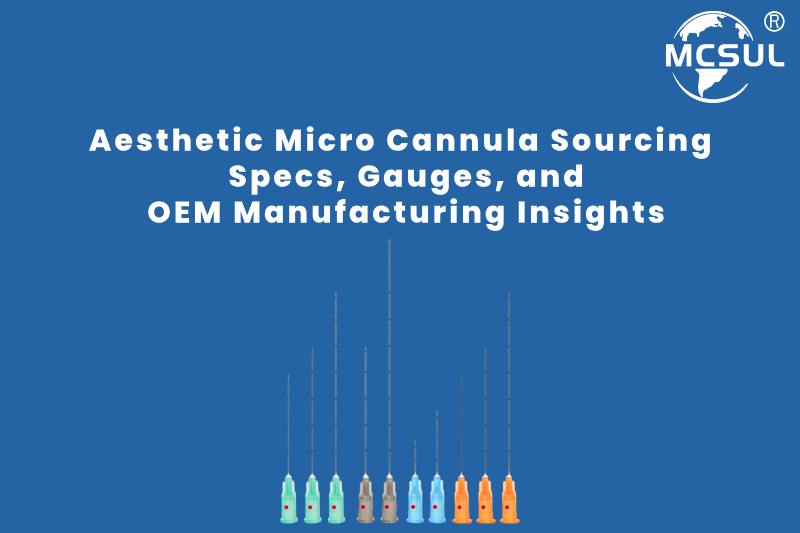
Sourcing the right aesthetic micro cannula is not a small task. The wrong tip shape can hurt patients,and wrong gauge can frustrate injectors. The wrong manufacturer can lead to a recall. This micro cannula sourcing guide breaks the process into clear steps. You will learn the key specs, the standards that matter, and how to vet a manufacturer. Use it whether you are building a private-label filler line or restocking an existing one.
What Is a Aesthetic Micro Cannula and Why Does Blunt-Tip Design Matter?
A micro cannula is a thin, flexible tube with a rounded tip. It is used to inject dermal filler under the skin. The blunt tip is the key design feature. It slides past blood vessels and nerves. It does not cut through them.
A sharp needle works differently. It cuts a straight path into tissue. A micro cannula pushes tissue aside instead. This one design choice is why cannulas are now the preferred tool for many filler jobs. This is true above all in areas full of blood vessels, like the tear trough, nose, and temple.
Most cannula treatments still start with a needle. The injector uses a sharp needle to make one small entry hole. From there, filler is pushed through with a filler injection syringe as the cannula is threaded through and fanned out under the skin. This two-step method blends the precision of a needle with the safety of a blunt tip. For the full basics on how these devices work, read our guide to aesthetic cannulas.
Blunt Tip Cannula vs. Sharp Needle: Which Is Safer for Filler Injection?
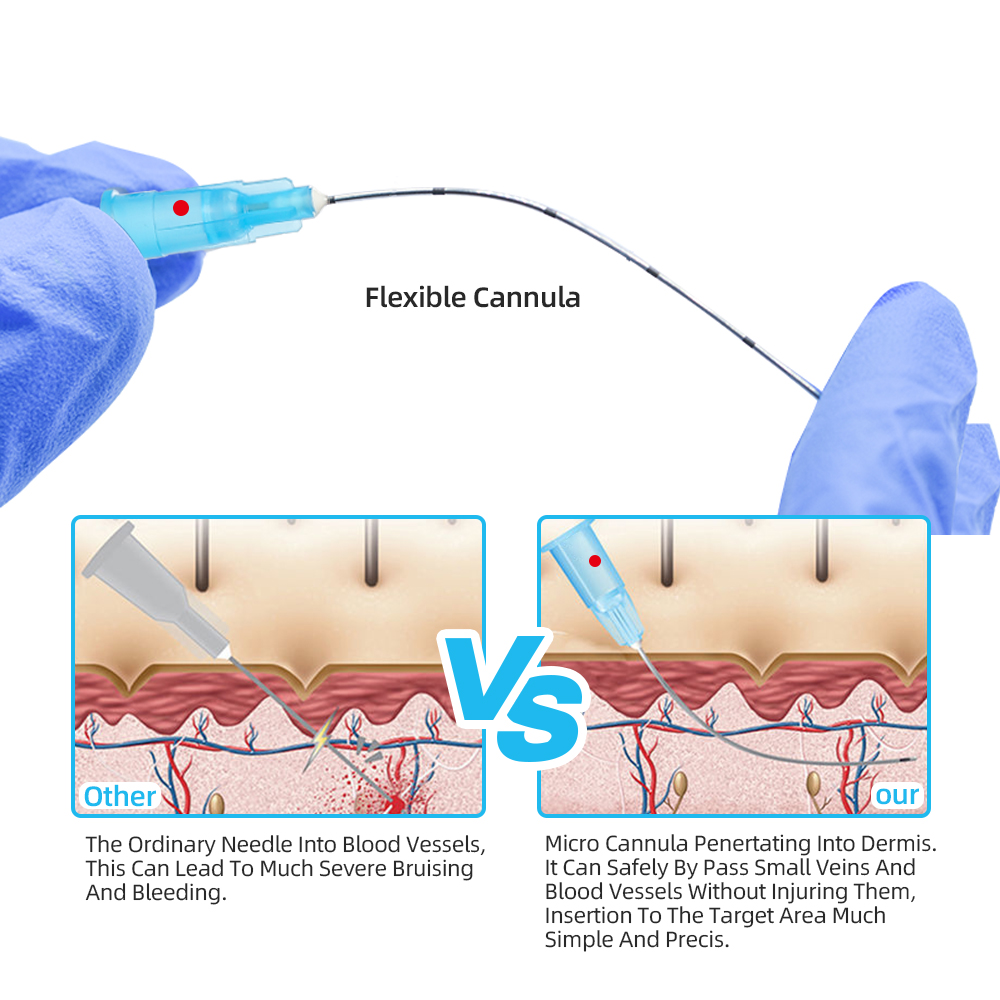
Most filler injections are safer with a blunt tip cannula than with a sharp needle. It lowers the risk of piercing a blood vessel. The most feared filler complication is vascular injury. It can cause tissue death. In rare cases, it can even lead to loss of vision. A blunt tip pushes vessels aside instead of puncturing them.
Sharp needles still have a place, though. They insert faster. They cost less per unit. Fine-gauge cosmetic filler injection needles work well for small, exact deposits, like along the lip border. Cannulas need a slightly wider tube to stay firm enough to thread through tissue. This is why they are used less for very fine, surface-level work.
| Feature | Blunt Tip Cannula | Sharp Needle |
| Vascular injury risk | Lower | Higher |
| Bruising and swelling | Less common | More common |
| Entry points needed | Often just one | Multiple, per area |
| Best for | Cheeks, tear trough, temples, jawline | Lips, fine lines, small spots |
| Learning curve | Slightly steeper | Easier for new injectors |
Many clinics now ask for a combo kit with both formats, sometimes pairing a cannula with multi-point injection needles for larger treatment areas. This gives injectors the choice on a case-by-case basis. If you sell OEM kits, it is smart to stock both. Do not pick just one format for your whole catalog.
Get Sample-Batch Pricing Before Your Next Bulk Order
MCSUL’s beauty needle range covers fine-gauge options for facial and cosmetic injection work, alongside the micro cannulas covered in this guide.
Request Product Details →What Gauge Size Should You Choose for Different Filler Areas?
The right cannula gauge depends on the treatment area and the filler’s thickness. Gauge numbers work in reverse order. A higher number means a thinner cannula. A 27G cannula is thinner than a 22G cannula.
Thick fillers need a lower gauge number. This lets the product flow without too much push force. Thin fillers work well with a higher gauge number and a finer tip. Using the wrong gauge can strain the injector’s hand or waste product in the tube.
| Gauge | Outer Diameter | Common Use Area | Typical Filler Type |
| 18G–20G | Very thick | Body contouring, large volume | High-viscosity, biostimulators |
| 22G | Thick | Cheeks, jawline, chin | Medium-to-high viscosity HA filler |
| 25G | Medium | Nasolabial folds, marionette lines | Medium viscosity HA filler |
| 27G | Fine | Tear trough, lips, fine lines | Low viscosity HA filler |
| 30G | Very fine | Superficial fine lines, under-eye | Very low viscosity HA filler |
Length matters too. A longer cannula, from 38mm to 50mm, covers a wide area from just one entry point. A shorter cannula, from 13mm to 25mm, suits small, local spots. If you sell to a broad clinic base, stock at least three gauge sizes. Add two length options as well. For more on tip shape and flex, see our guide on choosing a blunt tip microcannula.
What Should You Look for in an Aesthetic Micro Cannula Manufacturer?
A good aesthetic micro cannula manufacturer should offer real certifications, flexible OEM/ODM terms, and clear batch tracking. Certificates show the factory has passed an outside audit. This is worth more than a simple claim of compliance.
Look past the paperwork too. Check the factory’s actual setup:
- Raw material sourcing. Ask where the steel tubing comes from. Ask if it is tested to a named standard before it becomes a cannula.
- Tip-forming process. A blunt tip needs smooth, even rounding. A poor tip-forming step causes drag in tissue and injector complaints.
- Private label options. Confirm the factory can add custom hub colors and branded packaging. This should not raise your order minimum by much. Many buyers also private-label a matching facial aesthetic syringe under the same line.
- Sample speed. A factory that ships samples in one to two weeks is often a stronger OEM partner than one that takes a month.
- Clear technical support. Sourcing and rule questions move faster with one contact who knows both manufacturing and compliance.
MCSUL builds its OEM/ODM programs around these exact points. In-house tip-forming is paired with full paperwork for every batch. Our OEM/ODM solutions walk through what a private-label deal usually covers. Also, our global sourcing covers shipping and lead times for cross-border orders.
What Packaging and Labeling Should You Confirm Before a Bulk Order Aesthetic micro cannula?
Packaging and labeling for a disposable micro cannula should show the gauge, length, lot number, and sterilization date in clear print. Missing or unclear labels are a common cause of customs delays and clinic complaints.
Check these points before you approve a bulk order:
- Sterile barrier type. Most cannulas ship in a peel-open blister pack with a paper-and-film seal. Confirm the seal holds under normal shipping stress.
- Language and market fit. If you sell into the EU, labels need the CE mark, UDI code, and any required language translations.
- Lot traceability. Each box should list a lot number that matches the factory’s own batch records.
- Private label artwork. Confirm print quality on a real sample, not just a digital mockup. Colors and fine print often shift once printed.
- Inner and outer carton counts. Match these to your clinic order sizes so you are not left splitting full cases for small orders.
A manufacturer that gets packaging details right the first time usually runs a tighter process overall. Treat this step as a quick check on the factory’s attention to detail, not just a cosmetic concern.
What CE MDR and ISO Standards Apply to Disposable Aesthetic Micro Cannulas?
Disposable aesthetic micro cannula sold in the EU must meet EU MDR 2017/745. When paired with a dermal filler, they also fall under Annex XVI of the Common Specifications (EU) 2022/2346. This rule covers aesthetic devices sold without a stated medical purpose. In short, the device needs a CE mark. It also needs a technical file and an entry in the EUDAMED database before it can sell in EU countries.
On the factory side, look for ISO 13485 certification. This is the main quality standard for medical device makers. It is separate from the product mark. It shows how the factory runs its process day to day.
The cannula tube and tip are tested against ISO 7864. This standard is applicable to sterile hypodermic needles of single use. It also sets rules for cannula size, tip shape and flow rate. The raw steel tubing is checked first against ISO 9626. This standard sets limits for rust resistance, stiffness and surface finish. Luer hub fittings follow ISO 594-1 and ISO 594-2, so the cannula fits standard syringes. Biocompatibility testing follows ISO 10993-1.
Always ask a supplier for real copies of these certificates. Do not accept a written claim alone. Our compliance page lists the papers MCSUL provides for each standard above.
How Is Quality Control Handled for OEM Blunt Cannula Orders?
Quality control for a disposable blunt cannula for filler OEM order runs through several checks at MCSUL. They go from raw tubing to final sterile packing. Skip any step and there is a risk of a bent tip or broken seal.
A good QC process should have:
- Incoming tubing inspections. The steel is checked for straightness and wall thickness. This is done prior to production and using ISO 9626 limits.
- Tip-formation tests. Samples of each batch are inspected to see that the blunt tip is not ragged
- Test of size. Length, gauge, flow rate relative to ISO 7864 limits.
- Sterilization checks. Most cannulas use ethylene oxide (EtO) gas. Leftover gas levels are tested before the batch ships.
- Final visual checks. Every unit is checked for a sealed sterile pack. A broken seal means the whole batch gets rejected.
- Batch paperwork. Each lot gets a test report and a sterilization record. This lets any issue get traced back to one production run.
Ask any supplier for a sample QC report before you place an order. A factory that will not share one is a warning sign. Do not ignore it.
Common Sourcing Mistakes to Avoid
- Choosing on price alone. A cheaper unit often means thinner tube walls or a skipped check.
- Skipping a factory audit or video tour. Photos on a website do not prove real conditions on the floor.
- Ignoring gauge gaps. A supplier with only one or two gauges will not cover a full clinic’s needs.
- Overlooking adjacent product lines. Clinics that buy cannulas often also buy a beauty needle tube for thread embedding. A supplier who carries both saves you a second sourcing search.
- Not asking for real samples. Spec sheets can look the same. Actual tip quality often differs a lot between factories.
- Overlooking shipping terms and lead times. A great product with a six-week delay can still cost you clinic trust.
- Assuming one CE mark covers everything. CE marking applies to one exact product setup. A gauge or length change may need new paperwork.
Key Takeaways
- A micro cannula’s blunt tip lowers the risk of vascular injury. Sharp needles still suit small, exact deposits.
- Match gauge choice to the treatment area and filler thickness. Most clinics need at least three gauge sizes in stock.
- A strong manufacturer should hold ISO 13485. It should also give test reports for ISO 7864, ISO 9626, and ISO 10993-1 on request.
- EU orders need a CE mark under MDR 2017/745. Filler-paired cannulas also need to meet Annex XVI Common Specifications (EU) 2022/2346.
- Good QC runs from raw tubing checks through sterilization tests and batch paperwork. It should never stop at a quick visual scan.
- Always request real samples and a factory audit before you place a bulk OEM order.
Ready to Source Aesthetic Micro Cannulas from a Verified Manufacturer?
MCSUL manufactures blunt tip micro cannulas across multiple gauges and lengths, backed by ISO 13485 certification and full batch documentation. Browse the current aesthetic device range and request samples for your next OEM order.
Shop Aesthetic Devices →Final Thoughts
A useful micro cannula sourcing guide should leave you with a clear checklist, not just a list of features. Match your gauge range to your clinic base. Confirm your manufacturer’s certificates with real documents. Never skip the sample stage. Getting these steps right up front saves far more time than fixing a bad batch after it ships. MCSUL’s team can walk you through gauge choice, OEM specs, and current certificate copies whenever you are ready to start sourcing.