 +86-791-8686-1216



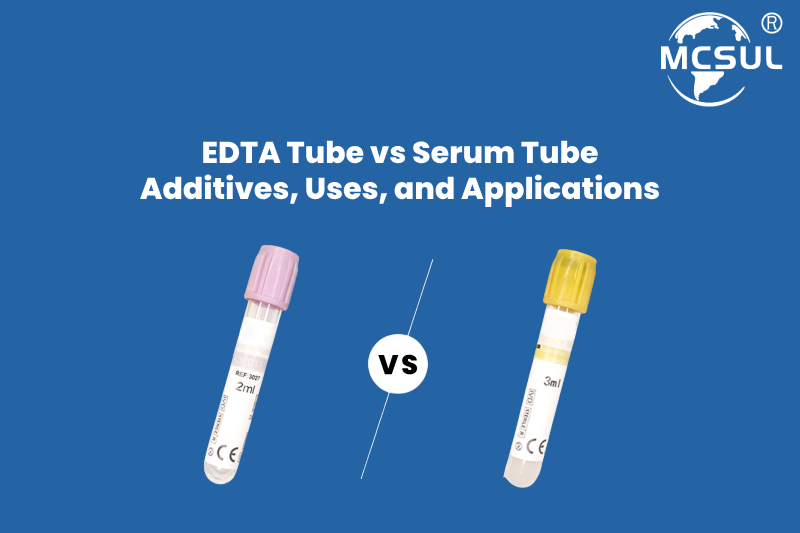
Proper blood sample collection is as important as the selection of the right blood collection tube. There are different kinds of blood specimens for laboratory tests. Some tests need whole blood and others need serum/plasma. Knowing difference between EDTA tube vs serum tube is important here. Both tubes are used to collect blood but they contain different additives and are used differently by the lab.
An EDTA tube stops blood from clotting and helps to preserve the blood cells for tests such as a complete blood count (CBC). A serum tube lets the blood clot before the serum is separated for chemistry, hormone and other diagnostic testing.
In this guide, you will learn about EDTA and serum tube additives, colors, uses, applications, and key differences. You will also understand how to choose the right blood collection tube for your laboratory needs.
What Is an EDTA Tube?
An EDTA tube is a blood collection tube that contains ethylenediaminetetraacetic acid. EDTA is an anticoagulant which means it prevents blood from clotting after collection.
When blood enters an EDTA tube, the additive binds calcium in the sample. Calcium is needed for the blood clotting process. By removing available calcium, EDTA helps keep the blood in a liquid state.
EDTA tubes are commonly used in hematology laboratories because it help preserve the shape and structure of blood cells.
Common EDTA Tube Colors
You can identify EDTA tubes by thier cap colors:-
- Lavender or purple top: Commonly used for routine hematology tests.
- Pink top: Often used for blood bank testing.
- White or pearl top: May contain K2 EDTA and gel for certain molecular diagnostic applications.
The exact tube color and application vary by manufacturer and laboratory protocol.
Types of EDTA Used in Blood Collection Tubes
You will commonly find two types of EDTA additives:-
1. K2 EDTA (Dipotassium EDTA)
K2 EDTA is widely used in modern blood collection tubes. It is available in spray-dried form and helps maintain blood cell structure. It is commonly used for CBC testing and other hematology applications.
2. K3 EDTA (Tripotassium EDTA)
K3 EDTA is another anticoagulant used in blood collection tubes. It is usually supplied in liquid form. Since the liquid additive can dilute the blood sample slightly laboratories should follow the recommended tube specifications and testing procedures.
What Is a Serum Tube?
A serum tube is a blood collection tube used to obtain serum from a blood sample. Unlike an EDTA tube, a standard serum tube does not contain an anticoagulant.
After blood enters the tube, it is allowed to clot. The sample is then centrifuged to separate the liquid serum from the blood cells and clot.
Serum contains water, proteins, electrolytes, hormones, antibodies and other things that laboratories measure during diagnostic testing.
Serum tubes are commonly used for clinical chemistry, immunology, hormone testing and serology.
Common Types of Serum Tubes
There are two common types of serum blood collection tubes:-
1. Red Top Serum Tube
A red top tube is generally used to collect blood without an anticoagulant. Depending on the tube design, it may be made of glass or plastic. Some plastic red top tubes contain a clot activator.
2. Gold Top Serum Separator Tube (SST)
A gold top serum separator tube has a clot activator and a special gel separator. The clot activator help the blood to clot faster and the gel acts as a barrier between serum and blood cells after centrifugation.
These features make SST tubes suitable for many routine chemistry and immunology tests.
EDTA Tube vs Serum Tube: Key Differences
Although both tubes collect blood, their additives, specimen types, and laboratory applications are different.
Here is a quick comparison of EDTA tubes and serum tubes.
| Feature | EDTA Tube | Serum Tube |
|---|---|---|
| Common cap color | Lavender/purple | Red or gold |
| Main additive | K2 EDTA or K3 EDTA | None or clot activator |
| Main function | Prevents clotting | Allows blood to clot |
| Sample type | Whole blood | Serum |
| Clotting | Prevented | Required |
| Centrifugation | Depends on test | Usually required |
| Common applications | CBC and hematology | Chemistry and immunology |
| Cell preservation | Helps preserve blood cells | Cells are separated from serum |
| Common tests | CBC, blood film, HbA1c | Liver function, lipid profile, hormones |
The main difference is simple: EDTA tubes keep blood from clotting, while serum tubes allow blood to clot so serum can be collected.
EDTA Tube vs Serum Tube: Additives Explained
The additives inside blood collection tube determine how the blood sample behaves after collection.
EDTA as an Anticoagulant
EDTA works by binding calcium ions in the blood. Since calcium plays an important role in coagulation, this action prevents clot formation.
This help you maintain a whole blood sample for hematology testing.
Clot Activator in Serum Tubes
Serum tubes may contain clot activators such as silica particles. These additives fast the natural clotting process.
After the sample clots, centrifugation separates the serum from the clot and blood cells.
Gel Separator in SST Tubes
A serum separator tube contains a special gel that moves between the serum and the clot during centrifugation.
This barrier help reduce contact between the separated serum and blood cells during storage and handling.
Remember that not every serum tube contains gel. Always check the tube specifications before selecting one for a particular test.
What Are EDTA Tubes Used For?
EDTA blood collection tube are mainly use when your laboratory need whole blood with preserved blood cells.
Some common EDTA tube applications include:-
1. Complete Blood Count (CBC)
CBC testing measures red blood cells, white blood cells, hemoglobin, hematocrit and platelets.
EDTA help prevent clotting and keeps blood cells suitable for analysis. This makes lavender-top EDTA tubes the standard choice for many routine CBC tests.
2. Hemoglobin A1c (HbA1c) Testing
The HbA1c test reflects the average blood glucose over the last two to three months. Laboratories commonly use EDTA whole blood for this test.
3. Blood Smear Examination
A blood smear helps you examine the size, shape and appearance of blood cells under a microscope. Technicians commonly use EDTA tubes to collect samples for this purpose.
4. Molecular and Genetic Testing
Some molecular diagnostic and genetic tests require EDTA blood because it provides a suitable source of DNA. The exact tube type depends on the laboratory method.
5. Hematology Testing
EDTA tubes are also use for platelet counts, white blood cell counts, red blood cell measurements, and other hematology procedures.
What Are Serum Tubes Used For?
Serum tubes are use when your laboratory need serum rather than whole blood or plasma.
Serum is the liquid part of blood that remains after clotting and centrifugation separate it. It has many substances which help health care providers to assess a person’s health.
Common serum tube applications include:
1. Clinical Chemistry Tests
Serum samples are widely use for routine chemistry testing, including:
- Liver function tests (LFT)
- Kidney function tests (KFT)
- Lipid profile
- Electrolyte testing
- Uric acid testing
Blood glucose testing, when the specific method accepts serum
2. Hormone Testing
Many hormone tests use serum to measure hormone levels in the blood.
Examples include thyroid function tests, reproductive hormone tests and other endocrine investigations. Always consult the laboratory’s test requirements as some methods accept different specimen types.
3. Immunology and Serology Testing
Antibody and antigen tests often use serum tubes.
Labs use these tests to check for infections, immune responses and some autoimmune conditions.
4. Biochemistry Testing
Serum furnishes a clear liquid specimen after proper separation, so it is useful for many biochemical tests.
Technicians often perform routine biochemistry in SST tubes with gold tops, as the separator gel prevents the serum from mixing with the blood cells.
5. Therapeutic Drug Monitoring
Some therapeutic drug monitoring tests use serum to measure the amount of a medicine in the blood. However, the correct specimen type depends on the specific drug and laboratory method.
EDTA Tube vs Serum Tube : Which Blood Sample Do They Produce?
One of the main differences between EDTA and serum tubes is the type of blood specimen they provide.
EDTA Tube Produces Whole Blood
When you draw blood into an EDTA tube the anticoagulant prevents the blood from clotting. The sample is still whole blood which contains red blood cells, white blood cells, platelets and plasma.
You can use this sample for tests that need intact blood cells.
Serum Tube Produces Serum
When you collect blood in a serum tube, the sample is allow to clot. After centrifugation, the clot and blood cells settle below leaving serum at the top.
Serum does not contain fibrinogen because it is consum during the clotting process
Serum vs Plasma: Are They the Same?
No. Serum and plasma are different blood components.
Serum : The liquid portion remaining after blood has clotted.
Plasma : The liquid portion of anticoagulated blood that contains clotting factors, including fibrinogen.
EDTA tubes contain whole blood with an anticoagulant, and you can spin them down to obtain EDTA plasma. Serum tubes give serum after clotting and centrifugation.
This difference is significant when choosing a blood collection tube for lab testing.
EDTA Tube vs Serum Tube: Blood Collection and Handling
Proper collection of blood and handling of specimens can achieve quality of the specimen and reduction of errors in testing.
Follow these basic steps when using EDTA and serum tubes.
Step 1: Select the Correct Tube
Before collecting blood check the laboratory test requirements.
Choose an EDTA tube for tests requiring EDTA whole blood.
Choose a red-top or gold-top serum tube for tests requiring serum.
Never select a tube based on cap color alone. Additive and specimen requirements. Check.
Step 2: Collect the Blood Sample
Follow venipuncture technique correctly and fill the tube to the manufacturer’s recommended volume .
Underfilling or overfilling the tube lead to an inappropriate blood-to-additive ratio and unreliable results.
Step 3: Mix the EDTA Tube
After collection gently invert EDTA tube as per manufacturer’s instruction.
This helps mix the anticoagulant with the blood sample and prevents the clots from forming.
Do not shake the tube aggressively. This damage the blood cells.
Step 4: Allow the Serum Tube to Clot
Maintain serum tube in the upright position and allow samples to clot for the time recommended by the tube manufacturer and laboratory procedure.
Do not centrifuge the sample until it has clotted adequately.
Step 5: Centrifuge When Required
Spin the serum tube at the recommended speed and time. This separates the serum from the clot and blood cells.
For EDTA samples centrifugation depends on the test. Some applications require whole blood while other use separated plasma.
Step 6: Store and Transport the Sample
Follow laboratory requirements for storage and transport of each test.
The test method and the temperature can affect the processing time and the stability of the samples. “Proper handling preserves the quality of the sample.”
Common Mistakes When Choosing EDTA and Serum Tubes
Choosing a wrong blood collection tube may affect sample quality and test accuracy.
Here are some common mistakes you should avoid:-
- Using EDTA for serum testing : EDTA is an anticoagulant so you cannot get serum from an EDTA specimen by the normal process of clotting.
- Using serum tubes for CBC testing : Blood cells may become trapped in the clot, making the sample unsuitable for routine CBC analysis.
- Ignoring tube additives : Regardless of tube additives, red-top and gold-top tubes may have different additives and processing requirements.
- Incorrect blood volume : The sample should be filled to the manufacturer’s recommended fill volume.
- Poor mixing : Gently invert EDTA tubes to mix the anticoagulant.
- Centrifuging too early : Serum tube require adequate time for clot formation.
- Incorrect storage : Specimen stability can be negatively affecting affected by improper storage and delayed processing.
Why Choose MSCUL for EDTA Tube and Serum Tube Solutions?
When selecting EDTA tube and serum tube, product quality and stable performance are important. MSCUL provides blood collection tube solutions to ensure safe collection, accurate additive performance and consistent use in the laboratory. MCSUL focus on quality materials, sterile and leak-proof designs, and reliable manufacturing standards makes it a provider for hospitals, diagnostic labs and medical distributors.
Contact MCSUL for recommendations on appropriate blood draw tube for your needs.
Conclusion
If you know the difference between a serum tube and an EDTA tube, you will be better able to select the appropriate blood collection tube for laboratory testing.
EDTA tubes contain an anticoagulant that prevents blood clotting and preserves whole blood for CBC, HbA1c and other hematology application.
Serum tubes allow blood to clot before centrifugation. They are commonly use for clinical chemistry, hormone, immunology and serology testing.
The most important point is to match the tube additive with the required specimen type. When you select the correct tube and follow proper collection and handling procedures you can help maintain sample quality and support reliable laboratory results.
FAQs: EDTA Tube vs Serum Tube
1. What is the difference between an EDTA tube and a serum tube?
The main difference between an EDTA tube and a serum tube is their additives and purpose. EDTA tubes contain an anticoagulant that prevents blood clotting and are used for hematology tests. Serum tubes allow blood to clot before centrifugation to separate serum for biochemical and immunological testing.
2. What is an EDTA blood collection tube used for?
An EDTA blood collection tube is primarily used for complete blood count (CBC), hemoglobin testing, blood cell analysis, and hematology examinations. Its EDTA additive binds calcium to prevent clotting and helps preserve the shape and condition of blood cells for accurate laboratory results.
3. What is a serum blood collection tube used for?
A serum blood collection tube is used to collect blood samples for biochemical, serological, hormonal, and immunological testing. Blood is allowed to clot before centrifugation, separating the liquid serum from blood cells and clotting components for laboratory analysis.
4. Does an EDTA tube contain an anticoagulant?
Yes, an EDTA tube contains an anticoagulant called ethylenediaminetetraacetic acid (EDTA). It works by binding calcium ions, which are necessary for blood clotting. Common EDTA tubes contain K2EDTA or K3EDTA and are widely used for CBC and other hematology tests.
5. Does a serum tube contain an anticoagulant?
No, a standard serum tube does not contain an anticoagulant. It allows blood to clot naturally before centrifugation. Some serum separator tubes contain a clot activator and gel separator to support clot formation and separate serum from blood cells.
6. What is the difference between an EDTA tube and a serum separator tube (SST)?
An EDTA tube contains an anticoagulant to keep blood in liquid form for hematology testing. A serum separator tube (SST) contains a clot activator and separation gel. After centrifugation, the SST produces serum for chemistry, hormone, and immunology tests.
7. What color is the EDTA tube compared to the serum tube?
EDTA blood collection tubes typically have lavender or purple tops, although some blood bank applications use pink tops. Serum tubes commonly have red tops, while serum separator tubes usually have gold or yellow-and-red tiger tops, depending on the manufacturer and tube type.
8. Can you use an EDTA tube instead of a serum tube?
No, an EDTA tube cannot generally replace a serum tube because both collect different specimen types. EDTA tubes provide anticoagulated whole blood or plasma, while serum tubes provide serum after clotting. Using the wrong tube can interfere with laboratory testing and produce inaccurate results.
9. Why is EDTA used in blood collection tubes instead of other additives?
EDTA is used in blood collection tubes because it effectively prevents clotting by binding calcium ions. It also helps preserve blood cell morphology, making it suitable for complete blood counts, platelet analysis, and other hematological examinations.
10. How do you choose between an EDTA tube and a serum tube?
Choose an EDTA tube when you need whole blood for CBC, hemoglobin, or blood cell analysis. Choose a serum tube for biochemical, hormonal, and serological testing that requires serum. Always follow the laboratory test requirements and specimen collection guidelines.