 +86-791-8686-1216



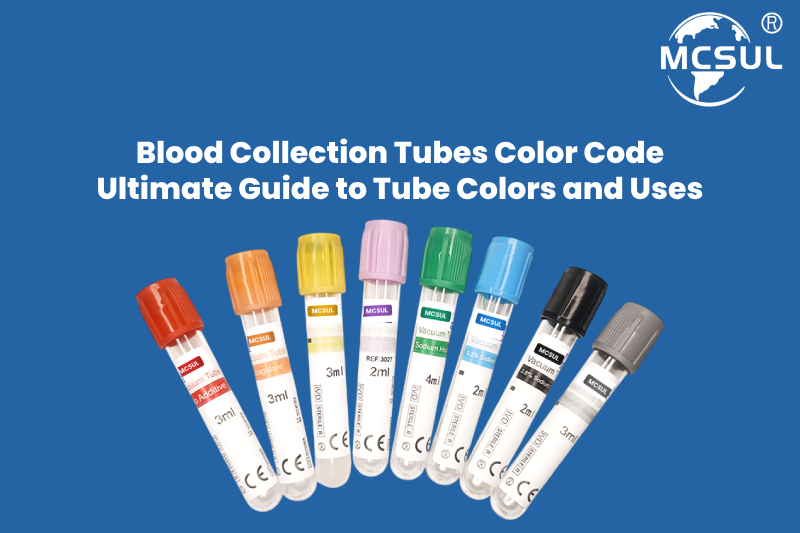
Blood collection tubes are needed for medical testing. Each tube is designed for specific purpose and the additive inside can be identified by the color of its cap. Additives are used to preserve blood specimens, to prevent clotting, to separate serum or plasma and to prepare specimens for different laboratory tests. Knowing the blood collection tubes color code helps you select the right tube for each test. If you work in a hospital, diagnostic lab, blood collection center, or in the medical supply business, knowing the different tube colors will help you avoid sample errors.
This guide will teach you the different blood test tube colors, additives, common laboratory uses and the correct order of draw. You’ll also find a simple blood vial color code chart for quick reference.
What Is the Blood Collection Tubes Color Code?
The blood collection tubes color code is a system that uses different colors of caps to identify the additives found inside of blood collection tubes. Each additive has a specific purpose and is used to prepare the blood sample for a specific laboratory test.
For example, a lavender-top tube contains EDTA which prevents the blood from clotting and helps preserve blood cells for hematology testing. Coagulation tests are performed in a light blue-top tube, sodium citrate.
Learning the color codes for blood collection tubes can help you find the right tube for a test more quickly.
However, note that cap colors are not universal between manufacturers or between countries. Before collecting any sample check the tube label, additive and laboratory instructions.
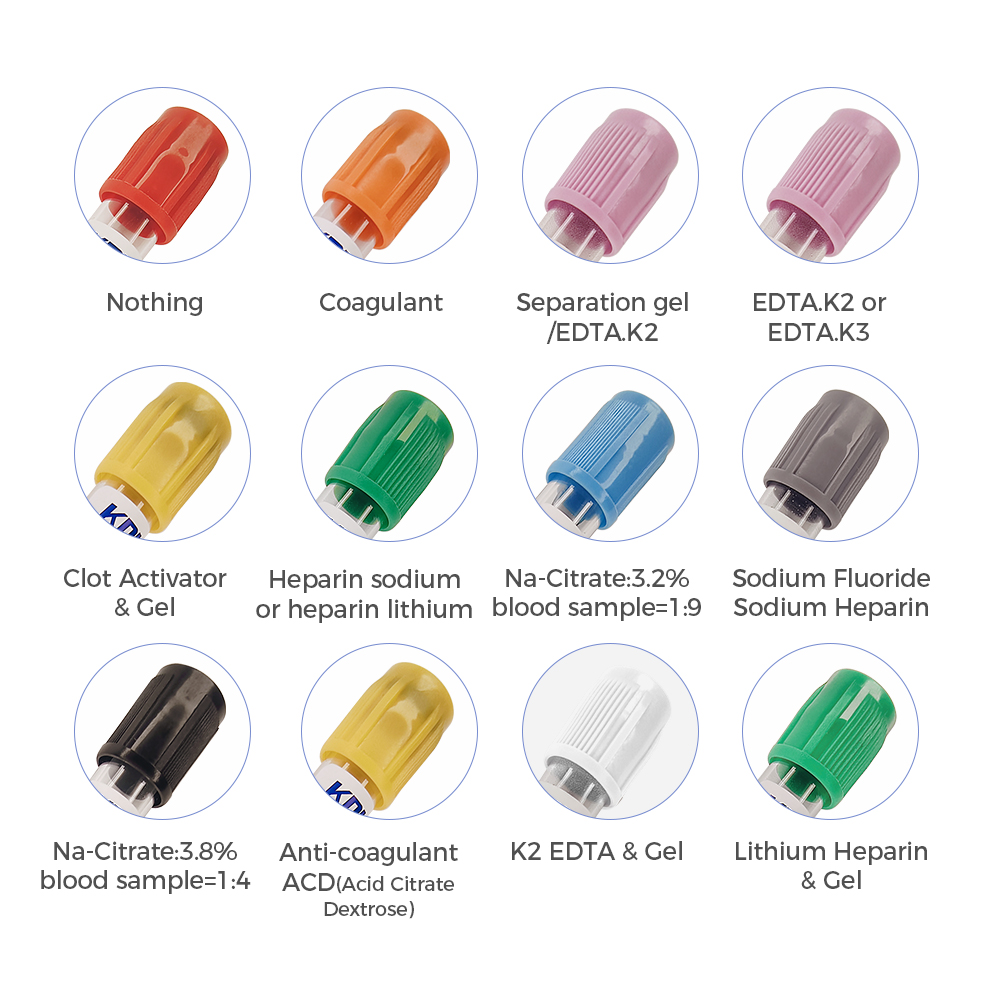
Different Blood Collection Tubes Color Code and Their Uses
Let’s look at the most common blood test tubes color and understand how each one works.
1. Light Blue Top Tube – Sodium Citrate
The light blue-top tube contains sodium citrate as an anticoagulant. It prevents blood from clotting by binding calcium in the sample.
This tube is mainly used for coagulation studies to see how well your blood clots.
Common uses:
- Prothrombin time (PT)
- Activated partial thromboplastin time (aPTT)
- International normalized ratio (INR)
- D-dimer testing
- Other coagulation studies
You must fill a sodium citrate tube to its required fill line. The standard blood-to-additive ratio is 9:1. An underfilled tube can affect test accuracy.
2. Red Top Tube – Serum Collection
The red-top tube is commonly used to collect blood for serum-based laboratory tests. Depending on its design, it may contain no additive or a clot activator.
After blood collection, the sample is allowed to clot. It is then centrifuged to separate the serum from the blood cells.
Common uses:
- Routine chemistry testing
- Hormone testing
- Serology
- Immunology
- Blood grouping and other special tests, depending on laboratory requirements
Red-top tubes are available in glass and plastic versions. Always check whether your tube contains a clot activator.
3. Gold Top Tube – Serum Separator Tube (SST)
The gold-top tube is also known as a serum separator tube (SST). It generally contains a clot activator and a gel separator.
After centrifugation the gel forms a barrier between the serum and blood cells. This helps keep the separated serum stable during sample handling.
Common uses:
- Liver function tests.
- Kidney function tests.
- Lipid profile.
- Thyroid function tests.
- Routine clinical chemistry.
- Immunology testing.
Gold-top tubes are preferred by diagnostic laboratories because they are used in the separation of serum.
4. Green Top Tube – Heparin
The green-top tube contains heparin which is an anticoagulant. It interferes with the clotting process, so it prevents the blood from clotting.
Depending on the tube, the additive may be lithium heparin or sodium heparin.
Common uses:
- Plasma chemistry testing
- Electrolyte testing
- Some emergency laboratory tests
- Special chemistry investigations
Green-top tubes are useful when laboratories need plasma instead of serum.
5. Light Green Top Tube – Plasma Separator Tube (PST)
The light green-top tube usually contains lithium heparin and a gel separator. It is also called a plasma separator tube.
The heparin prevents clotting, while the gel helps separate plasma from blood cells after centrifugation.
Common uses:
- Routine plasma chemistry.
- Electrolyte testing.
- Certain emergency chemistry tests.
Labs can process plasma samples faster with light green tubes.
6. Lavender or Purple Top Tube – EDTA
The lavender or purple-top tube contains EDTA (ethylenediaminetetraacetic acid). EDTA prevents blood clotting by binding calcium.
It also helps preserve the shape and structure of blood cells making it suitable for hematology testing.
Common uses:
- Complete blood count (CBC)
- Hemoglobin testing
- Red blood cell count
- White blood cell count
- Platelet count
- Peripheral blood smear
EDTA tubes usually contain K2EDTA or K3EDTA. The precise additive depends on the tube design.
If you need reliable blood cell measurements choosing the correct EDTA tube and following the laboratory’s sample-handling instructions are important.
7. Pink Top Tube – EDTA for Blood Banking
The pink-top tube also contains EDTA, usually K2 EDTA. However, it is commonly used for blood bank and transfusion-related testing.
It helps preserve the blood sample for immunohematology procedures.
Common uses:
- Blood grouping
- ABO and Rh typing
- Antibody screening
- Crossmatching
- Transfusion testing
EDTA is present in both pink and lavender tubes and though they can be used for different laboratory applications.
8. Gray Top Tube – Glucose Testing
The gray-top tube generally contains sodium fluoride and potassium oxalate.
Potassium oxalate acts as an anticoagulant, while sodium fluoride helps slow glycolysis. This reduces the breakdown of glucose by blood cells after collection.
Common uses:
- Blood glucose testing.
- Glucose tolerance testing.
- Some lactate testing protocols.
- Other tests requiring glycolysis inhibition.
Gray-top tubes are particularly useful for preservation of glucose during specimen handling and transport.
9. Yellow Top Tube – ACD
The yellow-top ACD tube contains acid citrate dextrose. It prevents clotting and helps to preserve some of the cellular components.
ACD tubes are used for specialized laboratory applications.
Common uses:
- DNA studies
- HLA tissue typing
- Paternity testing
- Specialized blood cell studies
Do not confuse yellow ACD tubes with yellow-top blood culture tubes. Their additives and purposes are different.
10. Royal Blue Top Tube – Trace Element Testing
Royal blue-top tubes are designed for trace element and special chemistry testing. Their additives depend on the specific tube version.
Some royal blue tubes are designed without additives, while others contain EDTA or clot activators.
Common uses:
- Zinc testing.
- Copper testing.
- Lead testing.
- Other trace element analysis.
When choosing a tube, always check the additive of the royal blue tube and the requirements of the laboratory.
11. Black Top Tube – ESR Testing
The black-top tube commonly contains sodium citrate and is designed for erythrocyte sedimentation rate (ESR) testing.
ESR measures how quickly red blood cells settle at the bottom of a tube over a specific period.
Common uses:
- Erythrocyte sedimentation rate testing
- Evaluation of inflammation
- Supporting the assessment of certain inflammatory conditions
Black-top ESR tubes have specific fill requirements. Do not confuse them with light blue coagulation tubes.
12. Orange Top Tube – Rapid Serum Testing
The orange-top tube usually contains a thrombin-based clot activator. It helps blood clot more quickly than conventional serum tubes.
This design can support faster serum preparation.
Common uses:
- Rapid serum chemistry testing.
- Emergency laboratory investigations.
- Tests requiring quickly prepared serum.
The exact application depends on the tube manufacturer and laboratory protocol.
Order of Draw for Blood Collection Tubes
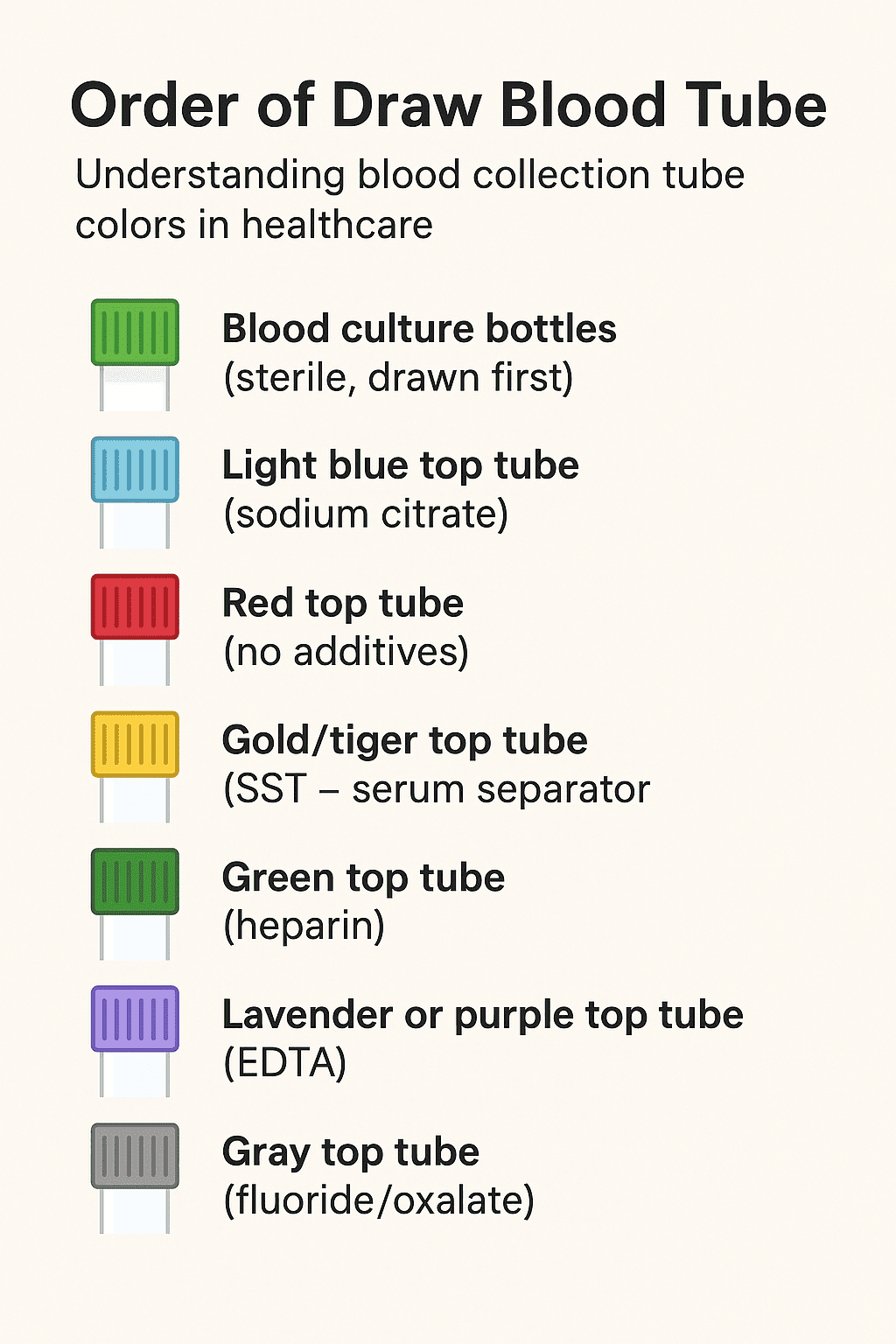
If blood is drawn in more than one tube during a single venipuncture, you must draw them in the correct order.
The order helps prevent additives from one tube from contaminating the next sample. Such contamination can affect laboratory results.
The commonly recommended order is:-
- Blood culture bottles: Used for microbiology testing.
- Light blue: Sodium citrate for coagulation testing.
- Red, gold, or tiger top: Serum collection.
- Green or light green: Heparin tubes for plasma testing.
- Lavender, pink, or pearl: EDTA tubes.
- Gray: Fluoride and oxalate tubes.
Specialty tubes such as ACD and ESR tubes, may require additional placement based on the laboratory’s approved procedure.
Always follow your laboratory’s current order-of-draw policy and the manufacturer’s instructions.
Why Is Color Coding Important in Blood Collection?
Color coded vials for blood collection helps in identification of samples and accuracy of lab.
Here are some important benefits.
Helps Select the Correct Tube
Different types of blood samples are needed for different tests. Color coding will help you to identify the correct tube and additive before collection.
Reduces Sample Contamination
The correct order of draw should be followed to minimize additive carryover between tubes. This is important because contamination can alter test results.
Supports Accurate Test Results
Each additive has its own function. The wrong tube could affect the blood cells, clotting factors, glucose or other parts of the sample.
Improves Laboratory Workflow
A clear blood vial color code helps lab staff to identify samples more quickly. Also the sample is easier to process, handle and store.
Makes Staff Training Easier
Color-coded tubes provide a simple visual reference for phlebotomists, nurses, and laboratory technicians. This makes it easier to learn the purpose of different blood collection tubes.
How to Choose the Right Blood Collection Tube
The right blood collection tube is more than just the color of the cap. You will also have to consider the tube additive, sample volume, test requirements and handling instructions.
Follow these steps :-
- Check laboratory test : Determine if the test needs serum, plasma or whole blood.
- Confirm the additive : Check whether the tube contains EDTA, heparin, sodium citrate, fluoride, or another additive.
- Check the tube size : Select the blood volume for the test you want to perform.
- Follow the fill line : Certain tubes require exact ratios of blood to additive, especially tubes with sodium citrate.
- Follow mixing instructions : Tubes containing additive should be inverted gently according to the manufacturer’s instructions. Don’t shake them.
- Check product quality : Choose tubes with tight caps, clear labels, suitable materials, and adequate sterility when necessary.
- Follow storage instructions : Store and transport samples according to laboratory requirements.
If you are purchasing blood collection tubes for a hospital, diagnostic center or laboratory uniform manufacturing quality and reliable product documentation are also important.
How to Select a Reliable Blood Collection Tube Manufacturer
The manufacturer you choose to purchase blood collection tubes in bulk from can affect both the quality of the product and the supply chain.
Before selecting a supplier consider these factors:
- Product range: Check whether the manufacturer offers EDTA, heparin, sodium citrate, serum separator, glucose, and other specialized tubes.
- Additive quality: Confirm that additives meet the required specifications for their intended applications.
- Sterility and safety: Review applicable sterilization, packaging, and quality-control requirements.
- Product consistency: Check whether tube dimensions, fill volumes, closures, and additives remain consistent between batches.
- Certifications and documentation: Request relevant quality certificates and product documentation.
- OEM and ODM services: If you need private-label products or customized specifications, check whether the manufacturer offers OEM or ODM support.
MCSUL is a manufacturer and supplier of medical products. If your business is in need of blood collection products, you can check out the available blood collection tube products and talk to the MCSUL team about your product needs.
Conclusion
Understanding the blood collection tube color code helps you identify the correct tube for different laboratory tests. Each tube has a different purpose whether it is a lavender EDTA tube for CBC testing or a light blue sodium citrate tube for coagulation studies .
Knowing the different colors of blood collection tubes, the additives they contain and the proper order of draw can help reduce errors in the sample and improve the flow of work in the lab.
If you are in the market for blood collection tubes for your hospital, diagnostic lab or medical supply business, you should find a reliable manufacturer that can provide consistent product quality, appropriate specifications and reliable documentation.
Looking for a trusted supplier of blood collection tubes? Find MCSUL blood collection tubes that can satisfy the needs of your business and lab
Blood Collection Tubes Color Code FAQS
1. What is the blood collection tube color code?
The blood collection tube color code is a system that identifies blood collection tubes by their cap colors. Each color generally represents a specific additive and laboratory purpose. For example, lavender tubes contain EDTA, light blue tubes contain sodium citrate, and gray tubes commonly contain sodium fluoride and potassium oxalate.
2. What color tube is used for a CBC test?
A lavender or purple-top tube is commonly used for a complete blood count (CBC) test. It contains EDTA, an anticoagulant that prevents blood clotting and helps preserve blood cells for accurate hematology analysis.
3. What is the difference between red and gold-top blood collection tubes?
Red-top tubes are used for serum collection and may contain no additive or a clot activator. Gold-top tubes usually contain a clot activator and gel separator. Both are commonly used for serum chemistry testing, but their sample separation methods differ.
4. Which blood collection tube is used for glucose testing?
A gray-top blood collection tube is commonly used for glucose testing. It generally contains sodium fluoride and potassium oxalate. Sodium fluoride helps slow glycolysis, reducing glucose breakdown in the sample after collection.
5. What color tube is used for coagulation tests?
A light blue-top blood collection tube is commonly used for coagulation tests. It contains sodium citrate, which binds calcium and prevents blood from clotting. Common tests include PT, aPTT, and INR.
6. What is the purpose of a green-top blood collection tube?
A green-top blood collection tube contains heparin, usually lithium heparin or sodium heparin. It prevents blood clotting and is commonly used to collect plasma for chemistry and electrolyte testing.
7. What is the difference between K2 EDTA and K3 EDTA tubes?
K2 EDTA and K3 EDTA tubes both contain EDTA as an anticoagulant. K2 EDTA is usually spray-dried on the tube wall, while K3 EDTA is commonly supplied in liquid form. Both are used for hematology testing, depending on laboratory requirements.
8. What is the order of draw for blood collection tubes?
The commonly recommended order is blood culture, light blue, serum tubes (red or gold), green, lavender or pink, and gray. Following this order helps reduce additive contamination between samples. Always check your laboratory’s approved procedure for specialty tubes.
9. What color blood collection tube is used for DNA testing?
Yellow-top ACD tubes are commonly used for certain DNA studies. They contain acid citrate dextrose, which prevents clotting and supports the preservation of blood cells for specialized testing. The required tube depends on the specific DNA test.
10. Are blood collection tube colors the same for every manufacturer?
No. Blood collection tube cap colors can vary between manufacturers, countries, and tube designs. Some colors may represent different additives or applications. Always check the product label, additive information, and laboratory instructions instead of relying on cap color alone.