 +86-791-8686-1216


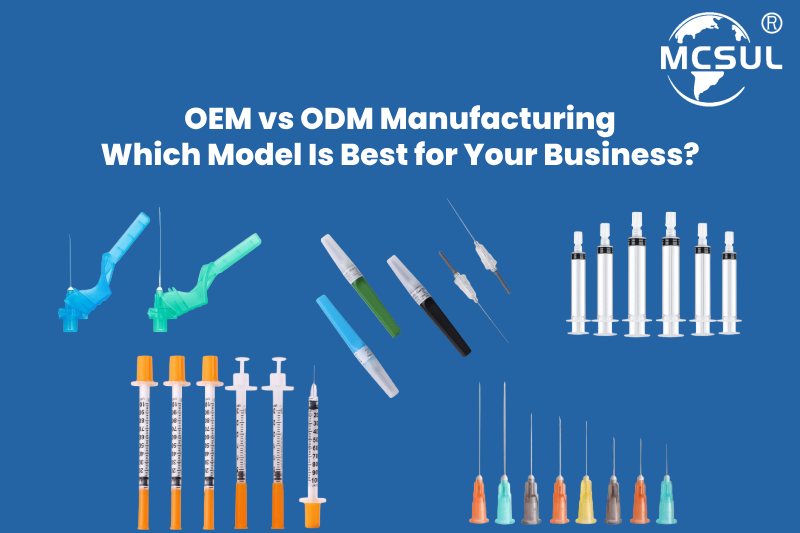
OEM vs ODM Manufacturing is a crucial decision for any business looking to develop, source or sell products. The right manufacturing model allows you to control costs, get products to market faster, improve product quality and build a stronger brand.
But OEM and ODM work differently in the manufacture. In OEM manufacturing, the buyer generally supplies the product design or detailed specifications, and the manufacturer produces the product. In ODM manufacturing the product design is owned or developed by the manufacturer and the buyer can often sell it under their own brand with mutually agreed modifications.
So, which model is right for your business?
The answer will depend on your budget, product requirements, customization requirements, intellectual property rights and time to market goals. This guide will assist you to learn how OEM and ODM manufacturing works, compare the costs and benefits, see real-world examples and how to choose the right manufacturing partner.
What Is OEM Manufacturing?
OEM stands for Original Equipment Manufacturer. Under an OEM manufacturing agreement, a manufacturer produces goods to the design, technical specifications, drawings or product requirements of a buyer.
The buyer has usually more control over design and features of the product. The manufacturer provides the production facilities, equipment, technical know-how and production processes necessary to the manufacture of the agreed product.
OEM manufacturing is a popular choice among businesses who need custom products, unique features or more control over product specifications.
How Does OEM Manufacturing Work?
The OEM manufacturing process usually follows these steps:-
- Product planning : The buyer plans the product objectives, target market, characteristics and performance requirements.
- Design and development: Either the buyer has a design, or works with engineering partners to develop one.
- Prototyping : The manufacturer makes samples or prototypes to check the design and to find problems.
- Testing and approval : Parties evaluate product performance, materials, dimensions and applicable quality requirements.
- Production : The manufacturer is then making the product to the agreed specifications.
- Quality inspection and delivery : Then finished products are checked, if needed, and packaged and sent out.
The specific process will be decided based on product complexity and the scope of responsibilities outlined in the manufacturing agreement.
Key Advantages of OEM Manufacturing
There are many benefits for businesses that require control of their products through OEM manufacturing.
- Greater customization : You can tailor products to particular technical specifications and customer needs.
- Product differentiation: Unique designs and features can help your business stand out from competitors.
- More design control: You can influence materials, dimensions, performance requirements, and other product characteristics.
- Potential for long-term product development: A custom design can provide a foundation for future product improvements.
- Better alignment with specialized needs: OEM can be suitable when standard products do not meet your requirements.
However, these benefits may come with higher upfront development costs, more technical work, and longer development timelines.
Common OEM Manufacturing Examples
OEM manufacturing is used across many industries.
- Medical devices: Custom made medical components, syringes, blood collection products and other devices made to agreed specifications.
- Electronics: Tailored circuit boards, electronic parts and dedicated hardware.
- Automotive: Vehicle components, engineered assemblies and parts manufactured to technical drawings
- Industrial equipment : Equipment, tools and production equipment for specialized machines.
- Packaging : Custom packaging developed for specific product and compatibility requirements.
The buyer and manufacturer must also agree on their respective responsibilities for testing, documentation, quality control and regulatory compliance for regulated products.
What Is ODM Manufacturing?
ODM is short for Original Design Manufacturer. In ODM manufacturing, the manufacturer creates a product design or provides a design that buyers can use under agreed commercial terms.
The buyer does not create a product from scratch, selects a suitable product, and may request allowed changes. Such changes may involve branding, packaging, colors, material or selected technical features.
ODM production allows companies to enter a market without having to invest heavily in developing a completely new product.
How Does ODM Manufacturing Work?
The ODM manufacturing process generally includes the following steps:
- Product selection: The buyer reviews the manufacturer’s existing product range or design options.
- Requirement review: The buyer identifies the desired specifications, target price, packaging, and branding.
- Customization: The manufacturer confirms which changes are technically possible and commercially available.
- Sample approval: The buyer evaluates samples to check whether the product meets the agreed requirements.
- Production planning: The parties confirm pricing, minimum order quantities, lead times, and quality requirements.
- Manufacturing and delivery: The manufacturer produces and supplies the approved products.
Generally, an ODM project will take less time to develop than a comparable custom OEM project because the manufacturer has already completed much of the design work.
But the speed depends on product availability, customization, testing, production capacity and regulatory requirements.
Key Advantages of ODM Manufacturing
ODM manufacturing can be useful for businesses that want to launch products without managing the entire design process.
- Lower initial development effort: The manufacturer has already developed the core design.
- Potentially faster market entry: Existing designs can reduce the time needed for product development.
- Access to manufacturing expertise: Buyers can benefit from the manufacturer’s established production processes.
- Simpler product development: The buyer may need fewer engineering resources.
- Branding opportunities: Businesses can often sell products under their own brand, subject to the agreement.
The main tradeoff is that the buyer may have less input into the original design, and fewer opportunities to produce a truly unique product.
Common ODM Manufacturing Examples
ODM manufacturing is common in industries where there are existing designs that can meet a wide range of customer needs.
Examples include :-
- Consumer electronics with customizable branding or selected features.
- Household products sold under private-label brands.
- Accessories and lifestyle products based on existing designs.
- Standardized industrial products with limited configuration options.
- Medical products based on existing designs, where customization, licensing, and regulatory requirements permit it.
Before selecting an ODM product, buyers should confirm the manufacturer’s design rights, permitted modifications, and any restrictions on selling the same or similar product in their target markets.
OEM vs ODM Manufacturing: What Are the Main Differences?
The primary difference between OEM and ODM manufacturing is in the product design and how it is developed and controlled.
In a typical OEM arrangement the design is supplied or directed by the buyer. In an average ODM setup, the design is supplied by the manufacturer, either pre-existing or designed by them.
Both models can support outsourced manufacturing, but they differ in customization, development effort, product ownership and commercial flexibility.
OEM vs ODM: Which Model Offers More Customization?
If you are looking for a product that is made to a specific need, OEM manufacturing is usually the way to go. You can control more of the size, materials, functionality, performance and design features of the product.
For example , a medical device company developing a specialized component would need accurate material properties, dimensions and performance specifications. If you there is not a current design that will satisfy those needs, an OEM arrangement may be appropriate.
Generally, ODM manufacturing is more suitable when the existing product already meets most of the specifications. Then the buyer can focus on allowed changes, branding, packaging and market positioning.
Choose OEM when your product needs significant customization. Choose ODM when an existing design meets your needs with only limited changes.
OEM vs ODM: Which Model Is More Cost-Effective?
The cost difference depends on the product and the complete arrangement for manufacturing.
For OEM projects, spending on design, engineering, prototypes, tooling and testing can occur before production is even started. That can make getting started expensive.
ODM projects can reduce the initial cost of development, since the basic design is available. But the buyer still has to consider sample costs, product changes, licensing fees where applicable, packaging, minimum order quantities and shipping.
Don’t just compare suppliers on unit price. Think of the total cost of ownership like development, testing, quality failures, inventory and future product changes.
OEM vs ODM: Which Model Gets Products to Market Faster?
If the manufacturer has a product that already fits your needs, ODM manufacturing can be a faster way to get to market.
OEM manufacturing can take longer because the product might require new engineering, prototypes, tooling and performance testing.
But a known OEM supplier with proven production processes can do a project in an efficient manner.” If you have an ODM product that needs a lot of modifications or validations, the process can also take longer than expected.
Always ask for a realistic project schedule before choosing a supplier.
OEM vs ODM Manufacturing: Pros and Cons
Knowing the pros and cons of each model can help you make a more informed decision.
Advantages and Disadvantages of OEM Manufacturing
Advantages
- More control over product specification.
- More chances to make unique products.
- Potential for more product differentiation
- Greater flexibility for special applications.
- Opportunities to develop a product that is consistent with your long term business strategy.
Disadvantages
- Potentially higher upfront costs.
- More engineering and development work.
- Longer timelines for complex projects.
- Greater need for technical coordination.
- Possible tooling and testing expenses before production.
OEM manufacturing often is most successful when product performance, customization and differentiation take precedence over minimizing front-end development work.
Advantages and Disadvantages of ODM Manufacturing
Advantages
- Reduced need for original product design.
- Potentially faster product launches.
- Access to established manufacturing processes.
- Lower initial development effort in many cases.
- Opportunities to build a branded product range.
Disadvantages
- Less control over the core design.
- Potential overlap with competing brands’ products.
- Restrictions on design modifications.
- Dependence on the manufacturer’s product roadmap.
- Possible limitations on exclusive selling rights.
ODM manufacturing is a good option when you value time and ease of execution over full control of product design.
OEM vs ODM in Medical Device Manufacturing
Manufacturing of medical devices requires diligent attention to product specifications, materials, quality systems, testing, packaging and applicable regulatory requirements.
Companies that require custom medical components or devices built to specific performance specs might find OEM manufacturing to be a good fit. A buyer may have a requirement for certain dimensions, compatibility of materials or product features that the existing design cannot provide.
ODM manufacturing may be appropriate for a buyer who is satisfied with a proven product design. The permitted modifications may encompass branding, packaging, or specific specifications, contingent upon the product and market.
Before choosing either model, assess the manufacturer’s relevant manufacturing experience, quality documentation, traceability, sterilization capabilities where applicable, and support for regulatory requirements.
For example, businesses sourcing blood collection products can explore KDLNC’s blood collection tube range when evaluating products relevant to their needs.
For pharmaceutical applications, KDLNC’s pharmaceutical packaging solutions provide another relevant area to explore.
The key is to verify which services, product configurations, and compliance documentation the supplier can actually provide.
OEM vs ODM: Which Manufacturing Model Is Best for Startups?
Factors that typically determine whether startups will go with OEM or ODM are budget, technical resources, market demand, and the degree of product differentiation needed.
When Should Startups Choose OEM Manufacturing?
OEM manufacturing may be the better choice when :-
- Product idea depends on unique features or a proprietary design.
- Existing products cannot meet your technical requirements.
- Have a clear product specification and development budget.
- Competitive advantage depends on product performance or design.
- Want greater control over future product development.
For example, a startup creating a niche product in the healthcare domain might need a specialized design for the intended use and technical requirements of theIf the necessary quality and regulatory responsibilities are addressed, an OEM arrangement may be a good path to take.
When Should Startups Choose ODM Manufacturing?
ODM manufacturing may be a better option when :-
- Want to test market demand quickly.
- An existing product already meets your core requirements.
- Have limited engineering resources.
- Main focus is branding, distribution, or marketing.
- Want to reduce the initial product development workload.
For example: a startup is rolling out a branded consumer accessory. They might prefer to tweak an existing product, rather than finance a whole new design.
However, less effort to develop does not always translate into lower overall cost or lower business risk. Look at supplier terms, product quality, market competition and future flexibility.
Can a Business Combine OEM and ODM Manufacturing?
Yeah. Both models are available for companies at any stage of product development.
For a company, the first use of an ODM product can serve to test the market demand and to learn about consumer tastes. Once demand is established, it can invest in a bespoke OEM design to offer unique features or improved performance.
It’s a way to help companies manage early development risks while creating opportunities for differentiation down the road.
The transition needs careful planning. Before you build a new product strategy on top of an existing product, review the ODM supplier’s design rights, restrictions, and contractual terms.
How to Choose the Right OEM or ODM Manufacturer
A good supplier is just as important as the manufacturing model. A good manufacturing OEM-ODM partner will understand your needs, be consistent in quality of production and communicate well throughout the project.
1. Evaluate Manufacturing Experience and Production Capacity
Seek suppliers experienced in your product category.
Ask about their production processes, their equipment, their engineering capabilities, their output capacity and their experience on similar projects. Figure out if manufacturing is done in-house or partially outsourced.
A seasoned vendor in your product line can identify production risks earlier and help you avoid costly changes.
2. Compare Quality Control and Certifications
Ask the manufacturer how they monitor raw materials, production processes, finished products and products which do not meet standards.
Depending on the product, you may need inspection reports, test records, information on how to track it, proof that it was sterilized, or proof that it meets all the standards that apply.
Check any certifications directly to make sure they are valid and that they cover the right facility, products, or activities. Don’t assume that all supplier certifications cover all products.
For medical devices, quality and regulatory responsibilities need to be defined clearly before production begins.
3. Understand MOQ, Pricing, and Lead Times
Request a detailed quotation rather than relying on a single unit price.
Your quotation should identify, where applicable :-
- Sample and prototype costs.
- Tooling and engineering charges.
- Minimum order quantities (MOQs).
- Unit prices at different order volumes.
- Packaging and labeling costs.
- Testing and inspection charges.
- Production lead times and delivery terms.
Compare total cost at realistic order volumes. The low unit price may be of little attraction if the supplier demands a large minimum order or expensive modificationns.
4. Clarify Intellectual Property and Confidentiality
One of the most important issues in OEM vs ODM manufacturing is intellectual property.
In an OEM arrangement, the buyer may own the design, but this should not be assumed. The contract should define ownership of drawings, specifications, molds, tooling, software, and new developments.
In an ODM arrangement, the manufacturer may retain ownership of the original design and license the buyer to make, market or sell the product.
Before signing, clarify :-
- Who owns the original product design?
- Who owns new modifications or improvements?
- Can the manufacturer supply the same design to other buyers?
- Does the buyer receive any exclusive rights?
- What happens to tooling and design files if the agreement ends?
Written agreements and appropriate legal review can help protect your business interests.
5. Assess Communication and Long-Term Support
A good supplier will communicate clearly about product requirements, production schedules, quality issues and design changes .
Ask the supplier about their process for sample approval, production updates, complaints, corrective actions, and reorders.
If your product is going to evolve with time, see if the manufacturer can change with the times and maintain the same quality as the volume increases.
Companies who need medical product suppliers can also check KDLNC’s OEM/ODM manufacturing information for what services they say they can provide and if that fits the company’s project needs.
OEM vs ODM Manufacturing Costs: What Should You Budget For?
The best way to compare OEM and ODM manufacturing is to evaluate the complete cost of bringing a product to market.
OEM Manufacturing Cost Factors
OEM projects may involve :-
- Product research and development.
- Engineering and prototype development.
- Custom tooling and molds.
- Material selection and testing.
- Product validation and regulatory activities.
- Production setup and quality inspections.
These expenses can increase the initial investment. However, a custom product may offer differentiation that supports your business goals.
ODM Manufacturing Cost Factors
It projects may involve :-
- Product selection and sample purchases.
- Design licensing fees, where applicable.
- Custom branding and packaging.
- Changes to materials or product features.
- Minimum order quantities.
- Testing, shipping, and inventory expenses.
ODM manufacturing can reduce the initial design workload, but the actual savings depend on the product and supplier agreement.
How to Compare the Total Cost of Ownership
You have a desire to select a supplier and to estimate the expected cost over the product’s life cycle.
Take into account the initial investment, cost of production, transportation, storage, inspection, possible defects, warranty obligations, and future design changes.
And consider how easy it will be for you to change suppliers if the relationship doesn’t work out. Something that is inexpensive at first can be costly if you can’t get the critical design files or tooling.
The best manufacturing model is the one that supports your business objectives at an acceptable level of total cost and risk.”
Common Mistakes to Avoid When Choosing OEM vs ODM
Avoid these common mistakes when evaluating manufacturing options.
Choosing a supplier based only on price : Low quotations do not guarantee consistent quality, reliable delivery, or good long-term value.
Assuming you own the product design : Design ownership depends on contracts, existing rights, and applicable law. Clarify the terms before you share any confidential information.
Ignoring minimum order quantities : Large MOQs can tie up cash in inventory, especially for new businesses with uncertain demand.
Skipping sample approval : Review samples against written specifications before authorizing full production.
Overlooking regulatory requirements : For regulated products, confirm the necessary testing, documentation, quality controls, and responsibilities before manufacturing begins.
Failing to plan for future changes : Consider whether the supplier can support design improvements, increased production, and future market requirements.
Choosing the wrong product model : If an existing suitable product is available, OEM may result in unnecessary development work. If your business needs a unique design, ODM may limit your ability to differentiate.
OEM vs ODM Manufacturing: How to Make the Final Decision
No single manufacturing model works for everyone. The right choice depends on what you’re building, how much customization you need and how you’re going to compete.
If you need a custom design, specialized features, or more control over product specifications for your product, go for OEM manufacturing. It may take more investment and development time but it is capable of supporting a stronger differentiation.
Choose ODM manufacturing when you have a design that fits your requirements and you want to reduce the initial development effort. It can help speed up the time to market for a product, but has limited options for customization and design ownership.
Check out suppliers, ask for samples, find out the total cost and check the manufacturing agreement carefully before you decide.
These checks are even more important for businesses manufacturing medical devices and healthcare products, as product quality, material compatibility, traceability and applicable regulatory requirements can impact the entire supply chain.
If you are considering medical product manufacturing options, check out KDLNC’s OEM/ODM services to learn more about its offering. Before you move ahead, talk to the supplier about your product specifications, expected order volumes, any customization requirements and documentation needs.
Ready to evaluate your manufacturing options?
Identify your product requirements and evaluate potential OEM and ODM manufacturers on their ability to meet your quality, cost, customization and delivery objectives.
Frequently Asked Questions About OEM vs ODM Manufacturing
1. What Is the Main Difference Between OEM and ODM Manufacturing?
OEM manufacturing typically involves producing a product based on the buyer’s design or specifications. ODM manufacturing involves using a design developed or supplied by the manufacturer. OEM can offer greater design control, while ODM can reduce the initial development workload. The actual arrangement depends on the contract and product requirements.
2. Is OEM Better Than ODM?
OEM is generally better when you need a custom product, specialized features, or greater design control. ODM may be better when an existing product meets your requirements and you want to launch with less original design work. Compare your budget, timeline, customization needs, and intellectual property rights before choosing.
3. Is ODM Manufacturing Cheaper Than OEM Manufacturing?
ODM manufacturing can be less expensive initially because the manufacturer has already developed the core product design. OEM projects may require additional engineering, prototyping, and tooling. However, total costs depend on order volume, customization, testing, licensing, shipping, and quality requirements. Compare the full project cost rather than unit prices alone.
4. Which Is Better for Startups: OEM or ODM?
ODM can suit startups that want to test market demand with an existing product and limited design work. OEM can be a better choice when the business idea depends on unique features or specialized performance. The right option depends on available funding, technical resources, competitive strategy, and the level of customization required.
5. Who Owns the Intellectual Property in OEM and ODM Manufacturing?
Intellectual property ownership depends on the manufacturing agreement and applicable law. In OEM projects, the buyer may own the custom design, but this must be confirmed contractually. In ODM projects, the manufacturer may retain the original design rights. Both parties should clarify ownership, licensing, exclusivity, and rights to modifications.
6. Can ODM Manufacturers Customize Products?
Yes, many ODM manufacturers offer customization options such as branding, packaging, colors, materials, or selected product features. The available changes depend on the design, technical limits, costs, and supplier policies. Ask for written confirmation of the permitted modifications and approve samples before placing a production order.
7. How Do I Find a Reliable OEM or ODM Manufacturer?
Evaluate a manufacturer’s experience, production capacity, quality controls, relevant certifications, sample quality, pricing, and delivery performance. Check references where possible and clarify intellectual property rights, MOQs, and contractual responsibilities. For regulated products, also verify applicable compliance requirements and the supplier’s ability to provide the necessary documentation.
8. What Is the Difference Between OEM, ODM, and Private Label Manufacturing?
OEM and ODM describe manufacturing and product design arrangements. Private label describes selling a product under your own brand. A private-label business may source an existing ODM product or use another arrangement that permits its branding. Always confirm who owns the design and what modifications or exclusivity rights are allowed.