 +86-791-8686-1216


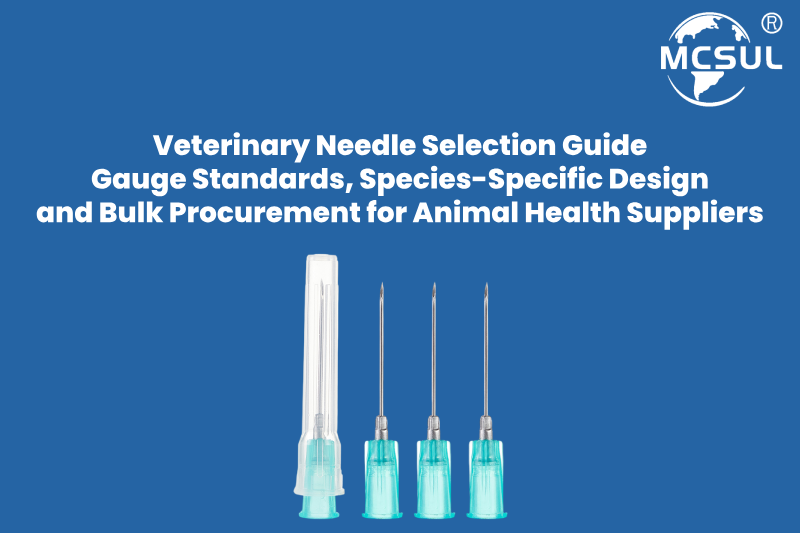
Veterinary needle selection is not just a smaller version of human needle buying. Animal health suppliers deal with a much wider range of body sizes, skin thickness, and field conditions. So a needle that works well on a cat can fail completely on a cow. This guide covers gauge standards, hub types, species-specific design, and what to check before you place a bulk order.
This guide is written by MCSUL (formerly KDL), a manufacturer of veterinary and human medical needles since 1987. It’s built for veterinary distributors, animal health suppliers, and clinics that buy veterinary hypodermic needles in volume.
Why Veterinary Needle Selection Matters for Animal Health Suppliers
A poor needle choice causes more than a failed injection. It can mean a bent needle mid-procedure, a stressed animal, or a wasted dose of medication. Because veterinary settings often involve less controlled conditions than a hospital, needle strength and reliability matter even more. Good veterinary needle selection therefore means thinking about gauge, hub durability, and species fit together, not as separate checkboxes.
What Makes a Veterinary Needle Different From a Human Needle
Hub Material and Durability Differences
Human needles are almost always plastic hub, single use, and built for controlled clinical settings. Veterinary needles, however, often need tougher hubs. For example, aluminum hub needles are built for large animal work, where the needle takes more force and needs to resist bending.
Gauge Range Built for Multiple Species
A veterinary needle line typically spans a wider gauge range than a human product line. That’s because the same supplier may serve everything from small birds to cattle. So the gauge range, not just the needle quality, is a key part of veterinary needle selection.
Veterinary Needle Gauge Standards Explained
Common Gauge Sizes and What They’re Used For
Veterinary gauges commonly range from about 14G, used for thick fluids and large animals, down to 27G, used for small or delicate patients. Lower gauge numbers mean a thicker needle, while higher numbers mean a finer needle.
Matching Gauge to Animal Size and Tissue Type
Gauge choice depends on animal size, tissue type, and what’s being injected. Thick vaccines or fluids need a wider gauge to flow smoothly. Fine work on small animals needs a narrower gauge to reduce tissue trauma. So gauge selection should always match both the fluid and the patient, not just habit or convenience.
Color-Coded Hubs and Why They Matter for Fast Identification
Color-coded poly hubs let staff identify gauge size at a glance, without reading fine print under time pressure. This color-coding follows the same size-designation logic used in ISO 7864:2016, the international standard for sterile single-use hypodermic needles. This matters more in the field than in a controlled clinic, so it’s worth checking that your supplier follows a consistent color standard across their full veterinary needle range.
Species-Specific Needle Design Considerations
Small Animal and Companion Pet Needles
Small animal work generally needs finer gauges and shorter lengths. Because skin and tissue are thinner, a needle built for cattle work would cause unnecessary damage.
Large Animal and Livestock Needles
Large animal needles need to be stronger and often longer, since they must reach through thicker hide and muscle. This is where hub durability becomes critical, because a bent or snapped needle in a large, moving animal is both a safety issue and a lost-dose problem.
Needle Length and Penetration Depth by Species
Needle length should match the intended injection depth for that species and injection site, whether that’s subcutaneous, intramuscular, or intravenous. So buyers should confirm length options across the full species range they serve, not just a single default length.
Hub Types: Poly, Aluminum, and Copper Compared
Poly Hub — Lightweight, Color-Coded, General Use
Poly hub needles are common for general veterinary use. In general, they’re lightweight, color-coded for gauge identification and cost-effective for routine injections across most species.
Aluminum Hub — Built for Large Animal Durability
Aluminum hub needles are designed for large animal applications that need a tougher, more durable needle. The regular wall design also resists bending under the extra force large animal work often requires.
Copper Hub — Strength for Repeated Use
Copper hub needles use a nickel-plated copper base pressed directly to a surgical-grade stainless steel cannula. This gives a thick-walled needle that resists point bending across repeated use, with hub stamping for easy size identification.
Needle Point and Bevel Design for Veterinary Use
Tri-Bevel Point Geometry and Penetration Force
A tri-bevel point grinds the needle tip at three angles instead of one. As a result, this lowers penetration force and makes entry smoother, which matters for animal comfort and for reducing struggle during injection.
Siliconized Coating for Smoother Injection
A siliconized coating reduces friction as the needle passes through skin and tissue. So it’s worth confirming this is standard on your supplier’s veterinary line, not just an upgrade option.
Ready to source reliable veterinary needles for your next bulk order?
Request a sample today and check gauge, hub strength, and point quality before you commit to volume.
Request a SampleSterility and Safety Requirements
Sterile, Non-Pyrogenic Standards
Veterinary needles should be sterile and non-pyrogenic, the same baseline standard used in human medical needles. Always confirm this is stated on the product documentation, not just assumed.
Preventing Needle Bending and Breakage in Field Use
Field conditions are less controlled than a clinic, so needle strength matters. Regular wall construction and secure hub-to-cannula connections such as aluminum rivet attachment, help prevent the needle from bending or separating from the hub during use.
Veterinary Syringe and Needle Pairing
Matching Syringe Volume to Needle Gauge
Needle gauge should be matched to the syringe and the fluid being delivered. For instance, a sterile veterinary syringe paired with the wrong gauge needle can slow delivery or cause unnecessary tissue trauma. So buyers sourcing both products should confirm gauge and syringe compatibility as one specification, not two separate ones.
Pen-Type Needles for Field and Farm Use
Pen-type veterinary needles are built for portability and speed in field settings. The pen sheath design makes them easy to carry and use quickly which matters for farm visits and mobile veterinary work.
Bulk Procurement Checklist for Veterinary Needle Selection
Specification Sheet Essentials
- Gauge range needed across your customer base
- Hub material (poly, aluminum, or copper)
- Needle length options
- Point design (tri-bevel, siliconized)
- Sterility and packaging format
- Color-coding standard
Documentation to Request From the Manufacturer
- Product specification sheet with gauge and length options
- Sterility and non-pyrogenic test documentation
- Material documentation for hub and cannula
- Quality management certification, such as ISO 13485
- Batch and lot traceability records
Sample Evaluation Before Mass Order
Always request samples before committing to volume. Check hub strength, point sharpness, gauge accuracy, and color-coding consistency across the sample batch. Then approve a golden sample as your reference for every future order.
How to Evaluate a Veterinary Needle Manufacturer
Manufacturing and Quality System Capability
Look for consistent quality across batches, sterilization capability, and a documented inspection process from incoming material to final release. Manufacturing consistency matters more in veterinary supply chains than buyers often expect, since a single bad batch can affect multiple species lines at once.
OEM/Private-Label and Custom Gauge Options
Many animal health suppliers need private-label packaging or a custom gauge range for a specific market. So check whether your manufacturer supports OEM branding, custom hub colors, and flexible gauge configurations before you commit to a long-term contract.
Common Mistakes to Avoid in Veterinary Needle Selection
- Using a single gauge across all species — this ignores real differences in tissue and animal size
- Choosing hub material by price alone — aluminum and copper hubs cost more but reduce bending in large animal work
- Skipping sterility documentation — always confirm sterile, non-pyrogenic status in writing
- Not testing samples in field conditions — a needle that performs well in a lab test can still fail in the field
- Ignoring syringe-needle compatibility — gauge and syringe volume should be specified together
Conclusion
In the end, veterinary needle selection comes down to matching gauge, hub material, and point design to the species and setting you serve. Large animal work needs stronger hubs and longer needles. Small animal work needs finer gauges and shorter lengths. So build your specification around species range, confirm sterility documentation, and always test a sample before you commit to a bulk order. Careful veterinary needle selection at the start also means fewer returns and fewer field failures later.
Browse MCSUL’s full veterinary needle range or contact our team for specification sheets and sample requests.