 +86-791-8686-1216


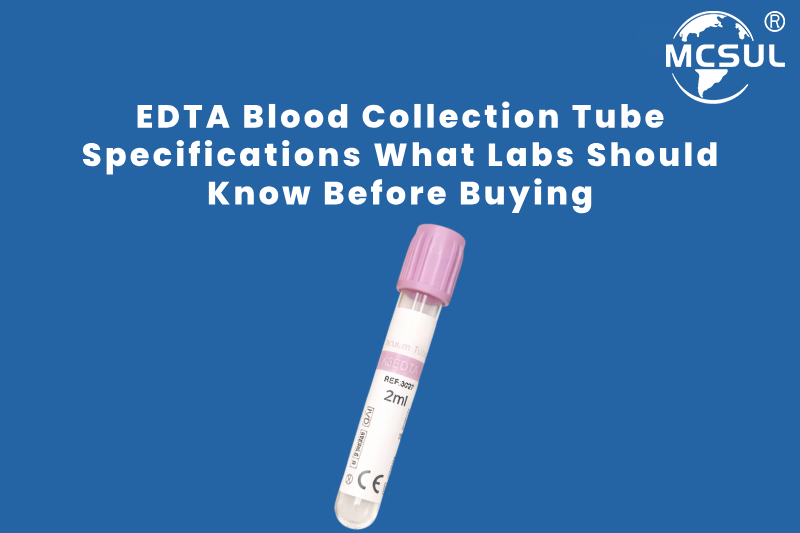
Choosing the right EDTA blood collection tube is critical for any laboratory, hospital, or diagnostic center. These tubes may seem basic, yet they play an important role in producing accurate test findings. The quality of the tube might have an impact on the blood sample. This may result in inaccurate reporting, repeated testing, and potentially a danger to patient care. In this guide, you will learn everything about specifications for laboratories, such as kinds, materials, quality standards, and how to choose the best one.
What Is an EDTA Blood Collection Tube?
An EDTA blood collection tube is a special tube used to collect blood samples. It contains a chemical called EDTA (Ethylenediaminetetraacetic acid). This chemical stops blood from clotting.
Because of this, the blood stays in a liquid form. This makes it easier to study blood cells.
Common Uses of EDTA Tubes
EDTA tubes are widely used in labs for:-
- Complete Blood Count (CBC) tests
- Hematology testing
- Blood cell counting
- Hemoglobin testing
- Platelet analysis
These tests need blood cells to stay in their natural shape. That is why EDTA tubes for CBC tests are very popular.
Why EDTA Tube Specifications Matter
Many labs focus only on price when buying tubes. But ignoring EDTA tube specifications can cause serious problems.
Here’s why specifications matter:
- They affect the accuracy of test results
- It help maintain sample quality
- Reduce chances of contamination
- Ensure proper blood to additive ratio
Blood cells may be damaged if the tube contains too much or too little EDTA. This leads to inaccurate reporting. So, knowing what to look for when purchasing an EDTA blood collection tube is essential.
Key EDTA Blood Collection Tube Specifications to Check
When buying EDTA tubes, labs should carefully check the following factors.
1. Tube Material
The material of the tube affects safety and durability.
Common Materials:
- Plastic (PET tubes)
- Glass tubes
Plastic EDTA tubes are more commonly used today because:
- It lightweight
- Do not break easily
- They are safer for handling and transport
Glass tubes are less common but still used in some cases.
For most labs plastic tube are the best choice for safety and ease of use.
2. EDTA Type: K2 vs K3 EDTA Tubes
One of the most important EDTA tube specifications is the type of EDTA used.
K2 EDTA Tubes
- Spray-dried EDTA
- Better mixing with blood
- More accurate results
- Widely used in labs
K3 EDTA Tubes
- Liquid EDTA
- Can dilute the sample slightly
- Used in specific cases
Which One Is Better?
Most labs prefer K2 EDTA tube compare to K3 EDTA tube because K2 offers:-
- Better cell preservation
- Higher accuracy in hematology testing
So, if you want the best EDTA tubes for hematology K2 EDTA is usually the right choice. As an experienced manufacturer and global supplier of EDTA blood collection tubes, we ensure every K2 tube is produced under strict quality standards, offering precise results, excellent cell preservation, and dependable performance for diagnostic labs.
3. Tube Volume and Fill Line
Each EDTA blood collection tube has a fixed volume. This means it must be filled to a specific level.
Why is this important?
- It keeps the correct ratio of blood and EDTA
- It prevents clotting or cell damage
Common mistakes:
- Underfilling the tube
- Overfilling the tube
Both can affect test results.
Always follow proper filling guideline for accurate blood testing.
4. Additive Concentration
The amount of EDTA inside the tube must be carefully controlled.
If EDTA is too high:
- Blood cells may shrink
- Test values may change
If EDTA is too low:
- Blood may clot
- Sample becomes unusable
This is why EDTA tube quality standards and requirements are very important.
A good manufacturer ensures the correct additive balance in every tube.
5. The process of sterilization
Sterilization makes ensuring that the tubing is clean and free of microorganisms.
Some common ways to sterilize things are:
- Gamma rays
- Ethylene oxide (ETO)
Sterile tubes help keep the blood sample safe and make the test more accurate. Always use tubes that satisfy the right standards for sterilization.
6. Cap Color Coding
EDTA tubes are easy to identify because of their lavender or purple caps.
This color coding helps:
- Lab staff quickly select the correct tube
- Reduce errors during sample collection
Color coding is a simple but important part of blood collection tube specifications.
7. Vacuum Quality
Vacuum pressure inside the tube helps draw the correct amount of blood.
If the vacuum is not proper:
- Blood may not fill correctly
- Sample volume may be wrong
High-quality EDTA tubes maintain stable vacuum levels for consistent performance.
8. Labeling and Markings
Good tubes have clear labeling, including:
- Fill line
- Lot number
- Expiry date
This helps labs track and use tubes safely.
Looking for a reliable EDTA blood collection tube manufacturer and supplier?
We offer high-quality tubes with consistent performance.
Get a bulk quote todayK2 vs K3 EDTA Blood collection Tubes: Detailed Comparison
| Feature | K2 EDTA Tube | K3 EDTA Tube |
|---|---|---|
| Form | Spray-dried | Liquid |
| Accuracy | High | Moderate |
| Cell Preservation | Excellent | Good |
| Dilution Effect | No | Slight |
| Usage | Most laboratories | Limited use |
For most applications, K2 EDTA tubes are recommended for accurate blood testing.
Common Mistakes When Buying EDTA Blood Collection Tubes
Many labs make avoid this mistakes when purchasing tubes.
1. Choosing Only Based on Price
Low cost tubes may compromise quality.
2. Ignoring Certifications
Always check for ISO, CE, or other quality approvals.
3. Not Testing Samples
Labs should test tubes before bulk purchase.
4. Choose Wrong Type
Choosing K3 insted of K2 can affect results.
5. Ignoring Supplier Reputation
A poor supplier lead to inconsistent quality.
Avoiding these mistakes helps ensure lab reliable performance.
How to Choose the Right EDTA Tube Supplier
Selecting the right blood collection tube manufacturer is just as important as choosing the tube itself.
Look for these factors:-
- Certified manufacturing process
- Consistent product quality
- Strong supply chain
- Customization options
- Technical support
Conclusion
Understanding EDTA blood collection tube specification crucial for every laboratory. Every detail matters, from material and additive concentration to vacuum quality and sterilization.
Selecting the right tube is beneficial:
- Enhance the precision of testing
- Ensure the integrity of the sample
- Minimize inaccuracies in reports
Prioritize quality over price at all times. Collaborate with a reliable supplier to achieve optimal outcomes.
By adhering to this guide, you can confidently choose the most suitable EDTA blood collection tubes for precise and dependable testing.