 +86-791-8686-1216


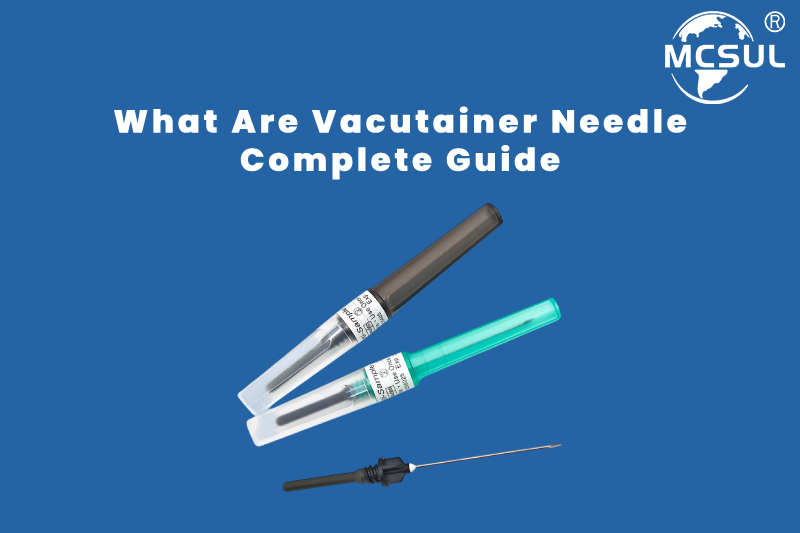
You probably had a vacutainer needle used on you when you had blood drawn in a hospital or lab. Blood collection is safer, faster, and more accurate thanks to these tiny but crucial medical tools.
This full guide will explain what vacutainer needles are, how they work, what their parts are, what sizes they come in, what benefits they have, and how they are used in labs and hospitals.
What Are Vacutainer Needle?
A vacutainer needle is sterile medical needle that helps draw blood straight into vacuum-sealed collection tubes. So, this is part of something called the vacutainer blood collection system, which was originally created by Becton Dickinson.
Healthcare professionals can collect multiple blood samples with just one needle insertion using the system. It really speeds things up and makes it a lot more comfortable for patients.
Why Vacutainer Needle Are Important in Healthcare
Blood tests help doctors diagnose:
- Infections
- Diabetes
- Anemia
- Heart conditions
- Liver problems
Accurate blood samples are critical. The vacutainer blood collection system ensures reliable test results.
That is why nearly every modern medical facility depends on this system daily.
How Does a Vacutainer Needle Work?
A vacutainer needle works using vacuum pressure inside special blood collection tubes.
How the process works step by step :
- The needle is attached to a plastic holder.
- One end of the needle goes into the patient’s vein.
- A vacuum tube is pushed into the holder.
- The vacuum inside the tube pulls blood automatically.
- When the tube fills, it is removed and replaced if more samples are needed.
The vacuum system removes the need for pulling back on a syringe. This makes blood collection faster and more consistent.
Parts of a Vacutainer Blood Collection System
To understand how vacutainer needles work, you need to know the main parts of the system.
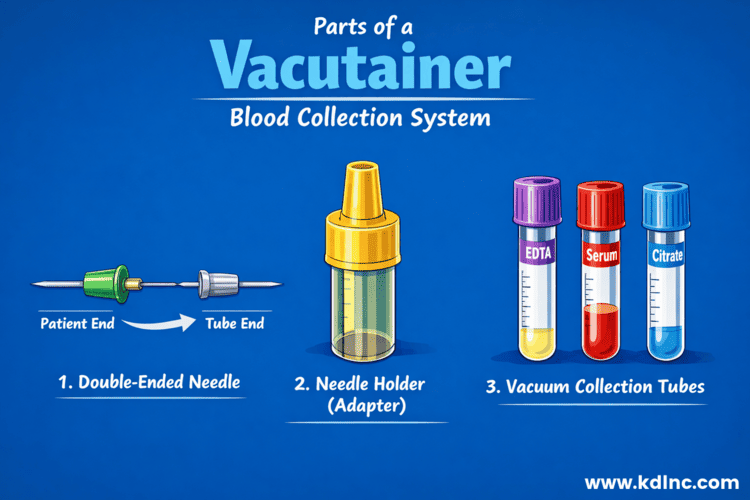
1. Double-Ended Needle
This needle has:
- One end for the vein
- One end that punctures the vacuum tube
It usually has a rubber sleeve on the inner end to prevent blood leakage.
2. Needle Holder (Adapter)
The holder is a plastic tube that :
- Holds the needle in place
- Secures the blood collection tubes
It allows easy switching between multiple tubes during one blood draw.
3. Vacuum Collection Tubes
These tubes contain:
- A preset vacuum
- Additives for different blood tests
The color of the tube cap shows what additive is inside.
Types of Vacutainer Needles
For various patients and situations, various types of vacutainer needles are used.
Standard Multisample Vacutainer Needles
These are the most common type. They are used for routine blood collection in adults.
Features :
- Double-ended design
- Available in different gauges
- Used with multiple tubes
Safety Vacutainer Needles
Safety vacutainer needles have a protective shield that covers the needle after use. This helps prevent accidental needle-stick injuries.
Many hospitals now require safety-engineered needles to protect healthcare workers.
Butterfly Vacutainer Needles (Winged Infusion Sets)
Butterfly needles are used for:
- Small veins
- Pediatric patients
- older patients
- Difficult blood draws
They have small wings for better control and are often connected to tubing before attaching to the vacutainer holder.
Vacutainer Needle Sizes and Gauges
One of the questions that comes up a lot is: What gauge needle do they use for blood collection?
Needle size is measured in gauge, or G.
- 21G is the most common size for adults.
- 22G – For those smaller veins
- 23G – For kids or delicate veins
Just a quick note: the higher the gauge number, the thinner the needle gets.
When it comes to routine venipuncture, most folks go with a 21 gauge vacutainer needle as the go-to option.
What Is a Vacutainer Needle Used For?
Healthcare professionals use Vacutainer needles in many medical settings, including:
- Routine blood tests
- Diagnostic lab testing
- Blood sugar testing
- Cholesterol testing
- Hormone level testing
- Blood donation centers
They are mainly used for venipuncture blood collection procedures.
Benefits of Using a Vacutainer Needle System
There are many reasons why healthcare providers prefer the vacutainer system over syringes.
1. Faster Blood Collection
The vacuum inside the tube automatically pulls blood. This makes the process quick.
2. Accurate Sample Volume
Each tube fills with the exact amount of blood needed for testing.
3. Reduced Risk of Contamination
The closed system reduces exposure to blood.
4. Multiple Samples with One Puncture
From a single vein puncture, you can fill several tubes.
5. Improved Safety
Safety vacutainer needles lower the risk of needle-stick injuries.
Vacutainer Needle vs Syringe: What’s the Difference?
Many people ask about the difference between a vacutainer needle and syringe for blood collection.
| Feature | Vacutainer Needle | Syringe |
|---|---|---|
| Blood Flow | Controlled by vacuum | Manual pulling |
| Speed | Faster | Slower |
| Multiple Tubes | Easy to switch | Must transfer blood |
| Risk of Hemolysis | Lower | Higher if pulled too fast |
| Safety | Closed system | More exposure risk |
Order of Draw in Vacutainer Blood Collection
When collecting multiple tubes, the order of draw matters.
This prevents cross-contamination of additives.
Standard order often includes:
- Red Top – No additive or clot activator
- Purple (Lavender) Top – EDTA
- Blue Top – Sodium citrate
- Green Top – Heparin
- Gray Top – Fluoride
Following the correct order ensures accurate lab results.
How to Choose the Right Vacutainer Needle
Choosing the correct vacutainer needle depends on:
- Patient age
- Vein size
- Type of test
- Number of tubes needed
For most adults, a 21G multisample vacutainer needle is ideal.
For children or older patients, a 22G or butterfly needle may be better.
Are Vacutainer Needles Safe?
Yes, correct usage ensures the great safety of Vacutainer needles.
Newer versions come in:
- Safety shields are installed.
- In sterile packaging
- A single use design
In order to prevent infections and needle injuries, hospitals adhere to stringent regulations set by groups like the Centers for Disease Control and Prevention.
Safe blood collection depends on people being properly trained.
Who Uses Vacutainer Needles?
Healthcare professionals commonly use Vacutainer needles.
- Phlebotomists
- Nurses
- Doctors
- Medical lab technicians
- Hospital staff
- Diagnostic centers
They are essential tools in medical laboratories worldwide.
Final Thoughts
Hey, have you ever heard of vacutainer needles?
A vacuum blood collection system employs these specially designed double-ended needles to draw blood safely and accurately. They make things run smoother, cut down on contamination, and keep healthcare workers safe.
Vacutainer needles, whether they’re the standard multisample ones or the safety and butterfly types, really make a difference in today’s diagnostics.
If you’re a nursing student diving into blood collection methods, a lab tech brushing up on procedures, or a medical supplier looking into vacutainer needle sizes and their uses, getting a grip on this system is super important.
Blood testing is a lifesaver, and vacutainer needles play a crucial role in making it safe and dependable.