 +86-791-8686-1216


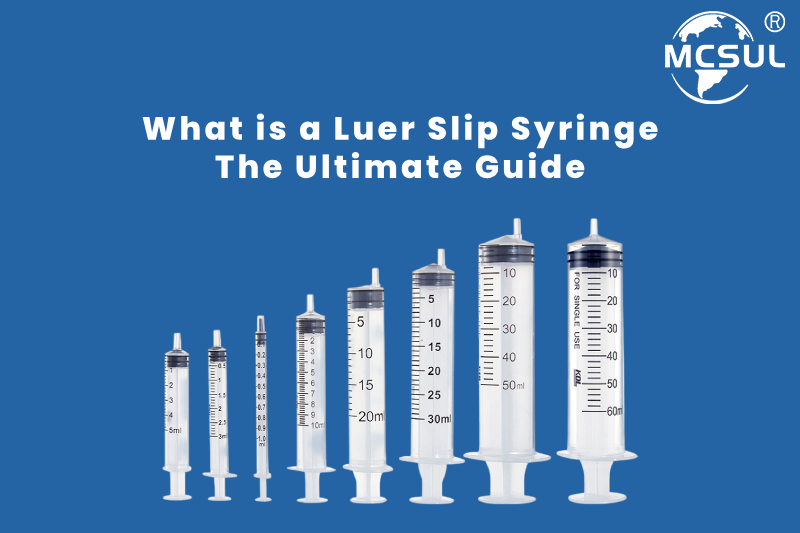
You may have heard of the Luer slip syringe if you work in healthcare, labs, or even with home medical supplies. But just what is a Luer slip syringe? How is it different from those other ones? When should you use one?
We’ll explain everything in simple terms in this full guide. You will learn how a Luer slip syringe works, its parts, its common uses, its benefits, and how it compares to other syringe types.
What Is a Luer Slip Syringe?
A Luer slip syringe is a type of syringe with a smooth, tapered tip that allows a needle to be pushed on and pulled off easily. The needle simply “slips” onto the tip of the syringe.
Unlike a Luer lock syringe, there is no twisting or locking mechanism. The connection is held in place by friction.
Simple Definition
A Luer slip syringe is a syringe that uses a push-on connection to attach a needle or other medical device.
It is one of the most common syringe types used in hospitals, clinics, laboratories, and home care settings.
Parts of a Luer Slip Syringe
To really get what a Luer slip syringe is all about, it’s useful to know its basic parts.
1. Barrel
The barrel is the clear tube that keeps the liquid inside. There are measurement marking on the side. These markings are super helpful for measuring the precise amount of medication or fluid you need.
There are various sizes of barrels, like:
- 1mL Luer slip syringe
- 3 mL Luer slip syringe
- 5 mL Luer slip syringe
- 10 mL Luer slip syringe
So, the size you pick really depends on how much liquid you’re looking to draw or inject.
2. Plunger
The plunger goes right inside the barrel. So, when you pull it back it actually, draws liquid into the syringe. If you push it forward, it sends liquid out. Most plungers come with a rubber tip that helps form a snug seal.
3. Luer Slip Tip
This part is super important. The Luer slip tip has a nice, smooth, cone-shaped end. This tip is designed for a needle hub to slide right onto it. The snug fit holds the needle securely while you’re using it.
How does a Luer slip syringe work?
A Luer slip syringes works on a pretty straightforward principle.
- Simple push the needle onto the tip to attach it.
- Always pull back the plunger to get the liquid into the barrel.
- Then push the plunger to inject or dispense the liquid.
- Take the needle off when you’re done.
- It’s super easy to attach and remove since it uses friction to hold the needle in place.
This is perfect for procedures that require quickness and ease.
Common uses for Luer slip syringes
Luer slip syringes are commonly found in both healthcare and lab environments.
Let’s talk about the most common uses.
1. Giving Medication
People usually use them for:
- intramuscular injections
- Subcutaneous injections
- Getting medication from vials
Since the needle can be taken out easily, healthcare workers can change needles when necessary.
2. Vaccinations
People often use a 1 mL or 3 mL Luer slip syringes for vaccines. The quick attachment really helps to speed things up in mass vaccination settings.
3. Drawing blood
You can use Luer slip syringes to draw blood samples whenever necessary.
4. Laboratory Applications
In labs, they’re used for:
- Moving liquids around
- Measuring out chemicals
- Filtering solutions that come with the right attachments
5. Veterinary
Veterinarians often use Luer slip syringes when giving injections and dosing medication for animals.
6. Home Medical Care
Some patients use Luer slip syringes for a variety of reasons:
- Insulin, based on the type.
- Hormone therapy
- Other injectable medications that are prescribed
Advantages of Using a Luer Slip Syringe
Now that you know what a Luer slip syringes is, let’s talk about why it’s so popular.
1. Easy to Use
The push-on design makes it simple and fast to attach a needle. No twisting means less time and effort.
2. Cost-Effective
Luer slip syringes are usually less expensive than Luer lock syringes. This makes them a cost-effective choice for high-volume use.
3. Lightweight Design
Because there is no locking mechanism, the syringe is often slightly lighter.
4. Quick Needle Changes
Healthcare workers can quickly remove and replace needles if needed.
Disadvantages of Luer Slip Syringes
They can be helpful, but there are a few drawbacks to consider.
1. Less Secure Connection
The needle is just held in place by friction, so if you apply too much pressure, it might come loose. That’s why they’re not really suggested for high-pressure procedures.
2. Risk of Leakage
If it’s not attached correctly, there’s a slight chance of fluid leaking out.
Sizes of Luer Slip Syringes That Are Available
When picking the right Luer slip syringes size, you should think about how much fluid you need.
These are popular sizes and what they’re used for:
1 mL Luer Slip Syringe
- Small doses that are exact
- Vaccines
- Pediatric care
3 mL Luer Slip Syringe
- most popular size
- injections of general medication
5 mL Luer Slip Syringe
- More medication doses
- The practice of irrigation
10 mL Luer Slip Syringe
- Flushing IV lines
- Drawing in more fluid
Picking the right size is important for accuracy and safety.
Are Luer Slip Syringes Safe?
Yes, when used properly.
To ensure safety:
- Always check that the needle is firmly attached
- Use sterile single-use luer slip syringes
- Dispose of sharps properly in approved containers
- Follow medical guidelines
Most Luer slip syringes are designed for single use only.
How to Attach a Needle to a Luer Slip Syringe
Here is a step-by-step guide.
- Remove the syringe from sterile packaging.
- Take the sterile needle.
- Push the needle hub straight onto the syringe tip.
- Press firmly to secure it.
- Do not twist (unless specified by manufacturer).
Always make sure the connection feels snug before use.
Can You Use a Luer Slip Syringe Without a Needle?
Yes. You can use Luer slip syringes without a needle for:
- Oral medication (with adapter)
- Flushing feeding tubes
- Irrigation
- Lab fluid transfer
In these cases, other attachments can be pushed onto the Luer tip.
Materials Used in Luer Slip Syringes
Most Luer slip syringes are made from:
- Medical-grade polypropylene (barrel and plunger)
- Synthetic rubber (plunger tip)
They are typically:
- Latex-free
- Sterile
- Individually packaged
Some are also available in bulk packs for hospitals and clinics.
How to Choose Right Luer Slip Syringe
Consider the following when choosing a Luer slip syringes:
Required Volume
You can pick 1 mL, 3 mL, 5 mL, or 10 mL depending on how much you need.
Compatibility with Needle Gauges
Verify that the syringe and needle size you intend to use are compatible.
The sterility
Always use clean, separately wrapped syringes for medical purposes.
Types of Applications
If you need extra safety or high pressure, a Luer lock syringe might be a better choice.
Final Thoughts
Luer Slip Syringes are easy-to-use syringe that fits snugly, making it simple to attach needles and transfer fluids. It’s super easy to use, affordable, and works with a lot of different setups, which is why it’s still one of the go-to syringe types in both medical and lab environments.
It might not have the locking security of a Luer lock syringe, but it does a great job for general-purpose injections, fluid withdrawal, and lab applications.
When you’re picking out syringe types, think about:
The kind of procedure
- Needed pressure
- safety needs
- Budget
A luer slip syringes is a solid and dependable option for a lot of everyday medical tasks.
If you’re in healthcare, working as a lab tech, or involved in medical supply, knowing how a luer slip syringe operates can really help you make safer and smarter choices.