 +86-791-8686-1216


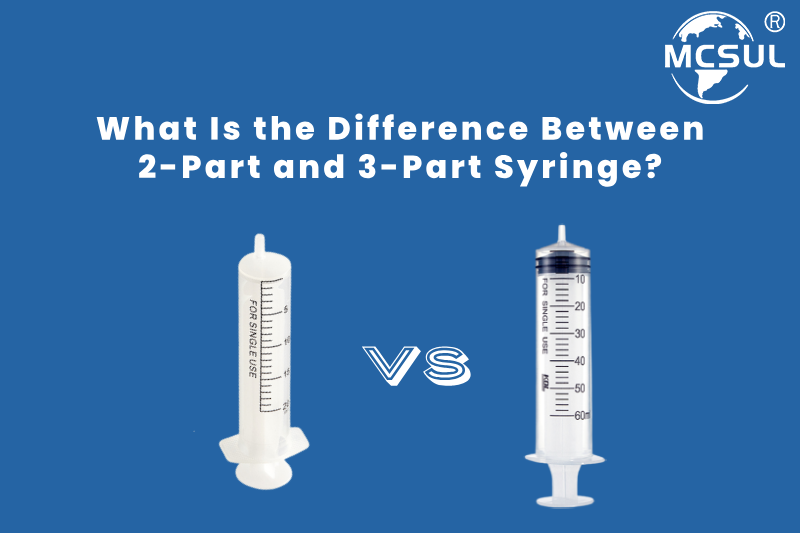
If you work in healthcare, run a clinic, manage a lab, or buy medical supplies in bulk, you’ve likely asked this question: what is the difference between 2-part and 3-part syringe?
At first glance, they look almost the same. Both are used to inject medication or draw fluids. Both have a barrel and a plunger. But there’s one small design change that makes a big difference in comfort, control, and cost.
In this guide, we’ll break it down in simple terms. You’ll learn:
- The key difference between 2-part and 3-part syringes
- Which syringe is better for different medical uses
- Advantage and Disadvantage of 2-part vs 3-part syringe
- How to choose the right syringe for your needs
Understanding the Basic Parts of a Syringe
Before we compare them, let’s quickly review the main syringe components.
Most syringes include :
- Barrel : the clear tube that holds the liquid
- Plunger : the rod you push and pull
- Tip : where the needle attaches (or connects to tubing)
The difference between a 2-part and 3-part syringe comes down to one small but important detail : a rubber stopper.
What Is a 2-Part Syringe?
A 2-part syringe has:
- A barrel
- A plunger
That’s it.
The plunger in a 2-part syringe is usually made of plastic only. There is no rubber gasket or stopper at the tip of the plunger.
How a 2-Part Syringe Works
When you push the plunger down, the plastic tip creates pressure against the barrel wall to push fluid out. When you pull back, it draws liquid in.
Because there is no rubber seal, the plunger slides directly against the plastic barrel.
What Is a 3-Part Syringe?
A 3-part syringe has:
- A barrel
- A plunger
- A rubber stopper (also called a gasket or seal)
The rubber stopper is attached to the tip of the plunger. This creates a tighter seal between the plunger and the barrel.
How a 3-Part Syringe Works
When you push or pull the plunger, the rubber stopper forms a secure seal. This helps prevent leakage and improves smooth movement.
This added component may seem small, but it makes a noticeable difference in performance.
2-Part and 3-Part Syringe: Key Differences (Quick Comparison Table)
| Feature | 2-Part Syringe | 3-Part Syringe |
|---|---|---|
| Number of Components | 2 (Barrel + Plastic Plunger) | 3 (Barrel + Plunger + Rubber Stopper) |
| Rubber Gasket | No | Yes |
| Plunger Movement | Slightly stiffer | Smoother glide |
| Seal Quality | Basic plastic seal | Strong airtight seal |
| Leakage Risk | Low (but slightly higher than 3-part) | Very low |
| Dosing Accuracy | Good for general use | Better for precise dosing |
| Force Required | May require more pressure | Requires less pressure |
| Injection Comfort | Standard | More controlled and comfortable |
| Cost | More affordable | Slightly higher cost |
| Best For | Basic fluid transfer, cost-sensitive use | Medication dosing, clinical precision |
2-Part vs 3-Part Syringe: Main Differences Side by Side
Let’s look at the main differences side by side.
1. Design and Structure
A 2-part syringe has a simple build with only two components: the barrel and a plastic plunger. There is no rubber stopper attached to the plunger tip. This makes the design straightforward and minimal. In comparison, a 3-part syringe includes an additional rubber gasket fixed to the plunger. This extra part really boosts the internal seal and enhances the overall function. They might look similar at first glance, but the way they’re constructed on the inside really affects their performance.
2. Smoothness of Plunger Movement
In a 2-part syringe, the plunger can feel a little stiff because the plastic moves right up against itself. Pushing or pulling might need more pressure. A 3-part syringe, on the other hand, has a rubber stopper inside the barrel that keeps it from rubbing against things. The plunger can move more easily, and you have better control when giving injections or drawing fluids.
3. Sealing and Leakage Prevention
The sealing ability of a 2-part syringe depends on tight plastic contact between the plunger and barrel. While this works well for general use, it may not provide the strongest seal. A 3-part syringe creates a tighter, more secure seal because of the rubber gasket. This helps prevent air entry and fluid leakage, making it more reliable for sensitive procedures.
4. Accuracy in Medication Dosing
For everyday medical tasks, a 2-part syringe typically offers good accuracy.But you know, that slightly stiffer movement can really make it tricky to handle those tiny measurements. A 3-part syringe provides improved precision thanks to its smoother glide and stronger seal.This is a go-to option for procedures that need precise and careful dosing.
5. Comfort During Injection
A 2-part syringe might require a bit more hand pressure, so the injection flow can sometimes feel a little less steady. A 3-part syringe makes it way easier to deliver medication smoothly and steadily. With less resistance, healthcare pros can handle the injection speed better, making the whole process more comfortable.
6. Cost
One of the primary benefits of a 2-part syringe is its cheap cost. With fewer components, it is often less expensive and more suited for bulk purchases. A 3-part syringe is significantly more expensive due to the additional rubber stopper and increased performance attributes. The ultimate decision often hinges on whether budget savings or improved functioning are more significant.
Advantages and Disadvantages of 2-Part Syringes
Let’s break it down clearly.
Advantages of 2-Part Syringes
- Lower cost
- Fewer materials used
- Simple design
- Suitable for general medical procedures
- Less risk of rubber-related allergies
- Because there is no rubber stopper, 2-part syringes may be preferred in environments concerned about latex or rubber sensitivity.
Disadvantages of 2-Part Syringes
- Not as smooth plunger movement
- A bit less sealing ability
- Not the best for super accurate dosing
- Could need a bit more push
- They’re handy, but not always the go-to for more delicate tasks.
Advantages and Disadvantages of 3-Part Syringes
Advantages of 3-Part Syringes
- Smooth plunger motion
- Strong airtight seal
- Better dosing accuracy
- Easier fluid control
- Preferred in many clinical settings
For professionals asking, “Which syringe is better for accurate injection?” — the 3-part design is often the answer.
Disadvantages of 3-Part Syringes
- Slightly higher cost
- Contains rubber material
- More components
Though the cost difference is small, it adds up in large purchases.
When Should You Use a 2-Part Syringe?
A 2-part syringe is a good choice when:
- Cost is a major concern
- You need syringes for basic fluid transfer
- High precision is not critical
- You want a simple, minimal design
They are commonly used in general hospitals, veterinary settings, and non-sensitive procedures.
If you’re searching for “best affordable disposable syringe,” 2-part syringes are often the practical option.
When Should You Use a 3-Part Syringe?
A 3-part syringe is better when:
- Precision is important
- Smooth injection is required
- You are administering medication
- You need a strong airtight seal
- Patient comfort matters
If you are looking up “which syringe is best for accurate medication dosing,” 3-part syringes are typically recommended.
They are widely used in:
- Vaccinations
- Insulin injections
- Laboratory settings
- Critical care environments
Are 3-Part Syringes Always Better?
Not necessarily.
Many people assume that more parts mean better quality. But it depends on your needs.
If you only need a syringe for simple fluid drawing or irrigation, a 2-part syringe may work perfectly well.
The right choice depends on:
- Budget
- Purpose
- Required accuracy
- Comfort level
- Regulatory standards
There is no one-size-fits-all answer.
How to Choose the Right Syringe for Your Needs
When you’re trying to choose between a 2-part and 3-part syringe, think about what you’ll be using it for.
What will it be used for?
- How important is dosing accuracy?
- Is budget a major factor?
- Will it be used frequently?
- Is patient comfort a priority?
If you want to prioritize accuracy and comfort, go for a 3-part syringe.
If you’re looking for something cost-effective and easy to use, a 2-part syringe might just do the trick.
Why Choose KDLNC for Manufacturer and Supplier of 2-Part and 3-Part Syringes
When you need reliable 2-part or 3-part syringes, you can count on KDLNC. As a trusted manufacturer and supplier 2-Part and 3-Part Syringes, KDLNC provides high-quality syringes designed for hospitals, clinics, labs, and medical distributors like you. You get products made with strong quality control and careful production standards. Whether you are looking for cost-effective 2-part syringes for general use or smooth and precise 3-part syringes for accurate medication dosing, KDLNC offers both options to meet your needs.
Final Thoughts
So, what’s the difference between a 2-part and a 3-part syringe?
The big difference here is that 3-part syringes have a rubber stopper. This little tweak really boosts sealing, smoothness, and accuracy.
Here’s a quick summary:
- 2-part syringes are easy to use, budget-friendly, and super handy.
- 3-part syringes provide smoother movement, improved sealing, and enhanced precision.
They both play important roles in the healthcare and medical supply industries.
It really comes down to what you need for your particular application. When you get a grasp on how they’re structured and how they perform differently, you’ll be able to make a confident and informed choice.
If you’re in healthcare, whether you’re a provider, distributor, or medical buyer, it’s really important to understand the difference between 2-part and 3-part syringes. This knowledge will help you pick the right tool for what you need to do.