 +86-791-8686-1216


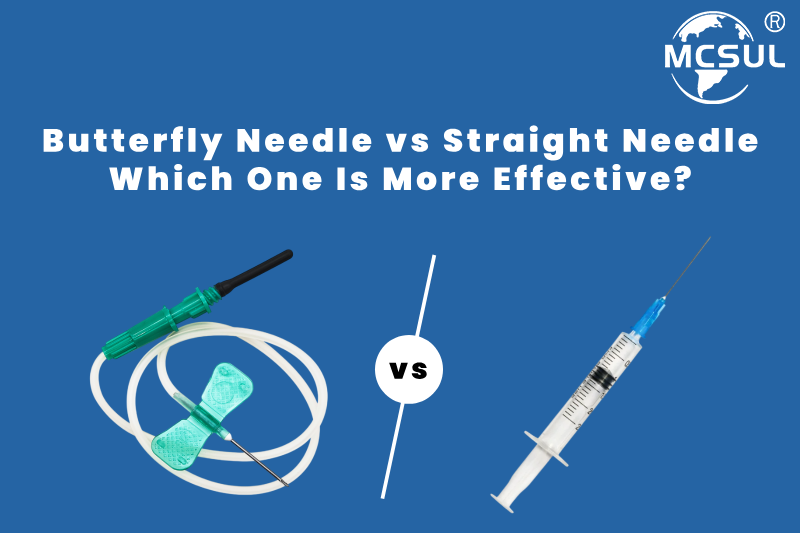
If you have ever had blood drawn or given an injection, you have used a needle. But not all needles are the same. Two of the most common types are the butterfly needle and the straight needle. Many people ask about the difference between butterfly needle and straight needle, and which one is better.
In this guide, we will break it all down in plain language. We will look at how each needle works, when it is used, and the pros and cons of both. By the end, you will clearly understand butterfly needle vs straight needle and why healthcare workers choose one over the other.
Learning the Basics About Medical Needles
First, let’s talk about what medical needles are used for.
There is a thin, hollow tube called a medical needle. This is what it’s used for :
- Draw blood
- Give injections
- Deliver Medicine Into The Body
Needles are available in a variety of sizes, types, and styles. The design changes how safe, comfortable, and accurate it is. That’s how butterfly needles and straight needles are different.
What Is a Butterfly Needle?
A butterfly needle is also called a winged infusion set. It has small plastic wings on each side. These wings look like a butterfly, which is how it got its name.
Key Parts of a Butterfly Needle
- Short, thin needle
- Flexible plastic tubing
- Two soft wings for grip
- Connector at the end for tubes or syringes
The wings help the person giving the injection hold the needle steady.
Common Uses of Butterfly Needles
Butterfly needles are often used when veins are small or hard to reach. Common butterfly needle uses include:
- Drawing blood from children
- Blood tests for older patients
- Patients with fragile or rolling veins
- Short-term IV access
Because the needle is smaller, it can be less painful for some people.
Sizes of Butterfly Needles
Butterfly needles usually come in smaller gauges, such as:
A higher gauge number means a thinner needle. Thin needles are gentler on veins but may take longer to draw blood.
What Is a Straight Needle?
A straight needle is a simple needle attached directly to a syringe or tube holder. It does not have wings or tubing.
Key Parts of a Straight Needle
- Longer needle
- Rigid design
- Direct connection to syringe or tube
This is the most common needle used in medical settings.
Common Uses of Straight Needles
When veins are easy to find, straight needles are often used. Some common uses for a straight needle are:
- Adult blood draws
- Injections like vaccines
- Drawing Large Blood Samples
- Routine medical procedures.
They work well, are quick, and are easy to find.
Sizes of Straight Needles
Straight needles come in many sizes, including:
- 18 gauge
- 20 gauge
- 21 gauge
- 22 gauge
Lower gauge numbers mean thicker needles, which allow faster blood flow.
Butterfly Needle vs Straight Needle: Main Differences
Now let’s look at the difference between butterfly needle and straight needle side by side.
Butterfly Needle vs Straight Needle : Design and Structure
The design of a needle affects how it is used and how easy it is to control.
Butterfly needles have small plastic wings on each side. These wings help healthcare workers hold the needle steady. The needle is short and connected to flexible tubing, which allows gentle movement without pulling on the vein.
Straight needles, on the other hand, do not have wings or tubing. They are longer and more rigid, which gives direct control during insertion.
- Butterfly needles are flexible and easier to adjust
- Straight needles are firm and direct
Butterfly Needle vs Straight Needle : Comfort Level for Patients
Patient comfort is very important, especially for people who are afraid of needles.
Butterfly needles are often seen as less scary because they are smaller and thinner. Many patients say they feel less pain when a butterfly needle is used.
Straight needles can feel stronger when they enter the skin, which may cause more discomfort for some people.
- Butterfly needles are often preferred for children
- Sensitive patients usually feel more comfortable with butterfly needles
- Straight needles may feel more intense
Butterfly Needle vs Straight Needle : Control and Precision
Healthcare workers choose needles based on how easy they are to control.
Butterfly needles work well for small or fragile veins. The wings and tubing help prevent sudden movement that could hurt the vein.
Straight needles give steady pressure and are useful when veins are easy to see and feel.
- Butterfly needles offer better control for small veins
- Straight needles work best for deep or firm veins
Butterfly Needle vs Straight Needle : Blood Flow Speed
Blood flow speed matters during blood tests and lab work.
Straight needles allow blood to flow faster because there is no tubing slowing it down. This makes them better for collecting large blood samples.
Butterfly needles have thinner tubing, which slows blood flow.
- Straight needles are faster
- Butterfly needles are slower but gentler
Butterfly Needle vs Straight Needle : Risk of Vein Damage
Keeping veins safe is a top priority.
Butterfly needles reduce vein movement, which lowers the chance of vein damage or collapse. This makes them a good choice for older patients or people with weak veins.
Straight needles can put more pressure on the vein, especially if the patient moves.
- Butterfly needles lower the risk of vein collapse
- Straight needles may cause more vein stress
Butterfly Needles: Pros and Cons
Let us look at what butterfly needles do well and what they do poorly.
Advantages of Butterfly Needles
- Better for veins that are small or weak
- More comfortable for many patients
- During insertion, it is easier to control
- Vein damage risk is lower
Because of these pros, they are perfect for certain situations.
Disadvantages of Butterfly Needles
- More expensive than needles with straight edges
- Slower Blood Draw
- Not Ideal For Large Samples
They aren’t always used for regular draws because they are expensive.
Straight Needles: Pros and Cons
There are both strong and weak points to a straight needle.
Advantages of Straight Needles
- A faster blood collection process
- Lower cost
- Simple and Reliable Design
- Good For Routine Use
Because of these things, straight needles are usually the best choice.
Disadvantages of Straight Needles
- Some people may find it painful.
- It’s tougher to use on small veins.
- Lack of flexibility during insertion
You need to be skilled and sure of yourself to use them.
Comparison of Butterfly Needle and Straight Needle Prices
Most of the time, straight needles cost less. This is why a lot of people use them in loud places.
It costs more for butterfly needles because
- They have more parts.
- For special circumstances, they are designed.
Cost vs. Benefits
Despite the fact that butterfly needles cost more,
- Reduce Repeat Sticks
- Improve Patient Comfort
- Save time when dealing with difficult veins
Most of the time, the value is greater than the cost.
Butterfly Needle and Straight Needle: Which One Is Better?
There is no single best choice. The right needle depends on the patient and the situation.
If the patient has small or fragile veins, a butterfly needle is often the better option. If the veins are strong and easy to find, a straight needle works well.
Understanding the difference between butterfly needle and straight needle helps healthcare workers make the best choice.
Final Thoughts
Both butterfly needles and straight needles play an important role in healthcare. Each has strengths and limits.
By knowing the difference between butterfly needle and straight needle, patients can feel more informed, and healthcare workers can choose the right tool for each job.
Whether it is a routine blood test or a difficult vein, the right needle makes all the difference.