 +86-791-8686-1216


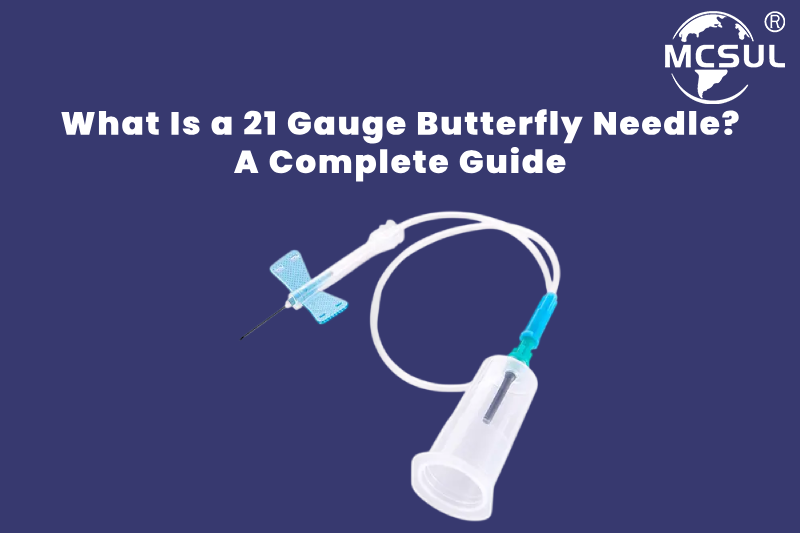
If you’ve ever had blood drawn or an IV placed, a butterfly needle was most likely used. These little, winged needles are widely used in hospitals, labs, and clinics. One of the most common sizes is the 21 gauge butterfly needle (also known as the 21g Butterfly Needle).
In this complete educational guide, we’ll explain everything in simple words. You will learn about a 21 gauge butterfly needle, how it works, when it is used, and why healthcare practitioners like it.
What Is a Butterfly Needle?
A butterfly needle is a small needle with two flexible plastic “wings” on the sides. These wings help the healthcare worker hold the needle steady during use. The needle is connected to a thin tube that allows blood or fluids to flow.
Butterfly needles are also called winged infusion sets. They are often used for blood draws and short-term IV access.
Key Parts of a Butterfly Needle
There are three primary parts in butterfly needle:
- The needle is a narrow, hollow tube made of metal.
- The wings are made of soft plastic and help you maneuver the plane.
- The tubing is flexible and attaches to an IV line or collecting tube.
The 21g butterfly needle is all about the size of the needle itself, not the wings or tubing.
What Does “21 Gauge” Mean?
The word “gauge” tells us how thick the needle is. In needle sizing, the higher the gauge number, the thinner the needle.
Understanding Needle Gauge Sizes
Here’s a simple way to think about it:
- 18 gauge: thick needle
- 21 gauge: medium thickness
- 25 gauge: very thin needle
A 21 gauge butterfly needle is considered a standard, medium-sized needle. It is one of the most commonly used sizes for blood collection in adults.
Why the 21 Gauge Butterfly Needle Is So Popular
The 21g Butterfly Needle is a popular choice since it works well and is comfortable. I t is broad enough to enable excellent blood flow yet thin enough to reduce pain.
Benefits of a 21 Gauge Butterfly Needle
- Allows steady blood flow
- Comfortable for most adult patients
- Easy to control
- Works well for routine blood draws
- Widely available in medical settings
This balance makes the 21 gauge butterfly needle a top choice for many healthcare professionals.
Common Uses of a 21 Gauge Butterfly Needle
The 21g butterfly needle is used in many medical situations. Let’s check out the most popular ones.
Blood Draws (Venipuncture)
This is the most common use. Labs and clinics often choose a 21 gauge butterfly needle for routine blood tests because it provides:
- Smooth blood flow
- Less vein movement
- Better control during the draw
Short-Term IV Access
In some cases, a butterfly needle is used for short IV treatments, such as giving fluids or medication over a short time.
Diagnostic Testing
Many diagnostic tests require clean, steady blood samples. The 21 gauge butterfly needle helps reduce hemolysis, which means damage to red blood cells.
Who Typically Uses a 21 Gauge Butterfly Needle?
The 21 gauge butterfly needle is mainly used for adult patients with normal, healthy veins.
Ideal Patient Types
- Adults with visible veins
- Patients needing routine blood work
- Outpatient lab patients
- Emergency room patients
While it’s great for many people, it may not be the best choice for everyone.
Environmental Considerations
Medical waste is a growing concern. While butterfly needles are single-use, many manufacturers now focus on:
- Reduced plastic use
- Safer disposal designs
- Compact packaging
These changes help lower environmental impact.
When a 21 Gauge Butterfly Needle May Not Be Ideal
Even though the 21g Butterfly Needle is very versatile, there are times when a different size is better.
Situations Where Another Gauge Is Chosen
- Children or infants – usually need smaller needles
- Olderly patients with fragile veins – thinner needles may be safer
- Patients with very small veins – smaller gauges reduce vein damage
Healthcare workers always assess the patient before choosing the needle size.
21 Gauge Butterfly Needle vs Other Needle Sizes
Comparing a 21 gauge butterfly needles to other sizes clarifies its common selection.
21 Gauge vs 23 Gauge Butterfly Needle
- 21 gauge: faster blood flow, slightly thicker
- 23 gauge: thinner, slower blood flow, less vein trauma
A 23 gauge is preferable for small or fragile veins, while a 21 gauge is more efficient for standard draws.
21 Gauge vs Straight Needles
Straight needles are devoid of wings or tubing. In contrast to conventional needles, a 21g butterfly needle provides:
- Better control
- Less movement in the vein
- More comfort for the patient
Clinicians often prefer butterfly needles for tricky or sensitive draws.
How a 21 Gauge Butterfly Needle Is Used
The process of using a butterfly needle follows standard medical steps.
Step-by-Step Overview
- The skin is clean with antiseptic
- The wings hold the needle
- The needle is insert into the vein at a shallow angle
- Blood flows through the tubing into collection tubes
- Clinicians remove and dispose of the needle safely.
The design of the 21 gauge butterfly needles makes these steps easier and safer.
Safety Features of Modern Butterfly Needles
Many modern 21 gauge butterfly needles come with built-in safety features.
Common Safety Features
- Retractable needles
- Push-button needle shields
- Automatic needle covers
These features help reduce the risk of needle stick injuries for healthcare workers.
Comfort and Pain Level: What Patients Experience
One of the biggest concerns patients have is pain. The good news is that the 21g Butterfly Needles is design with comfort in mind.
What Affects Pain During a Blood Draw?
- Needle size
- Skill of the person drawing blood
- Vein condition
- Patient anxiety
Most patients report mild or brief discomfort when clinicians use a 21-gauge butterfly needle.
Materials Used in a 21 Gauge Butterfly Needle
For safety and performance, it’s crucial to use high-quality materials.
Common Materials
- Needle made of stainless steel
- Wings made of medical-grade plastic
- Flexible tubing that won’t kink
These materials assist keep blood flowing smoothly and lower the chance of breaking.
Sterility and Single-Use Design
A 21 gauge butterfly needle is always single-use only.
Why Single-Use Matters
- Prevents infection
- Reduces cross-contamination
- Meets medical safety standards
Dispose of the needle in a sharps container after use.
How to Choose the Right Butterfly Needle Size
Healthcare workers consider several factors before choosing a 21g Butterfly Needle.
Key Factors Considered
- Patient age
- Vein size and condition
- Type of procedure
- Amount of blood needed
The 21 gauge butterfly needle is often the first choice when conditions are normal.
Common Myths About 21 Gauge Butterfly Needles
Myths About 21 Gauge Butterfly Needles
There are a few common myths worth clearing up.
Myth 1: Bigger Gauge Means More Pain
Not always. A 21-gauge needle isn’t large and often causes less pain than smaller needles that require more time.
Myth 2: Butterfly Needles Are Only for Children
Butterfly needles are use for patients of all ages, including adults.
Advantages for Healthcare Professionals
Healthcare workers also benefit from using a 21 gauge butterfly needles.
Professional Benefits
- Better control during insertion
- Reduced vein rolling
- Easier handling during blood collection
- Reliable sample quality
These advantages help explain why the 21g butterfly needle is a standard tool.
Final Thoughts
The 21 gauge butterfly needles is a very important medical tool today. It strikes a good mix between safety, comfort, and speed. In fact, millions of blood draws happen every day because people trust it.
Patients and anyone learning about medical care can feel more confident and trust their care more when they understand what a 21g Butterfly Needle is and how to use it. This needle is a real healthcare essential because it is easy to use, works well, and has a simple design.
You’ll understand what those tiny plastic wings mean and why the 21 gauge butterfly needles is such a wise choice if you ever see them again.