 +86-791-8686-1216


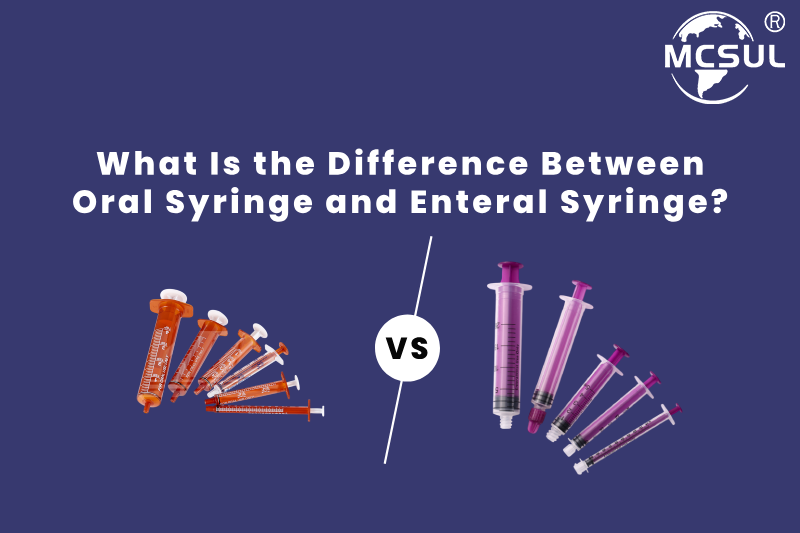
Giving medicine the right way matters. The syringe you choose can affect safety, comfort, and how well the medicine works. Many people mix up oral syringe and enteral syringe because they look similar at first glance. But they are not the same and using the wrong one can cause real problems.
In this guide, you’ll learn the clear, simple difference between an oral syringe vs enteral syringe, how each one works, and when to use them. We’ll keep things easy to read, practical, and helpful.
Why the Right Syringe Matters
Medicine errors often happen because of small mix-ups. One common mix up is using the wrong syringe. Oral and enteral syringes are designed to prevent mistakes, especially in babies, children, and people who use feeding tubes.
Choosing the correct syringe helps :
- Deliver the right dose
- Avoid choking or aspiration
- Prevent medicine from going into the wrong place
- Improve comfort and safety
What Is an Oral Syringe?
An oral syringe is a small medical tool used to give liquid medicine by mouth. It does not have a needle. Instead, it has a smooth tip that fits safely inside the mouth.
Common Uses of an Oral Syringe
Oral syringes are commonly used for :
- Babies and young children
- People who cannot swallow pills
- Accurate dosing of liquid medicine
Key Features of an Oral Syringe
- Design For oral use only
- Easy-to-read markings that are clear
- Safe mouth use with a smooth tip
- Available in sizes of 1 mL, 5 mL, and 10 mL
Reasons Why Oral Syringes Are Better Than Spoons
Spoons aren’t always right. To avoid spills and the possibility of choking, use an oral syringe to measure the exact dose and administer it slowly.
Choosing a reliable manufacturer is crucial for safe and accurate oral medication delivery. KDLNC manufactures and supplies oral syringes for easy use and accurate dosing. KDLNC oral syringes are used for administering liquid medicine to babies, children, and adults. Measurement markings and smooth tip designs enable caregivers to confidently administer the correct dose in home and clinical settings.
What Is an Enteral Syringe?
An enteral syringe is used to give medicine or nutrition through a feeding tube. It connects to tubes that go into the stomach or intestines, not the mouth.
Common Uses of an Enteral Syringe
Enteral syringes are used for :
- Patients with feeding tubes (NG tube, G-tube, PEG tube)
- Giving liquid nutrition
- Delivering medicine directly into the stomach or gut
- Hospital and home care settings
Key Features of an Enteral Syringe
- Special connector tip (often ENFit)
- Does not fit IV or oral connections
- Clear volume markings
- Made to reduce wrong-route errors
Product safety is crucial for tube feeding and enteral drug administration. KDLNC manufactures and supplies enteral syringes designed exclusively for feeding tubes and enteral use.
The enteral syringes have secure tube-compatible tips and clear labeling to minimize wrong-route medication errors. Syringes are suitable for hospitals, long-term care institutions, and home healthcare settings that prioritize patient safety.
The Main Difference Between Oral Syringe and Enteral Syringe
The biggest difference between oral syringe and enteral syringe is how and where they are used.
| Feature | Oral Syringe | Enteral Syringe |
|---|---|---|
| Use | By mouth | Through feeding tube |
| Tip design | Fits in mouth | Connects to feeding tube |
| Safety role | Accurate oral dosing | Prevents wrong-route errors |
| Common color | Clear | Purple or labeled |
| Patient type | Babies, kids, adults | Tube-fed patients |
Even though they both deliver liquids, they are not interchangeable.
Why the Difference Between Oral Syringe and Enteral Syringe Matters
Using the wrong syringe can cause serious harm.
Risk of Medication Errors
If liquid medicine meant for oral use is given through a feeding tube incorrectly, or if tube feeding liquid is given by mouth by mistake, it can lead to:
- Choking
- Aspiration into the lungs
- Wrong dosage
- Infection
That is why understanding the difference between oral syringe and enteral syringe is so important.
Safety Standards Exist for a Reason
Enteral syringes are designed so they cannot connect to IV lines. This reduces the risk of deadly errors, such as giving feeding formula into a vein.
Tip Design: A Major Difference Explained
Oral Syringe Tip Design
Oral syringes have a narrow, smooth tip. This allows:
- Easy placement in the side of the mouth
- Slow and controlled medicine delivery
- Comfort for babies and children
Enteral Syringe Tip Design
Enteral syringes have a special connector that:
- Locks into feeding tubes
- Does not fit oral or IV connections
- Prevents cross-use
This design difference is one of the most important safety features.
Color Coding and Labels
A major clear difference between oral syringe and enteral syringe is the color of them.
Oral Syringes
- Usually clear or lightly tinted
- Focus on clear measurement markings
- May not have special warning labels
Enteral Syringes
- Often purple or marked boldly
- Labeled “Enteral Use Only”
- Easy to identify in busy care settings
Color coding helps caregivers quickly grab the right tool.
When Should You Use an Oral Syringe?
Use an oral syringe when:
- Giving liquid medicine by mouth
- Treating babies or small children
- Accurate small doses are needed
- A spoon is not precise enough
Oral syringes are great for everyday medication needs at home.
When Should You Use an Enteral Syringe?
Use an enteral syringe when:
- A patient has a feeding tube
- Giving medicine through a tube
- Delivering liquid nutrition
- Working in medical or long-term care settings
Never use an enteral syringe for oral dosing unless a healthcare provider tells you to.
Can You Use an Oral Syringe for Tube Feeding?
No. This is a common and dangerous mistake.
An oral syringe:
- May not fit the feeding tube properly
- Can disconnect and spill
- Is not design for tube pressure
- Increases the risk of errors
Always use the correct tool designed for the job.
Can You Use an Enteral Syringe for Oral Medication?
In most cases, no.
Enteral syringes:
- May be uncomfortable in the mouth
- Deliver medicine too quickly
- Are designed to avoid oral use
If oral dosing is needed, use a proper oral syringe.
Sizes and Measurements
Both syringe types come in different sizes, but their use differs.
Oral Syringe Sizes
- 1 mL
- 3 mL
- 5 mL
- 10 mL
These are ideal for small, precise doses.
Enteral Syringe Sizes
- 20 mL
- 35 mL
- 60 mL
Larger sizes help with feeding and flushing tubes.
Cleaning and Reuse Differences
Oral Syringes
- Often reusable for short periods
- Must be washed and dried after each use
- Should be replaced if markings fade
Enteral Syringes
- May be single-use or limited reuse
- Must follow medical guidelines
- Can wear out faster due to pressure
Always follow healthcare instructions for cleaning.
Difference Between Oral Syringe and Enteral Syringe for Babies
Parents often ask this question.
For babies:
- Oral syringes for babies are used for medicine by mouth
- Enteral syringes are used only if the baby has a feeding tube
Never guess. If unsure, ask a nurse or doctor.
Difference Between Oral Syringe and Enteral Syringe in Hospitals
In hospitals, the difference is even more important.
Hospitals use enteral syringes to:
- Prevent tubing mix-ups
- Follow safety rules
- Protect patients from serious errors
Oral syringes are kept separate and use only for oral dosing.
Cost Differences
Oral Syringes
- Low cost
- Widely available in pharmacies
- Often free with prescriptions
Enteral Syringes
- Slightly more expensive
- Specialized design
- Often provided through medical suppliers
Cost should never be the reason to use the wrong syringe.
Common Myths About Oral and Enteral Syringes
Myth 1: They Are Basically the Same
They are not. The difference between oral syringe and enteral syringe is about safety, not just shape.
Myth 2: One Syringe Can Do Both Jobs
This is unsafe and not recommended.
Myth 3: Color Doesn’t Matter
Color coding helps prevent serious medical mistakes.
Safety Tips for Caregivers
- Store oral and enteral syringes separately
- Label syringes if needed
- Never force a syringe into a connection
- Replace worn or damaged syringes
- Ask questions if unsure
These small steps can prevent big problems.
Final Thoughts
The difference between oral syringe and enteral syringe may seem small, but it plays a huge role in safety and proper care. Oral syringes are made for the mouth. Enteral syringes are made for feeding tubes. Each has a clear purpose.
By using the right syringe every time, you protect patients, avoid mistakes, and give medicine or nutrition the safe way. If you have any doubts, pause and consult a healthcare professional.