 +86-791-8686-1216


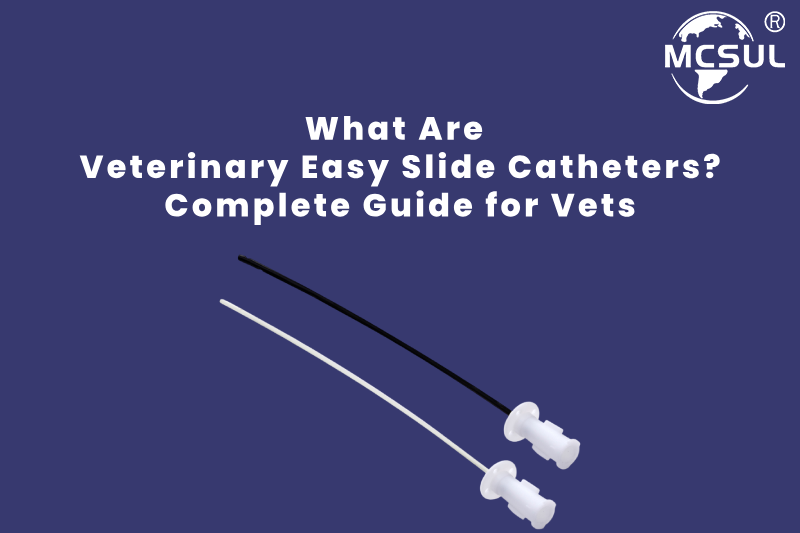
Veterinary medicine is working with a lot of different tools every day. The veterinary Easy Slide catheters are one of the things that make a big difference in how you take care of patients. A lot of hospitals and clinics use these Veterinary medical devices because they help vets work faster and safer, and they make the team and the animal less stressed.
This full guide will explain what Easy Slide catheters are and how they work and when they are used and how to place them and how to pick the right size and type and how to succeed and what mistakes to avoid.
This guide will help you understand why Easy Slide catheters are becoming a popular choice in veterinary care, whether you are a vet with a lot of experience, a vet tech student, or someone learning new things.
What Are Veterinary Easy Slide Catheters?
A Veterinary Easy Slide catheters are specially built to make it easier for doctors to put catheters in the right place with less fight and tissue damage. They are made of high-tech materials and have a smooth covering so that they can slide more easily through the urethra. This speeds up and eases the treatment process for cats, dogs, and other animals.
A hydrophilic or greased surface coats many Veterinary Easy Slide catheters. This layer gets very smooth when wet, which makes it easy for the catheter to slide into the urethra. For this reason, they help with pain, bleeding, swelling, and pressure.
Key Features
- A soft and bendable substance that guards sensitive tissue
- A smooth or slippery layer makes entry easy.
- Made to lower inflammation and damage
- Comes in a wide range of lengths and sizes
- Can be used for short- or long-term treatment
- Useful for putting catheters in the right place when it’s hard to do so.
As a result, the process is better, cleaner, and more reliable.
What Are the Benefits of Veterinary Easy Slide Catheters for Vets?
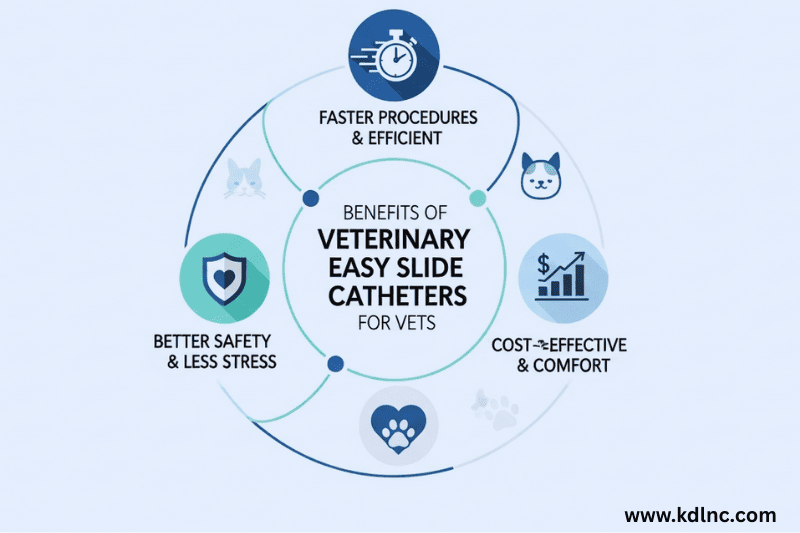
1. Faster Procedures and Less Stress
Veterinary Easy slide catheters are made to be quick and simple to use. Their smooth and flexible design helps vets insert them faster than regular catheters. This saves time and makes the process less stressful for both the vet and the animal.
2. Better Safety and Comfort
These Veterinary Easy slide catheters are soft and gentle, which means they are less likely to hurt the animal. Because they cause less irritation, animals feel more comfortable and calm during the procedure. This also helps lower the risk of problems like infections or injuries.
3. Cost Effective and Efficiency
Veterinary Easy slide catheters are strong and don’t need to be replaced as often. Since they are easier to use, vets don’t have to spend as much time on each procedure. This helps the clinic save money and lets vets help more animals each day.
Common Uses for Veterinary Easy slide catheters
Veterinary Easy slide catheters are strong and don’t need to be replaced as often. Since they are easier to use, vets don’t have to spend as much time on each procedure. This helps the clinic save money and lets vets help more animals each day.
1. Assisting Animals with Urination
Pets get sick or hurt and can’t pee on their own some of the time. To drain pee from the bladder, vets use tubes that are easy to slide. This makes sure the animal stays relaxed and helps avoid other health issues.
2. Getting urine samples
For checking diseases or other problems, vets usually need clean pee samples. Easy slide tubes make it safer for people to take these samples without hurting the animal.
3. Putting medicine directly into the bladder
Some drugs work better when they go directly into the stomach. Using easy slide tubes to give medicine right where it is needed helps animals get better faster.
4. Getting rid of Blockages
A blocked urine system can be very dangerous for an animal. Vets gently clear the blockage with easy-to-slide tubes to help the animal pee again. This is very important if there is an emergency.
5. Getting rid of the bladder
Cleaning the bladder can help get rid of things like blood, crystals, or dirt. Vets use easy slide tubes and a special liquid to clean the bladder and keep the urinary system healthy.
6. After-Surgery Care
After some treatments, animals might need help peeing for a little while. Vets use easy slide tubes to help animals go to the bathroom while they are recovering from surgery.
How Do Veterinary Easy Slide Catheters Work?
Veterinary Easy Slide Catheters have a special covering that is very important. The coating gets slippery when the tube is soaked or triggered with a clean fluid. This makes it easier for the catheter to slide through the urethra without causing as much friction.
How a Hydrophilic Coating Can Help
- Makes things easier to move
- Stops the tube from sticking to flesh.
- Reduces the amount of force needed to place it.
- Helps keep tissue that is swollen safe.
This smooth motion makes it possible to put things in the right place with just one clean try instead of multiple tries.
Types of Veterinary Easy Slide Catheters
There are several common catheter types used in vet medicine:
1. Polypropylene Catheters (Rigid Catheters)
- Hard plastic
- Used for initial decompression in blocked cats
- Can be uncomfortable and cause irritation
2. Flexible Red Rubber Catheters
- Softer material
- Often used for long-term placement
3. Polyurethane Catheters
- Flexible but can be guided more easily than rubber
- Good for longer management
4. Easy Slide Catheters
- Soft but supportive
- Hydrophilic or lubricated surface
- Designed for smooth insertion and less trauma
The key difference is how they move through the urethra. Easy Slide catheters glide much easier, which is why many vets prefer them for difficult cases or painful blockages.
How to Place an Veterinary Easy Slide Catheters Safely: Step-by-Step
Steps
- Position the patient
- Cats: dorsal recumbency or lateral recumbency
- Dogs: standing or lateral depending on size
- Activate hydrophilic coating
- Flush inside and outside with sterile saline
- Gently insert catheter
- Slowly advance without forcing
- Flush to remove debris or stones
- Secure catheter in place
- Suture or tape depending on product type
- Connect to a closed urine collection system (if indwelling)
- Monitor urine output and patient comfort
Choosing the Right Veterinary Easy Slide Catheters Size
Choosing the correct catheter diameter and length is important. Too small will not drain well, and too large may cause trauma.
Common Size Guidelines
| Animal | Size Range |
|---|---|
| Male cat | 3.5–5 Fr |
| Female cat | 5–7 Fr |
| Small dog | 5–8 Fr |
| Medium dog | 8–10 Fr |
| Large dog | 10–12 Fr or more |
Some brands like KDNC offer stylet support for more control or a wire guide for advanced placement.
Tips for Successful Placement of Veterinary Easy Slide Catheters
Here are helpful tips to get the best results:
- Never force a catheter. If it does not move, stop and reposition.Use sterile technique to prevent infection.
- Keep the patient calm to prevent urethral spasm.
- Flush gently to check patency.
- Use plenty of sterile lubrication or saline.
- Replace the catheter if it becomes clogged or contaminated.
- Monitor urine for blood or crystals.
Using an Easy Slide catheter often reduces complications, but careful handling is still very important.
Common Mistakes to Avoid When using Veterinary Easy Slide Catheters
Even experienced teams can run into problems during placement. Here are common pitfalls and how to avoid them:
- Pushing too hard: This can cause tearing and swelling. If resistance is strong, pulling back slightly and flushing can help.
- Not securing the catheter: Animals may chew or pull it out accidentally.
- Using the wrong size: Can lead to poor drainage or damage.
- Poor cleaning technique: Raises the chance of urinary tract infection.
- Not monitoring urine output: Urine should be tracked carefully, especially in hospitalized patients.
Choosing the Best Veterinary Easy Slide Catheters for Your Clinic
When choosing a veterinary easy slide catheters supplier, consider:
What to Look For
- High quality, soft materials
- Consistent coating that activates easily
- Packaging that keeps sterility
- Range of sizes and lengths
- Clear product instructions
- Good training resources
Many clinics like having both initial rigid catheters and Easy Slide flexible options ready for emergencies.
Final Thoughts
Veterinary Easy Slide catheters have transformed the approach veterinarians take to urinary catheterization. Their approach enhances safety, efficiency, and comfort for pets during the process. Their adaptable design and refined coating contribute to the protection of sensitive tissue and enhance outcomes in challenging situations, such as with obstructed felines. They assist veterinary teams in operating with assurance, leading to improved outcomes for animals.
Clinics that address urinary emergencies, chronic urinary conditions, or surgical cases can greatly enhance their services by incorporating Easy Slide catheters into their offerings. When properly trained in sizing, placement, and care, these tools significantly enhance patient comfort and safety.
Key Takeaways
- Easy Slide catheters are hydrophilic urinary catheters
- Reduce friction and improve comfort
- Great for feline urinary blockage (FUO)
- Available in different types and sizes
- Designed for short- or long-term placement
- Help lower risks like swelling and urethral damage