 +86-791-8686-1216


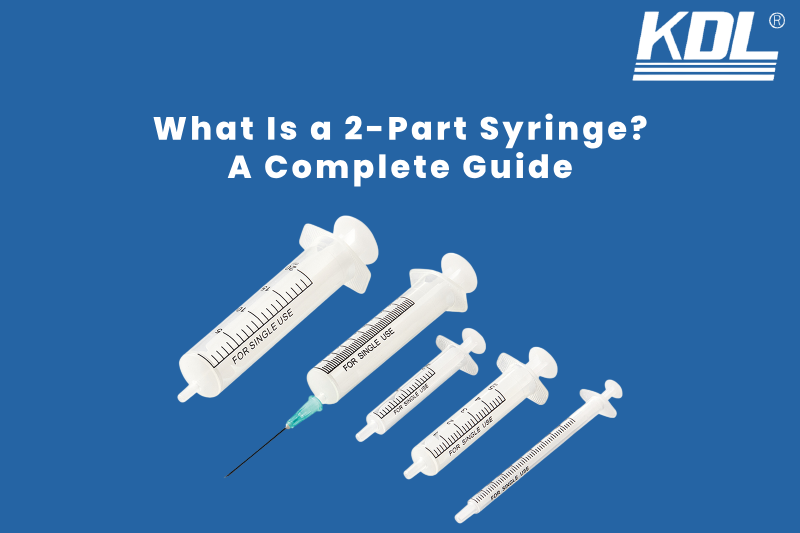
A syringe is something you’ve probably seen in a lab, hospital, or clinic. Some syringes are better made than others, though. 2-Part Syringe is a popular type. It looks easy, but it’s a very important part of giving safe injections and collecting fluids. This guide explains what a 2-part syringe is, how it works, where it’s used.
What Is a 2-Part Syringe?
A 2-part syringes is a disposable syringe that’s made up of just two main parts:
- Barrel
- Plunger (no rubber gasket)
Unlike a 3-part syringe, it doesn’t have a rubber stopper at the end of the plunger.
This straightforward design makes it super popular in hospitals, labs, vet clinics, and research places.
Key Components of a 2-Part Syringe
Knowing how a syringe works helps explain why this design is better for some uses.
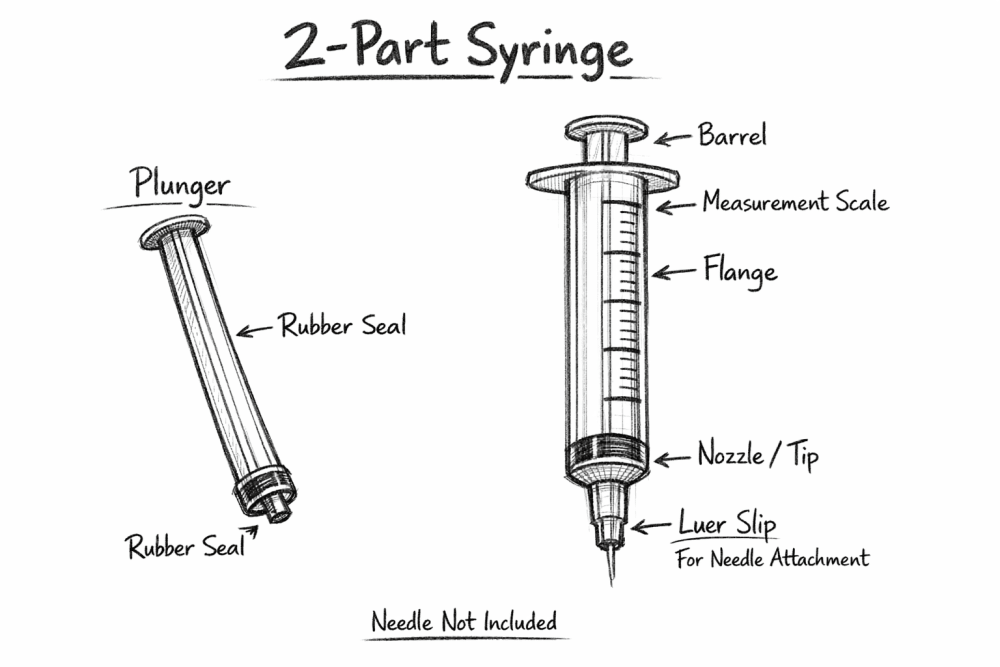
1. Barrel
Most of the time, the barrel is made of medical-grade plastic like polypropylene. It has measurement marks that let users accurately control how much medicine is given or taken away.
2. Plunger
The plunger moves inside the barrel to make pressure or suction. In a 2-part syringe, the body is usually made of the same or a similar material as the barrel and does not have a rubber tip.
3. Tip
Most syringes also have a tip that can be attach to a needle or tubing. These tips usually have luer lock or slip-tip connections that make them safe to use.
How Does a 2-Part Syringe Work?
The basic idea behind how it works is simple:
- When you pull the plunger back, it makes negative pressure, which pulls fluid into the barrel.
- When you push the plunger forward, the fluid comes out through the tip or needle.
Most syringes have the same mechanism; the only difference is how the seal is made. A 2-part syringe doesn’t have a rubber gasket to make the seal. Instead, the plunger and barrel fit tightly together.
Materials Used in 2-Part Syringe
Most 2–part disposable syringes are made from:
- Medical-grade polypropylene plastic
- Latex-free plastic plunger
- Stainless steel needle (if attached)
This makes them:
- Lightweight
- Non-reactive
- Safe for single use
Hospitals prefer latex-free syringes to avoid allergic reactions.
Sizes Available in 2-Part Syringe
Different medical tasks need different sizes. The most common options include:
| Syringe Size | Typical Use |
| 1 ml | Vaccines, insulin alternatives |
| 2 ml | Pediatric injections |
| 3 ml | General medicine |
| 5 ml | Antibiotics |
| 10 ml | IV flushing |
| 20 ml | Lab sampling |
Advantages of a 2-Part Syringe
1. Reduced Risk of Chemical Interaction
Rubber components can sometimes react with certain medications or sensitive compounds. Removing the gasket lowers the risk of contamination or chemical incompatibility.
2. Lower Material Complexity
With fewer parts, manufacturing is simpler, which can support consistent quality and reduce potential points of failure.
3. Suitable for Specialized Applications
Pharmaceuticals and lab research are two examples of fields that need to use few additives. These fields often pick equipment that has fewer parts that could mess up the results.
4. Cost Efficiency
2-part syringes are an ideal option for high-volume environments due to their lower manufacturing costs.
Disadvantages of a 2-Part Syringe
Even though they have certain advantages, 2 part syringes aren’t always the best choice.
Not as smooth to use
The plunger may not move as smoothly as it does in a 3 Part Syringe without a rubber stopper.
Possible Small Leaks
Some users choose 3 part syringes for situations needing particularly tight seals because rubber seals often offer higher leak resistance.
Limited Clinical Preference
Because they enable consistent performance during injections, 3 part syringes are often used in healthcare.
Common Uses of 2-Part Syringe
Two-part syringes are not always the most common choice in hospitals, but they are very useful in many areas.
Laboratory Work
Researchers often use them to measure and transfer liquids with precision.
Pharmaceutical Manufacturing
They are helpful when rubber compatibility is a concern for certain drug formulations.
Veterinary Medicine
Some veterinary practices use simplified syringes for controlled dosing.
Specialty Medical Procedures
When material sensitivity is important, getting rid of rubber can be helpful.
Why Hospitals Still Use 2-Part Syringes
You might wonder why doctors choose it when 3-part exists.
The answer is practical:
- Large vaccination programs need affordable syringes
- Many drugs don’t need ultra-tight sealing
- Faster filling saves time in busy wards
In high-volume healthcare settings, the 2-part syringe is efficient.
Are 2-Part Syringe Safe?
Yes, 2-part syringes are safe for their intended uses as long as manufacturers make them according to medical standards. They should be like all other sterile medical devices:
- Used once unless explicitly labeled reusable
- Properly disposed of after use
- Stored in clean, controlled environments
It is very important to follow standard infection control procedures, no matter what kind of syringe you have.
How to Choose Between a 2-Part and 3-Part Syringe
Selecting the right syringe depends on your application.
Choose a 2-part syringe if:
- Rubber interaction could compromise the substance
- You need a simplified design
- Laboratory accuracy is the priority
Choose a 3-part syringe if:
- Smooth plunger movement is essential
- Maximum leak prevention is require
- You are performing routine clinical injections
When in doubt, consult medical or laboratory guidelines for your specific procedure.
How syringes will be made in the future
Medical device makers keep coming up with new ideas by focusing on
- Better ways to keep people safe
- Better harmony with materials
- Less damage to the earth
- More accurate results
As drug formulations get more complicated, there may be a greater need for specific syringe designs, such as those with two parts.
Final Thoughts
The 2-part syringe is another useful and simple type. Getting rid of the rubber stopper makes it easier to use in labs, for pharmaceutical work, and for other specialized medical purposes. It also lowers the risk of material interaction.
The three-part syringe may be better for daily clinical use, and we may not fully replace it. Healthcare workers, researchers, and purchasing teams can make safer, more compatible, and more accurate decisions when they are aware of these differences.
Both types of syringes will likely still be useful in the future, even though medical technology is getting better. This is because they are both very important to modern medicine and scientific research.